

 2025/12/19
Beijing, December 15, 2025 — A full-spectrum, experimentally measured quantum efficiency (QE) calibration covering photon energies from 100 eV to 10 keV has been completed for X-ray scientific cameras developed by Tucsen. The work represents an important step toward improved detector characterization in high-energy X-ray imaging.

Figure 1. Experimental team conducting 100 eV–10 keV QE calibration measurements
The 6–10 keV high-energy region, which is essential for synchrotron radiation experiments, materials science, and astrophysics, places stringent requirements on detector performance, calibration accuracy, and measurement traceability. The resulting measured QE curves in this range provide a reliable reference for reducing systematic uncertainty and improving the accuracy of quantitative X-ray measurements.
The calibration results supply traceable response data for the characterization of the Dhyana XF95 X-ray cameras, supporting detector evaluation and experimental system optimization in practical research environments.
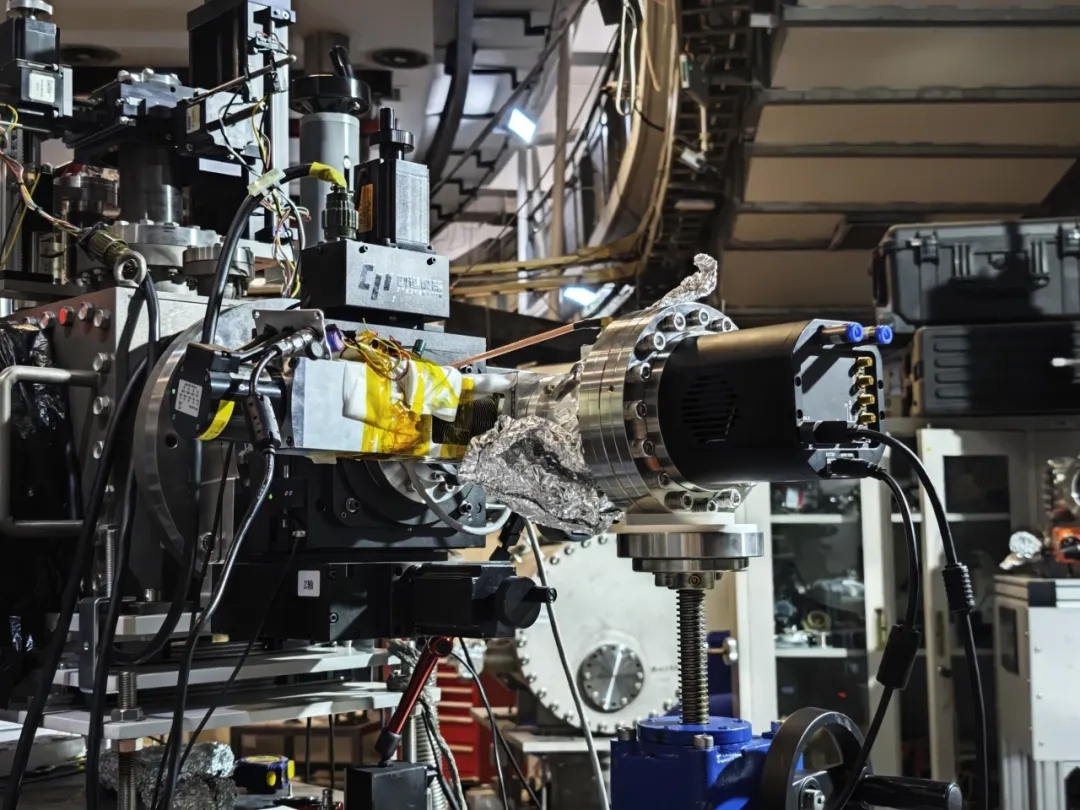
Figure 2. X-ray measurement system with the Dhyana XF95 camera
“Experimentally measured and traceable detector response is fundamental to quantitative X-ray science,” said Yanchun Wu, Sales Director of Tucsen. “This work enables researchers to move beyond theoretical estimation toward more reliable and reproducible measurements.”
Ongoing collaboration with research institutions will continue to advance calibration methodologies and support high-precision scientific imaging across emerging X-ray applications.
For further information on the performance and QE calibration of the Dhyana XF95 X-ray camera, please contact Tucsen.


