

 2026/04/22
Exposure time is one of the most familiar camera specifications, but it is also one of the most misunderstood. In a camera, exposure time does more than make an image brighter or darker. It determines how long the sensor collects signal during image acquisition, which directly affects usable image information, motion blur, and how well a camera fits fast or low-light imaging tasks.
That is why exposure time should never be read as just a number on a spec sheet. A short exposure can help reduce blur in fast events and limit light burden on sensitive samples. A longer exposure can help collect more signal in dim conditions, but it may also introduce new limits as acquisition time increases. The right setting depends on the sample, the imaging goal, and the trade-offs your workflow can accept.
What Does Exposure Time Mean in Camera Specs?
In camera specifications, exposure time usually refers to the period during which the sensor collects light for a single image. In practical terms, it is the signal integration time before the frame is read out. On most spec sheets, exposure time is not shown as one fixed number. Instead, it is usually presented as a range, which tells you the minimum and maximum values the camera allows you to set.
This distinction matters because users often focus on the number itself without thinking about what the range means in real work. A camera with very short exposure capability may be better suited to bright scenes or fast-moving targets. A camera with a long exposure range may be more useful in low-light imaging, provided the rest of the system can still maintain good image quality during longer acquisitions.
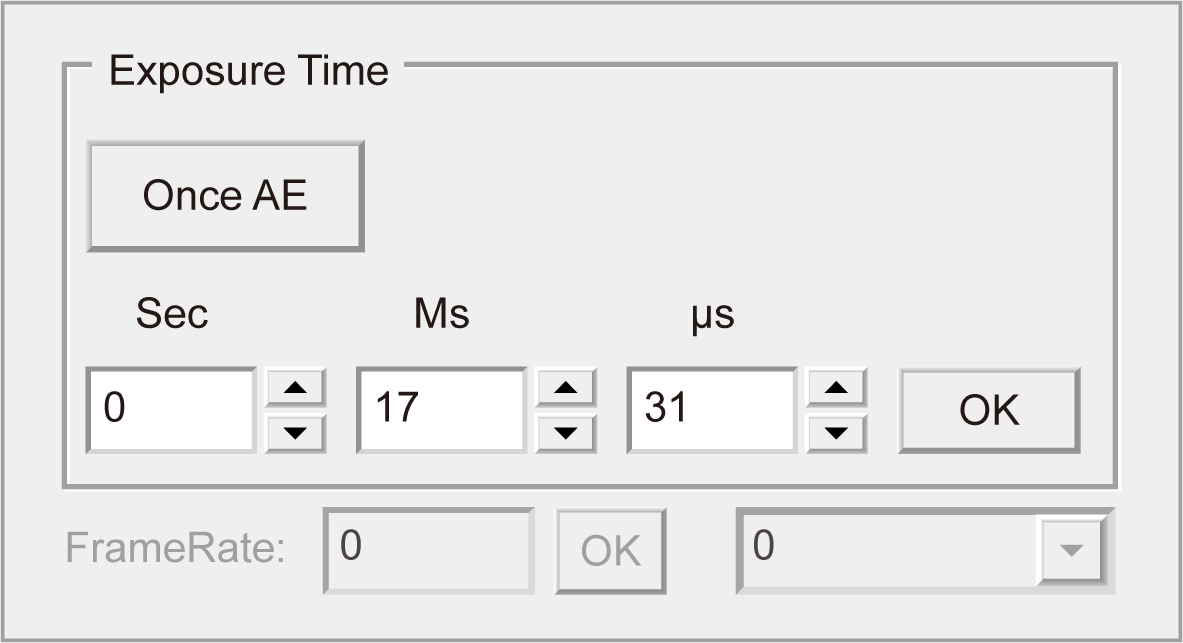
Figure 1: Exposure settings in Tucsen SamplePro software.
You will also see exposure time expressed in microseconds, milliseconds, or seconds. The unit often reflects the type of application the camera is expected to support. Very short exposures are common in high-speed or high-brightness work, where timing control needs to be precise. Longer exposures are more common in light-limited tasks, where collecting enough signal takes more time.
So when you read exposure time in a camera spec sheet, the key question is not simply “What is the number?” The better question is “What exposure range does this camera offer, and is that range appropriate for my imaging task?”
How Exposure Time Changes Image Brightness and Signal Level?
The basic relationship is straightforward: the longer the exposure time, the longer the sensor can collect photons from the sample. In most cases, that leads to a stronger recorded signal and a brighter image. This is why exposure time is often one of the first settings users adjust when an image looks too dim.
But in camera systems, it is more useful to think of exposure time as signal collection time, not just brightness control. A brighter image is only helpful when it improves the information you actually need. If a longer exposure reveals weak structures more clearly without losing important detail, it may be the right choice. If it only makes the image look brighter while pushing strong regions too far or reducing measurement value, then longer exposure is not really improving the result.
This is where camera systems differs from basic photography explanations. The goal is usually not to make the image look pleasing in a general sense. The goal is to collect enough signal to support observation, analysis, or measurement while keeping the image usable for the task. That is why exposure time should always be judged by image quality and data value, not by brightness alone.
Why Longer Exposure Is Not Always Better?
A longer exposure time can help the sensor collect more signal, but that does not mean it always improves the final image. In camera systems, longer exposure often introduces trade-offs that affect how useful the data really is. The image may look brighter, but highlight detail, motion clarity, and acquisition speed can all become limiting factors. That is why exposure time should be judged by overall imaging performance, not by brightness alone.
Exposure Time and Saturation
A longer exposure increases the amount of signal collected by each pixel, but it also makes bright regions more likely to reach saturation first. When that happens, the image may look stronger overall while the brightest parts lose recoverable detail. This is especially important in scenes with mixed signal intensity, where strong regions can hit the sensor limit before weaker regions are properly balanced.
For that reason, the goal is not simply to make the image as bright as possible. A more useful target is to collect enough signal while still preserving highlight detail and making better use of the camera’s dynamic range. In practice, that means exposure time should be set with the full image distribution in mind, not just the dimmest areas.
Exposure Time and Motion Blur
Longer exposure also increases the chance of motion blur. If the sample, stage, platform, or target moves during the exposure window, that movement can be recorded inside a single frame instead of being cleanly separated in time. The result is softer edges, reduced fine detail, and less reliable capture of fast events.
This matters in high-speed imaging, flowing samples, vibration-prone setups, and any application where positional accuracy within a frame is important. In these situations, exposure time is not only a brightness control. It is also a motion control parameter. A shorter exposure is often necessary to keep the image sharp enough for observation or analysis.
Exposure Time and Frame Rate
A longer exposure can also limit frame rate. As the camera spends more time collecting signal for each image, less time remains for capturing frames at higher speed. In real workflows, this can reduce the system’s ability to track fast changes or maintain efficient acquisition over time.
That is why frame rate should never be treated as an isolated specification. Actual acquisition speed depends on more than one factor, including exposure duration, sensor readout, ROI, bit depth, and data transfer conditions. Even if a camera supports high frame rates on paper, a long exposure setting may prevent the system from reaching them in practice.
Taken together, these trade-offs explain why the longest available exposure time is rarely the best choice. In most applications, the better approach is to use enough exposure to collect the signal you need while still avoiding premature saturation, limiting motion blur, and keeping acquisition speed practical for the task.
How Exposure Time Relates to Dynamic Range?
Exposure time is closely tied to dynamic range because it affects how much of the scene’s signal range the camera can record usefully in a single image. In practical terms, dynamic range is only valuable if exposure is set so that weak signals are still visible while strong signals remain below saturation. If exposure time is not well matched to the sample, the camera may have good dynamic range on paper but still fail to preserve the full intensity range in practice.
Too Short: Weak Signals Stay Buried
If exposure time is too short, the sensor may not collect enough signal from dim structures or low-emission regions. The image can still look technically clean, but weak details may remain too close to the noise floor to be useful. In that situation, the issue is not simply that the image looks dark. The more important problem is that the lower end of the signal range is not being recorded clearly enough for observation, comparison, or measurement.
A short exposure can therefore underuse the available dynamic range. The camera may be capable of separating weak and strong signals, but the captured frame does not take full advantage of that capacity because the faint information never rises far enough above the background. This is one reason exposure time should be judged by how much usable signal it reveals, not by visual brightness alone.
Too Long: Highlights Reach Saturation First
If exposure time is too long, the opposite problem appears. Bright regions can fill the pixel well first and lose linear response before weaker regions are ideally exposed. Once that happens, the image no longer preserves the true intensity differences in the brightest areas, and part of the scene’s signal hierarchy is lost.
This is why the best exposure time is usually not the one that produces the brightest possible frame. A better target is an exposure that lifts meaningful weak signal while still protecting bright structures from premature saturation. In other words, exposure time helps determine whether dynamic range remains usable across the image, not just whether the image becomes easier to see.
When Dark Current Starts to Matter?
Dark current does not affect every imaging workflow in the same way. Its practical importance depends heavily on exposure time. A low dark current number matters most when the camera is expected to hold image quality during long acquisitions, especially in low-light work where useful signal is already limited.
Why Dark Current May Be Negligible in Short Exposures
In short exposures, dark current often has little time to build up to a level that noticeably affects the image. This means that for many fast or brightly illuminated applications, dark current may not be the factor that defines image quality. Other limits, such as signal level, motion blur, or readout behavior, are often more important in that range.
This is why short-exposure workflows should not automatically over-prioritize dark current in isolation. It is still a real sensor characteristic, but in fast acquisitions its practical effect may remain small enough that it does not dominate the imaging result. In other words, dark current can be technically present without becoming a meaningful workflow limit.
Why Long Exposures Make Sensor Noise More Important
As exposure time increases, dark current has more time to accumulate. At that point, it can begin to reduce image clarity, weaken low-light performance, and make long-exposure imaging harder to optimize. As exposures become longer, thermally generated electrons can build up and reduce the practical low-light advantage of the system.
This becomes especially important when the imaging task depends on collecting weak signal over tens of seconds or longer. In that range, lowering dark current through cooling and sensor design can make a real difference to usable image quality. Tucsen’s FL 26BW Cooled CMOS Camera makes the same point, highlighting low dark current as a key reason the camera can maintain performance during exposures as long as 30 minutes.
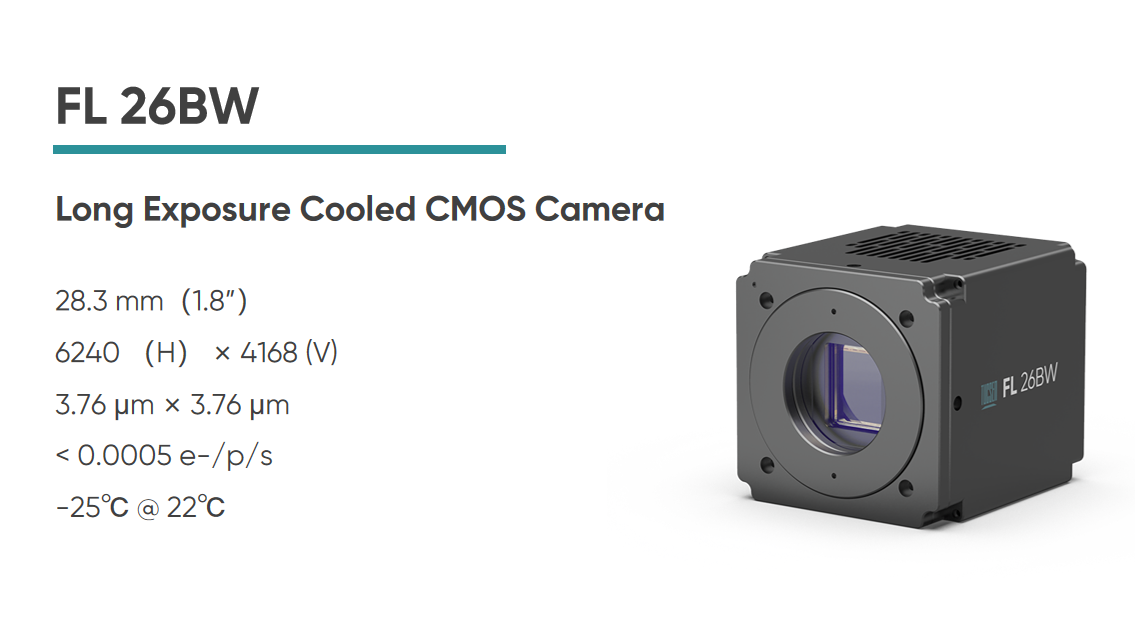
For that reason, dark current matters most when exposure time moves from a simple capture setting to a true system constraint. In short exposures, it may stay in the background. In long exposures, it can become one of the main reasons why a camera with the right exposure range on paper still needs strong cooling and low-noise performance in practice.
How to Choose Short vs Long Exposure for Different Imaging Tasks?
The best exposure time always depends on what the imaging task needs most. In some workflows, the priority is protecting the sample or freezing motion. In others, the priority is collecting enough signal from a dim scene to make weak detail usable. That is why exposure time should be chosen by application logic, not by a single idea of “better” or “more sensitive.”
Live-Cell Imaging
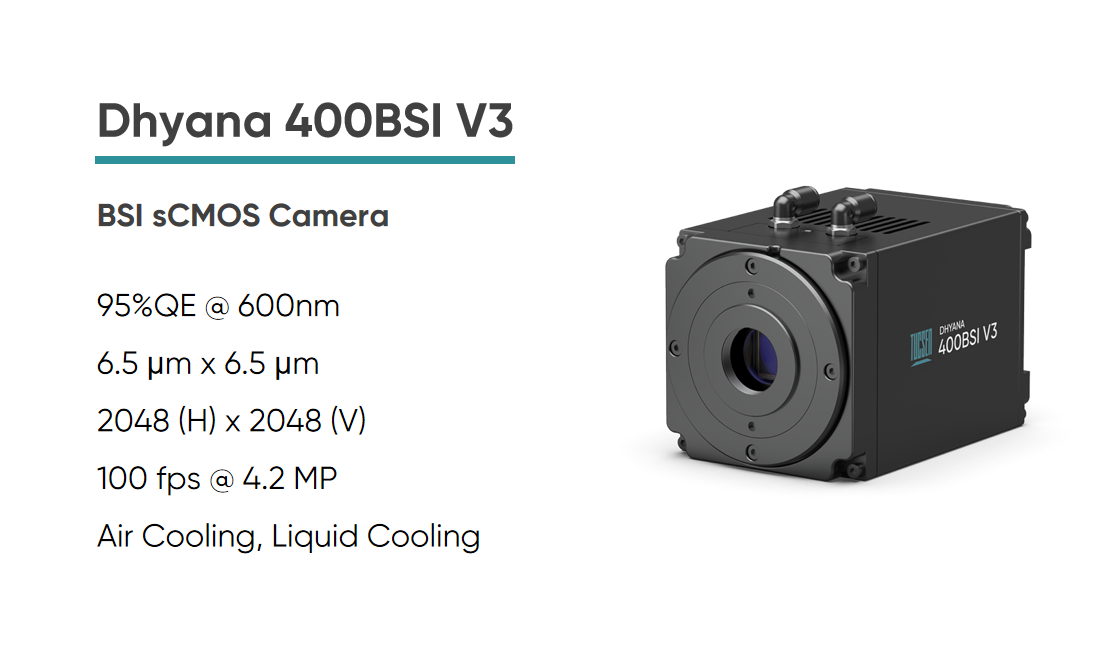
In live-cell imaging, shorter exposure is often preferred because the sample itself needs protection, not just visibility. Tucsen’s Dhyana 400BSI V3 sCMOS Camera material makes this point directly: shorter exposure can help reduce light damage and phototoxic stress while still capturing usable images. In this kind of workflow, the goal is usually to collect enough signal without placing unnecessary light burden on sensitive cells over repeated acquisitions.
High-Speed Motion Imaging
In high-speed imaging, short exposure is often necessary to keep motion sharp within each frame. A high frame rate alone does not fully solve blur if the exposure window is still too long. Tucsen’s high-throughput imaging camera materials emphasize demanding imaging systems that require both high speed and strong acquisition performance, which reinforces a practical point: if the event is fast, exposure duration has to be short enough to preserve frame-level clarity.
Low-Light Fluorescence Imaging
In low-light fluorescence imaging, longer exposure is often the practical way to collect enough signal from weak emission. Tucsen’s cooled CMOS cameras position long-exposure cameras for fluorescence and other ultra-low-light tasks specifically because longer integration can improve usable signal when the scene is dim. But this only works well when the camera can also keep dark current and hot pixels under control during the longer acquisition.
Static Imaging or Long-Exposure Inspection
If the sample is stable and throughput is not the first priority, a longer exposure can be a reasonable choice. In these cases, the workflow may benefit more from signal accumulation than from speed. That kind of specification matters most when the task is static enough to allow long acquisition times and the system is designed to support them.
Taken together, these examples show that exposure time should be chosen by what the application needs to preserve first. For live samples, that may be sample health. For fast events, it is motion clarity. For dim fluorescence or static low-light scenes, it is usable signal. Once that priority is clear, the exposure decision becomes much more practical.
Final Thoughts
Exposure time is one of the most visible numbers in a camera spec sheet, but it is not a number that should be judged in isolation. It affects not only image brightness, but also motion blur, dynamic range usage, and how much dark current matters as exposures become longer. A short exposure can protect motion clarity or reduce light burden on sensitive samples. A long exposure can improve signal collection in dim scenes, but only within the practical limits of the imaging system.
For that reason, the best exposure time is rarely the longest or shortest value a camera can offer. It is the value that best supports the imaging task, the sample, and the quality of data you need to preserve. If you are comparing cameras for fast events, low-light fluorescence, or long-exposure imaging, Tucsen can help you evaluate which exposure range and sensor performance best fit your workflow.
Tucsen Photonics Co., Ltd. All rights reserved. When citing, please acknowledge the source: www.tucsen.com


