

 2025/12/12
Since its release, the Tucsen Aries 6504 sCMOS camera has drawn significant attention from both scientific research and industrial imaging communities for its combination of single-photon-level sensitivity and high-speed imaging capability.
Recently, Tucsen officially released the latest measured performance data and benchmark images for the Aries 6504. The results provide direct experimental validation of the camera’s key performance characteristics under its core operating modes.
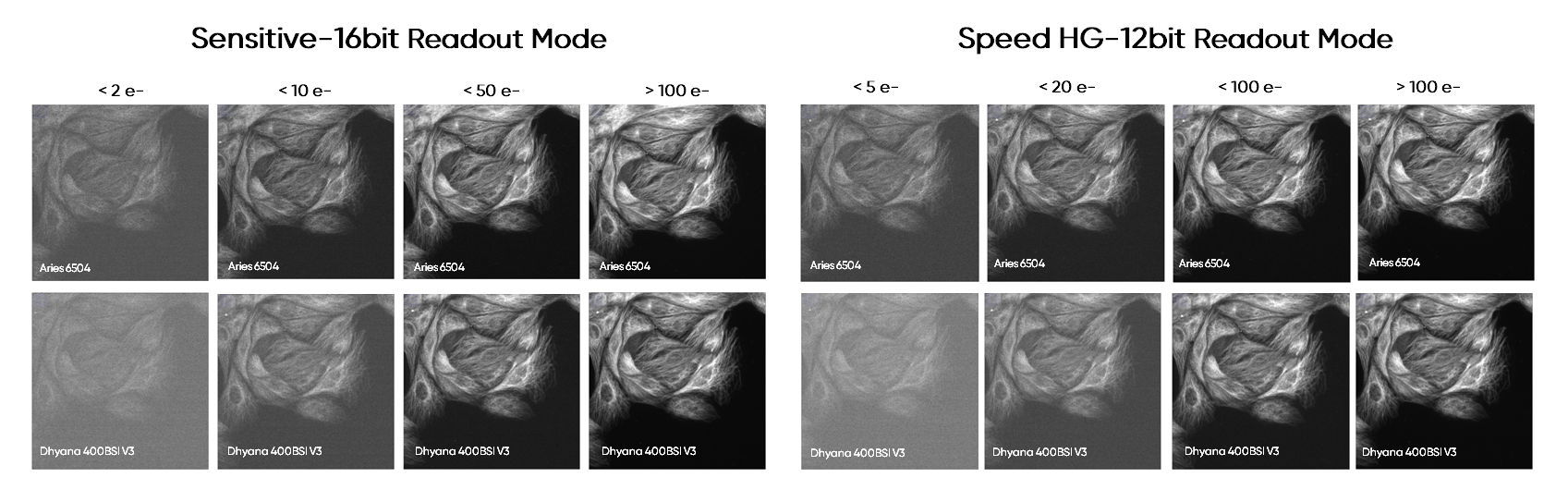
Figure 1. Comparison of Aries 6504 and Dhyana 400BSI V3 in low-light imaging
Sensitive 16-bit Mode: Single-Photon-Level Sensitivity Analysis
Design Objective
The Sensitive 16-bit mode is designed to enable single-photon-level detection by maintaining readout noise below 0.4 e⁻.
Measured Results
In this mode, the Aries 6504 achieves a measured readout noise of 0.37 e⁻, representing approximately a 60% reduction compared with previous-generation back-illuminated sCMOS cameras. At the same time, the camera supports full-resolution imaging at up to 99 fps, balancing extreme sensitivity with practical dynamic imaging performance.
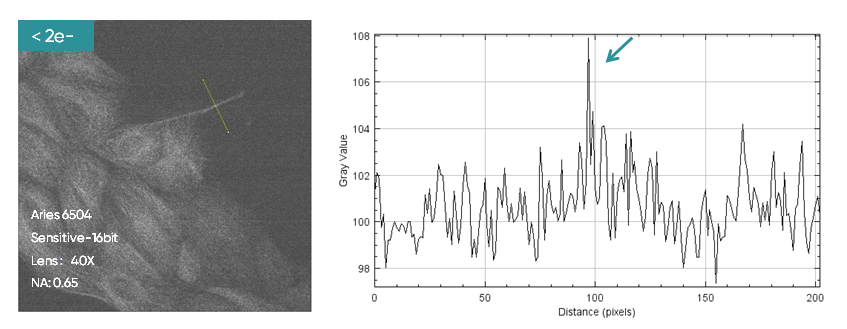
Figure 2. Measured images in Sensitive 16-bit mode.
As shown in Figure 2, when operating at an average signal level of approximately 2 photons per pixel, the signal histogram exhibits clearly separated peak structures.
Speed HG 12-bit Mode: High-Speed Low-Light Imaging Analysis
Design Objective
The Speed HG 12-bit mode is optimized to maintain low readout noise at high frame rates, addressing the requirements of high-speed imaging under extremely low-light conditions.
Measured Results
In this mode, the Aries 6504 delivers a measured readout noise of 0.75 e⁻ while operating at nearly 300 fps at full resolution. The results demonstrate stable performance for applications that require both high temporal resolution and sensitivity.
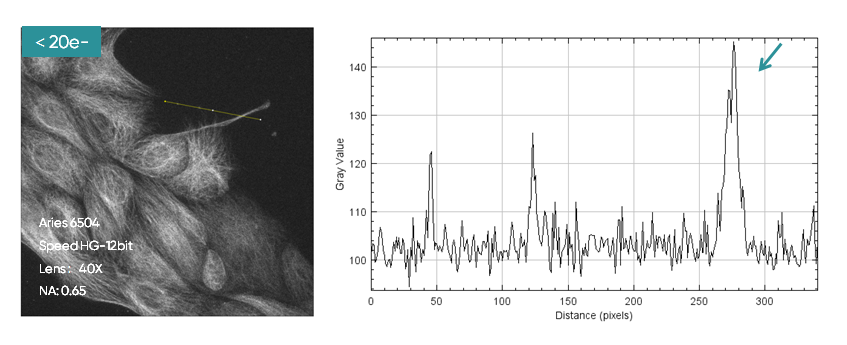
Figure 3. Measured images in Speed HG 12-bit mode.
As illustrated in Figure 3, even under weak illumination conditions of approximately 20 photons per pixel, the camera is able to resolve low-level signal structures with good clarity. This imaging mode is well suited for applications such as high-speed voltage imaging and calcium imaging in neuroscience.
Expert Commentary
“The measured performance of the Aries 6504 in small-batch production, together with validation across multiple end-user application scenarios, confirms its technical strengths in high-sensitivity, low-light, and high-speed imaging.
The project team completed product design and performance optimization within a very short development cycle. All predefined technical targets were achieved, and several key performance metrics exceeded initial expectations.
We have strong confidence in this product and look forward to its impact across both scientific research and industrial imaging applications.”
— Lou Feng
Director of Product Business Development, Tucsen
Contact
The continued validation of Aries 6504 performance across real-world application scenarios supports Tucsen’s technical roadmap for next-generation scientific cameras. While discussions around future imaging technologies continue across the industry, Aries 6504 is already demonstrating measurable performance backed by experimental data.
For more information about the Aries 6504 or to request a demonstration unit, please contact Tucsen.


