

 2026/02/28
Photo-Response Non-Uniformity (PRNU) represents the uniformity of a camera’s response to light, and is particularly important in high-light applications. PRNU quantifies variations in the gain—the ratio of detected photo-electrons to the corresponding digital greyscale value (ADU)—across the pixels in a camera sensor.
PRNU becomes more noticeable at higher signal levels (within the linear region) and matters most for quantitative workflows such as flat-field-based measurements or frame averaging/summing. By contrast, DSNU is an offset/dark-signal non-uniformity that is most visible in dark or low-light conditions. This guide explains how to define, measure, compare, and correct PRNU—and how to avoid mistaking near-saturation artefacts for true PRNU.
What PRNU Is (and what it is not)?
When a camera detects light, each pixel collects photo-electrons during the exposure. These electrons are converted into a digital greyscale value (ADU) by the readout chain, typically involving pixel-level amplification and an analogue-to-digital converter (ADC).
PRNU: pixel-to-pixel gain variation
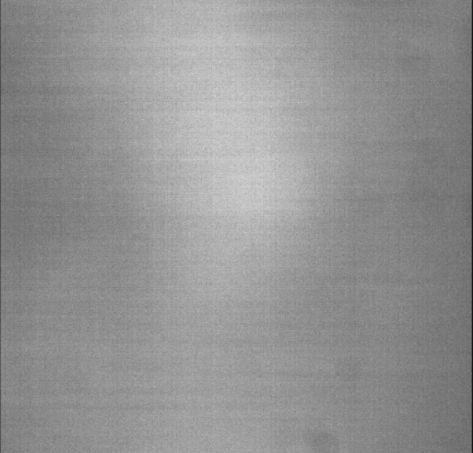
Figure 1: One of the most typical manifestations of PRNU, clearly showing the characteristics of pixel photoresponse non-uniformity.
PRNU refers specifically to pixel-to-pixel variation in gain. Under uniform illumination, this appears as a stable response “texture,” where some pixels respond slightly higher and others slightly lower than the average. A defining property of PRNU is that it scales with signal level (within the linear region): when illumination increases, the absolute difference between pixels increases proportionally.
This is why PRNU often becomes more relevant in quantitative workflows, such as flat-field-based measurements or frame averaging, where random noise is reduced but fixed gain differences remain.
PRNU vs DSNU
PRNU is often discussed alongside Dark Signal Non-Uniformity (DSNU):
● DSNU refers to pixel-to-pixel variation in offset or dark signal and is most visible in dark frames or low-light conditions.
● PRNU refers to pixel-to-pixel variation in gain and becomes more apparent as illumination increases.
Both effects can appear as fixed pattern noise (FPN), but they originate from different parts of the signal model (offset vs gain) and behave differently as signal level changes.
What PRNU is not
In practice, many effects can be mistaken for PRNU. PRNU is not:
● Non-uniform illumination from the light source
● Optical shading or vignetting introduced by lenses or filters
● Dust or contamination on optics or the sensor window
● Near-saturation non-linearity or clipping, which can create high-light artefacts that resemble “worse PRNU”
Keeping these distinctions clear is essential before interpreting a PRNU specification or attempting a measurement.
Where PRNU Comes From in Modern CMOS Cameras?
PRNU originates from small, repeatable gain mismatches introduced by pixel-level circuitry and column-parallel readout paths in modern CMOS architectures. Because these systems operate in highly parallel signal chains, even very small differences in amplification or ADC behavior can appear as stable pixel- or column-level response variations under uniform illumination.
Importantly, the presence of measurable PRNU does not imply a low-quality sensor. Even the high-performance scientific CMOS camera exhibit some degree of intrinsic gain spread that becomes visible only under controlled conditions or high-SNR workflows.
How PRNU Affects Image Quality and Quantitative Accuracy?
PRNU is a fixed, pixel-dependent gain error, so its impact depends strongly on signal level and on whether the image is evaluated as a single frame or as part of a quantitative or averaged result.
Low- and mid-signal imaging
In low- to mid-signal regimes—where photon counts are relatively small—PRNU is typically minor compared with other noise sources such as read noise, DSNU, or photon shot noise. In these cases, modest PRNU differences rarely have a visible impact on single-frame image quality.
If an image is limited by read noise or dark-related noise, improving PRNU alone usually does not produce a noticeable benefit unless the workflow is explicitly quantitative.
High-signal imaging and averaging
At high signal levels, photon shot noise often dominates single-frame noise, so PRNU may still appear minor in a typical image. However, when frames are averaged or summed, random noise decreases approximately as 1/√N, while PRNU does not average away.
As a result, PRNU can become a limiting factor for:
● flat-field-based measurements and radiometry
● background uniformity in scientific imaging
● defect detection thresholds in industrial inspection
● mosaicking or stitching where consistent shading matters
High-Light Artefacts and PRNU
At high signal levels, PRNU-related patterns can become more visible—but many reported “high-light artefacts” are caused by effects other than intrinsic PRNU.
What high-light artefacts look like
Users commonly describe:
● static distributions of slightly brighter and darker pixels
● structured column or row banding
● subtle fixed shading that becomes apparent after contrast stretching
These patterns remain in the same pixel locations from frame to frame, indicating a systematic origin.
Why near-saturation behaviour can be misleading
As sensors approach saturation, non-linearity and clipping can introduce artefacts that resemble increased non-uniformity. An image may appear “more PRNU-like” simply because the response is no longer linear—even if the underlying PRNU has not changed.
A practical rule is to evaluate PRNU well within the linear region and avoid operating points close to saturation.
Practical rules to avoid confusion
● Stay below saturation and avoid clipped highlights
● Check multiple signal levels within the linear range
● Use a truly uniform and stable illumination source
● Separate optical shading and contamination from sensor response
● Remember that averaging reduces random noise and can reveal fixed patterns
How to Read PRNU Specs?
PRNU values are easy to miscompare because results depend strongly on how they are measured and reported.
● Metric: %RMS is more stable than %peak-to-peak, which is highly sensitive to outliers.
● ROI and masking: Full-frame values may be dominated by edges or defects; confirm ROI definition and pixel masking.
● Signal level: PRNU should be reported in the linear region; near-saturation values can be misleading.
● Raw vs corrected: Some specifications quote PRNU after flat-field/NUC correction; others quote raw PRNU. These are not directly comparable.
● Test conditions: Wavelength, temperature, readout mode, gain, binning, and optics all affect PRNU.
If these conditions are not clearly stated, treat the number as a rough indicator rather than a strict comparison metric
Typical PRNU Values (and what “<1%” really means)
Many CMOS sensors are specified with PRNU values below ~1%, but that number is only meaningful when the reporting conditions are stated—such as the metric used (%RMS vs %peak-to-peak), the ROI, the signal level within the linear region, temperature/illumination spectrum, and whether the value is raw or after flat-field/NUC correction.
In most low- and mid-signal, single-frame imaging workflows, PRNU at this level is often not the dominant limitation compared with read noise, DSNU, or shot noise. Where “<1%” becomes more relevant is in quantitative imaging (flat-field-based measurements, mosaicking/stitching) or frame averaging/summing, where random noise is reduced and fixed response variation can set a consistency floor.
PRNU Correction in Practice (Flat-Field / NUC)
PRNU is typically addressed using flat-field correction, also known as non-uniformity correction (NUC). This approach characterizes each pixel’s relative gain under uniform illumination and applies a gain map to normalize the response.
Flat-field correction reduces systematic gain differences but does not remove random noise or compensate for non-linear behavior near saturation.
What PRNU correction actually removes
Flat-field/NUC primarily compensates for systematic gain differences across pixels and columns. After correction, residual non-uniformity is typically much lower and less visible in both qualitative images and quantitative measurements. Importantly, PRNU correction does not remove random noise, and it cannot compensate for non-linear behavior near saturation.
One-point vs multi-point correction
● One-point correction (single illumination level) is often sufficient when the sensor response is highly linear and the operating range is narrow.
● Multi-point correction becomes important when gain varies with signal level, mode, or operating conditions, or when high-precision radiometric accuracy is required.
Re-calibration considerations
Re-calibration may be needed if temperature changes significantly, the optical path is altered, readout mode or gain settings change, or long-term drift affects stability.
In high-precision inspection workflows—particularly semiconductor and metrology applications—proper DSNU/PRNU correction is often a prerequisite for reliable quantitative analysis.
For a deeper, application-focused discussion, see Why DSNU/PRNU Correction Matters in Semiconductor Inspection.
Troubleshooting: If Your “PRNU” Looks Bad
When PRNU appears worse than expected, the issue is often not intrinsic sensor gain variation.
|
Symptom you see |
Likely cause |
Quick check |
Recommended action |
|
Strong gradient or uneven field |
Illumination non-uniformity or optical shading |
Rotate or reposition the camera/light source; does the pattern move? |
Improve flat-field uniformity, adjust geometry, or restrict analysis to a central ROI |
|
Localized dark or bright spots |
Dust or contamination on optics/sensor window |
Slightly defocus or remove optics; do spots change? |
Clean optics/sensor window and re-measure |
|
Vertical or horizontal banding |
Column/row gain differences, readout-related structure, or lighting flicker |
Compare single frame vs averaged frame; check illumination stability |
Verify lighting stability, avoid flicker sources, evaluate PRNU in the linear region |
|
Non-uniformity worse near highlights |
Near-saturation non-linearity or clipping (not true PRNU) |
Reduce exposure to stay well below saturation; does the pattern reduce? |
Measure PRNU only in the linear range; avoid clipped pixels |
|
Edges look worse after correction |
Over-correction due to vignetting or shading included in gain map |
Apply correction only to central ROI |
Separate optical shading from sensor PRNU; refine masks/ROI |
|
PRNU value changes between runs |
Temperature drift or unstable settings |
Repeat test after thermal stabilization |
Stabilize temperature and lock gain/mode during measurement |
|
Unexpectedly high %peak-to-peak PRNU |
Outliers or bad pixels dominating the statistic |
Switch to %RMS and mask bad pixels |
Report %RMS with clear masking rules |
Final Thoughts
PRNU is rarely the headline specification—but in quantitative imaging, it often defines the consistency limit once random noise is reduced. Understanding where PRNU comes from, how it behaves across signal levels, and how it should be measured and corrected is essential for making meaningful comparisons and avoiding misinterpretation.
At Tucsen, PRNU performance is addressed not just at the sensor level, but across calibration, operating modes, and real measurement workflows. If your application depends on stable flat-fielding, frame averaging, or high-precision inspection, our team can help you evaluate PRNU in the context that actually matters for your system.
FAQs
Does PRNU change over time or with sensor aging?
PRNU is generally stable over time, but it can drift slowly due to sensor aging, long-term temperature exposure, or changes in operating conditions. In high-precision or long-life systems, it’s good practice to periodically verify PRNU—especially if quantitative consistency is critical.
Should PRNU be evaluated per pixel or per column?
That depends on the sensor architecture and application. Pixel-level PRNU captures the most complete picture, but in column-parallel CMOS designs, column-level structure can dominate. For diagnostics and troubleshooting, examining both pixel maps and column-averaged profiles is often helpful.
Is lower PRNU always better for every application?
Not necessarily. For many qualitative or single-frame imaging tasks, reducing PRNU beyond a certain point provides no practical benefit, because other noise sources dominate. Lower PRNU matters most when your workflow relies on flat-field correction, averaging, or quantitative measurements.
Can PRNU be compared across different sensor sizes or pixel pitches?
Direct comparison is risky. PRNU depends on pixel design, readout architecture, operating mode, and test conditions—not just pixel pitch or sensor size. Meaningful comparison requires matching measurement conditions, not just headline specifications.
Tucsen Photonics Co., Ltd. All rights reserved. When citing, please acknowledge the source: www.tucsen.com


