

 2026/04/08
“We are developing an image stabilization system for a fibre-optic spectroscopic instrument for the 2-Meter telescope at our site in Tautenburg, Germany. The Aries 16 sCMOS camera combines high speed with the excellent sensitivity and low-noise performance we require to observe very faint stars.”
– Hans-Peter Doerr, Karl Schwarzschild Observatory, Thüringer Landessternwarte Tautenburg
Group Research Aims
At the Thüringer Landessternwarte Tautenburg, researchers study stars, the Sun, planets and other astronomical objects using ground-based telescopes. The Optical Technologies & Photonics group, led by Prof. Markus Roth, focuses on the development of special purpose optical instrumentation to study the Sun and the Stars.
Dr. Hans-Peter Doerr’s work centres on developing instrumentation for solar and stellar physics, with a strong emphasis on high-precision spectroscopy and spectropolarimetry. His research is aimed at understanding solar and stellar dynamics, magnetic activity, and velocity fields in the solar atmosphere by measuring subtle variations in spectral lines.
This type of work supports long-term studies of solar variability and contributes to coordinated observing efforts and networks designed to monitor the Sun continuously with high temporal stability and accuracy.
Equipment & Experiment
Scientific cameras play a critical role at the detector plane of the spectrographs, where they must capture fine spectral details such as intensity or wavelength shifts with high precision. But astronomical observations with ground-based telescopes are hindered by random image motions and image blurring caused by turbulence in Earth’s atmosphere: an effect referred to as astronomical seeing. Seeing is the dominant effect limiting the resolution of large ground-based telescopes. The image stabilization currently in development at the TLS aims to mitigate this effect partially by keeping the image of the Star centered on the optical fiber which guides the light to the spectrograph for further analysis.
The Aries 16 is well suited to this application because it can be operated at a high frame rate while still providing an exceptionally low read noise and a high sensitivity
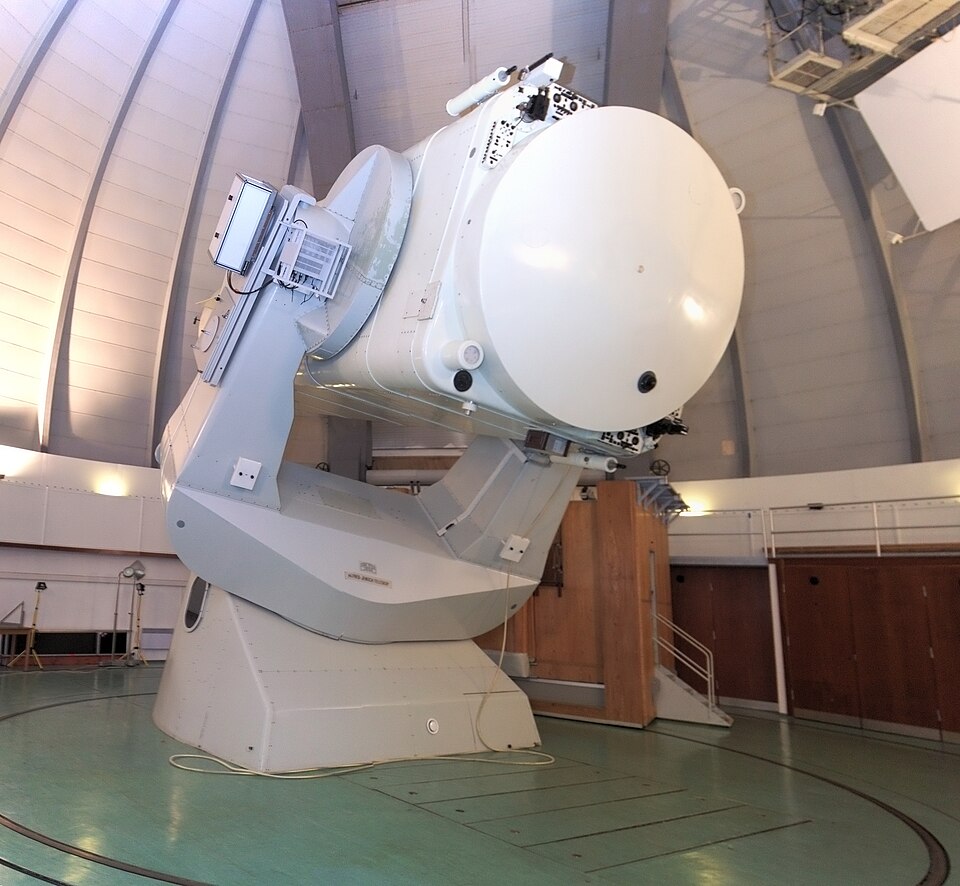
Karl Schwarzschild Observatory – Alfred Jensch Telescope.By Ximeg – Own work, CC BY-SA 3.0, https://commons.wikimedia.org/w/index.php?curid=23611507
Experience with Tucsen
“For such an application it is essential to have full control over the camera parameters and being able to run it in a highly specialized custom software framework. Tucsen has given us great support for this, and we look forward to deploying the instrument to the telescope later this year.”
—— Hans-Pater Doerr, Karl Schwarzschild Observatory, Thüringer Landessternwarte Tautenburg
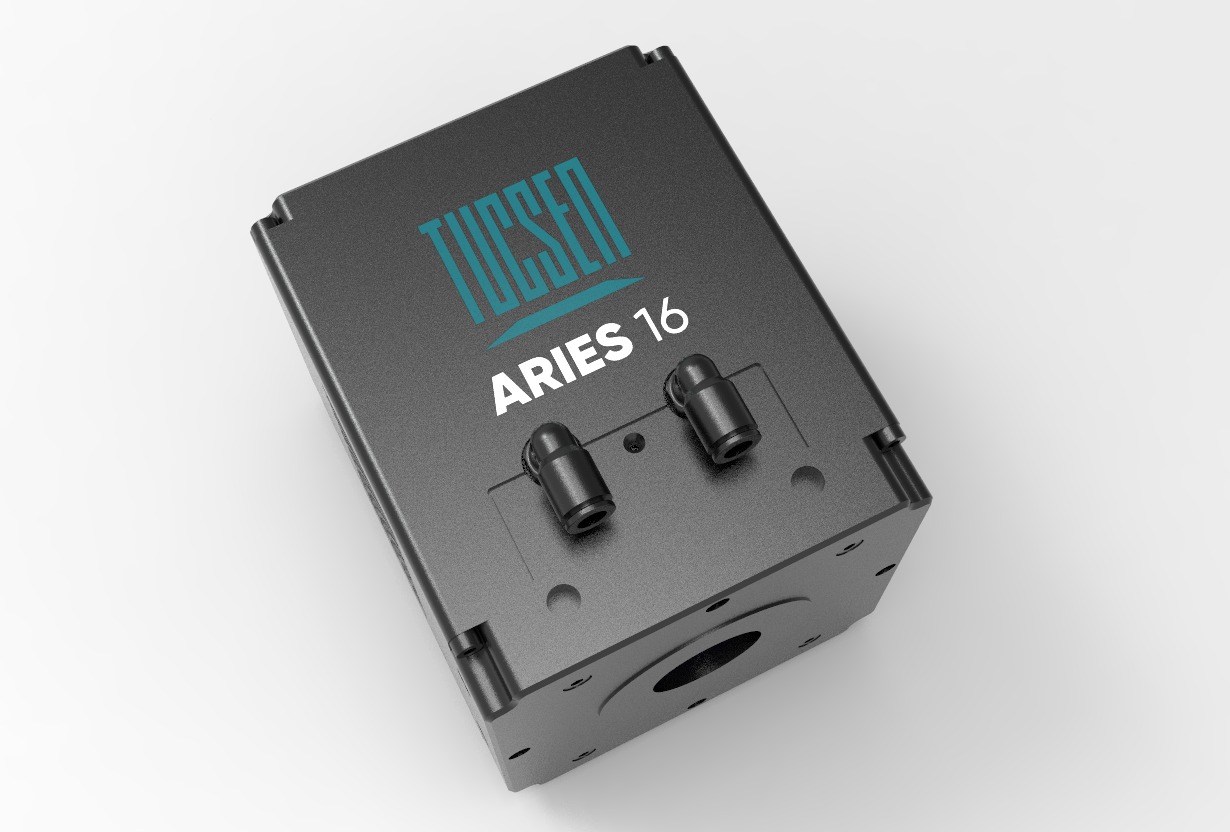
The Aries 16 features 16 μm pixels, allowing for the ultimate sensitivity of EMCCDs while also surpassing binned sCMOS.
90% Peak QE
60 fps
0.9 e- Read Noise
800 x 600 Pixels
16 Micron Pixels
CameraLink & USB 3.0


