

 2026/05/18
Rolling shutter operation in many CMOS cameras can create practical problems in some imaging workflows. These may include motion-related artefacts, less efficient use of timing or light dose, and image cross-over when hardware or illumination states change between frames. Such issues are often more noticeable in multichannel acquisition, where clean timing separation matters.
To reduce these problems, some rolling shutter cameras can be used in a pseudo-global way when the illumination source can be controlled through hardware triggering. This allows useful image data to be collected during a more time-consistent part of the exposure cycle, helping the camera behave more like a global shutter system in the right workflow.
In this article, we will explain what pseudo-global shutter means, how it works, how it relates to global reset operation, and when it can be useful in real scientific imaging setups.
What Is Pseudo-Global Shutter?
Pseudo-global shutter is a way to make a rolling shutter camera behave more like a global shutter system by controlling illumination through hardware triggering. The sensor itself still operates with rolling shutter timing, but useful light is restricted to a carefully controlled part of the exposure cycle where the full frame can be captured with better temporal consistency.
That means pseudo-global shutter is not a separate sensor type, and it is not simply another name for true global shutter. Instead, it is a system-level acquisition strategy. The camera, the trigger timing, and the illumination source work together so that meaningful light reaches the sensor only during the most suitable part of the frame cycle.
This approach is especially useful in timing-sensitive workflows, where ordinary rolling shutter behavior can create artifacts, reduce efficiency, or make channel separation less clean. Rather than changing the sensor architecture itself, pseudo-global shutter changes when meaningful exposure happens.
How Does Pseudo-Global Shutter Work?
Pseudo-global shutter still starts from a rolling shutter process. As a new frame begins, the start of exposure moves row by row down the sensor until every row is exposing. That means the camera does not suddenly become a true global shutter device. The key difference is that, in pseudo-global operation, the system is designed so that useful light is not allowed to reach the sensor during this first rolling phase. In other words, exposure may have started electronically, but no meaningful image signal is collected yet because the illumination is kept off.
Once every row has entered exposure, the sensor reaches the part of the cycle that matters most: the shared exposure window. At this point, the full frame is ready to receive light without row-to-row timing delay across the sensor. This is where pseudo-global imaging actually happens. If the light source is triggered on only during this shared window, the resulting image behaves much more like a globally exposed frame, even though the sensor is still operating with rolling shutter timing underneath. That is why pseudo-global shutter is best understood as a timing strategy rather than a different sensor architecture.
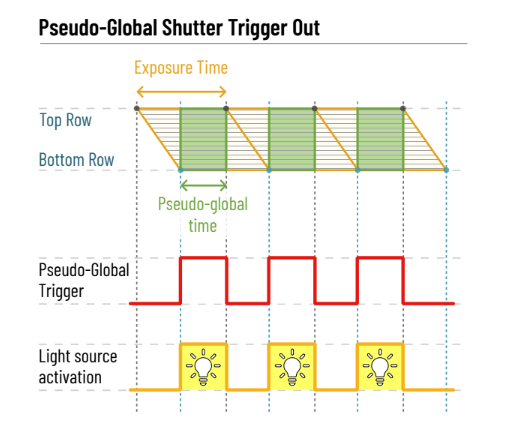
Figure 1: Timing for pseudo-global shutter operation.
With a trigger-controlled light source, useful illumination is limited to the shared exposure window when all rows are exposing, avoiding periods when only part of the sensor is active.
Before the end of exposure begins to roll through the frame and readout progresses down the sensor, the light is turned off again. As a result, no useful information is collected during this second non-global phase either. In practice, this means the illumination pulse defines the effective exposure, because it determines the part of the frame cycle during which meaningful light actually reaches the camera. The nominal exposure setting may still be longer, but only the illuminated portion contributes useful signal. This approach is especially valuable in controlled illumination workflows such as triggered fluorescence imaging and synchronized microscopy, where timing consistency matters more than simply leaving the sensor exposed for longer.
How Is Pseudo-Global Shutter Related to Global Reset Modes?
Global reset helps align when exposure begins, while pseudo-global shutter refers to a broader timing strategy that also depends on how illumination is controlled.
What Global Reset changes
A global reset mode makes the start of exposure more uniform across the frame. That matters because it gives the camera a more controlled timing relationship with external devices such as triggered light sources or synchronized hardware. In practical imaging systems, this makes it easier to build repeatable trigger-led workflows, especially when illumination and acquisition must be coordinated closely.
Why Global Reset is not the same as true global shutter
What global reset does not do is turn a rolling shutter sensor into a true global shutter sensor. Starting exposure together is not the same as exposing every pixel in the same way from start to finish. A camera may support global reset and still rely on rolling shutter behavior during the rest of the frame cycle. That is why global reset should be treated as a timing mode, not as another name for true global shutter.
The differences are easier to see when the main timing strategies are compared side by side:
|
Mode / Strategy |
Exposure Start Behavior |
When Useful Light Is Best Collected |
Temporal Uniformity Across the Frame |
Main Limitation |
|
Rolling shutter |
Starts row by row |
Throughout the rolling exposure |
Lower |
Different parts of the frame correspond to slightly different times |
|
Global reset |
Starts together or more uniformly |
Still depends on sensor timing and workflow setup |
Improved at exposure start, but not fully global |
Does not make the full exposure truly global |
|
Pseudo-global shutter |
Still based on rolling shutter timing |
Only during the shared exposure window defined by gated light |
Better, if illumination is tightly controlled |
Depends on triggerable illumination and timing coordination |
|
True global shutter |
Starts and exposes all pixels together |
Across the full global exposure period |
Highest |
Requires a true global shutter sensor architecture |
Why illumination control still matters
Even with global reset, pseudo-global shutter does not work automatically. Illumination still has to be controlled so that useful signal is collected only during the intended part of the frame cycle. Global reset can support that timing strategy, but it cannot replace it.
When Can Pseudo-Global Shutter Be Used?
Pseudo-global shutter is most useful when the imaging system can control not just the camera, but also the timing of illumination. In practice, this means it works best in setups where light can be turned on and off with good precision, and where the scene remains comparatively dark between illumination events. That controlled timing is what allows the camera to pass through its rolling phases without collecting unwanted signal, so the useful image data is concentrated in the pseudo-global window.
Triggered illumination systems
The most natural use case for pseudo-global shutter is a triggered illumination workflow. A camera-controlled pseudo-global mode makes this easier, but it is not the only option. If the timing is known well enough, external triggering can also be used to delay illumination until the sensor has reached the right part of the frame cycle. In either case, the main requirement is not just a fast light source, but a light source that can be triggered repeatably and kept effectively dark between pulses. This is why pseudo-global shutter is especially relevant in applications such as light-sheet microscopy, voltage imaging, optogenetic workflows and certain inspection workflows where illumination timing must be controlled carefully.

Multi-channel and synchronized acquisition workflows
Pseudo-global shutter also makes sense when the workflow depends on tight coordination between the camera, illumination, and other hardware states. In multi-channel and synchronized acquisition, that kind of coordination can make timing more repeatable and reduce ambiguity about what optical condition each frame represents. This is one reason pseudo-global timing is often discussed in advanced scientific imaging workflows, even when a true global shutter sensor is not strictly required.
Fast imaging where rolling artifacts matter, but full global timing is not mandatory
Pseudo-global shutter can also be a practical middle ground in fast imaging workflows where ordinary rolling shutter behavior causes problems, but true global shutter is not strictly required. The key question is not whether the application is simply “fast,” but whether the timing can be managed well enough to make the pseudo-global window useful.
When pseudo-global shutter may not be enough
Pseudo-global shutter becomes less attractive when illumination cannot be gated precisely, when the application demands stricter full-frame temporal consistency, or when the system timing becomes too complex to manage reliably. At that point, a workaround may stop being the simplest or most robust solution.
Example: Pseudo-Global Shutter for Multi-Channel Imaging
Multi-channel imaging is a good example of why pseudo-global shutter matters in practice. In microscopy, it is common to alternate between different wavelength channels, polarization states, z positions, or x/y stage positions within one dataset. That sounds straightforward, but with an ordinary rolling shutter camera, timing can become less clean than the acquisition sequence suggests.
Why rolling shutter can complicate channel separation
The main issue is that different parts of the frame do not represent exactly the same moment in time. Rolling shutter cameras can also overlap the end of one frame with the start of the next. If hardware changes such as wavelength switching happen between frames, part of the image intended for one channel may still be captured while the system is already moving toward the next channel state. In a red/green alternating workflow, for example, some signal intended for the red frame can bleed into the timing of the green frame, and vice versa.
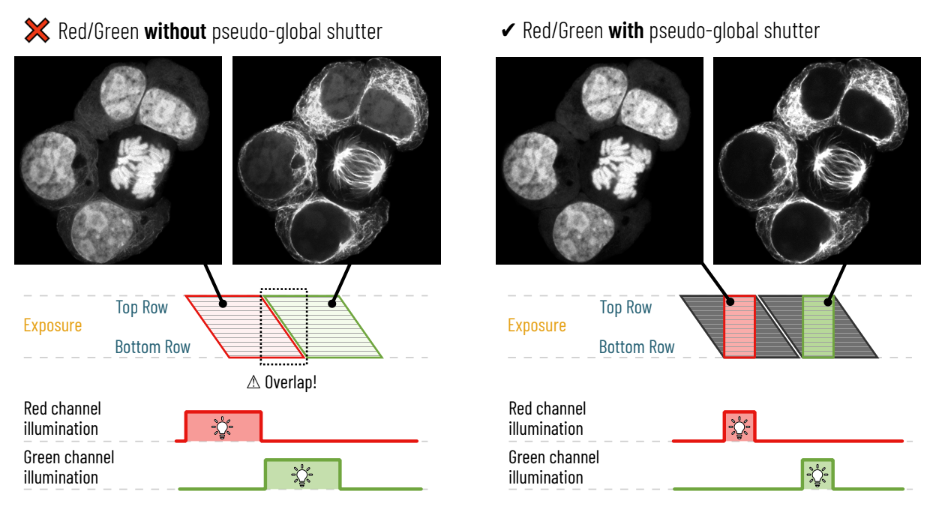
Figure 2: Use of pseudo-global shutter modes in multi-channel imaging.
In alternating red/green fluorescence imaging with a rolling shutter camera, frame overlap can cause cross-talk between channels when hardware changes occur without sufficient timing control. Left: without pseudo-global shutter, parts of the red and green frames are captured during overlapping channel states. Right: pseudo-global shutter limits useful illumination to non-overlapping exposure windows, improving channel separation.
How pseudo-global timing helps keep channels cleaner
Pseudo-global timing reduces this problem by restricting useful light collection to the shared exposure window, when all rows are exposing together. If the light source is triggered only during that window, each frame is tied more cleanly to one intended channel state. If other hardware events are also coordinated around the same timing logic, channel transitions can happen while the camera is in its rolling phases rather than during useful exposure. This does not remove every source of cross-talk, but it does improve temporal separation and make channel timing more predictable.
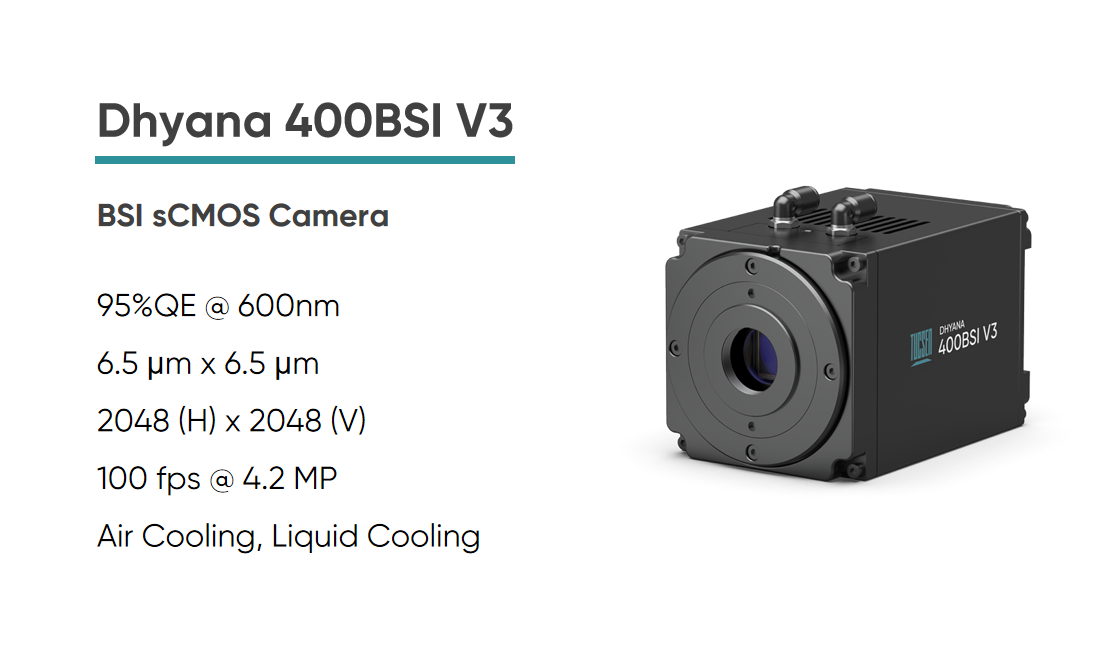
In practice, this is the kind of workflow where a timing-capable rolling shutter sCMOS camera becomes especially valuable. For example, cameras such as Tucsen’s Dhyana 400BSI V3 sCMOS camera combine rolling/global reset operation with hardware trigger support, making them easier to integrate into multi-channel microscopy workflows that depend on controlled illumination and clean timing coordination.
What the trade-off can look like in practice
The trade-off is that some cycle time is no longer used for useful light collection. Compared with a simple free-running rolling shutter workflow, pseudo-global timing can reduce usable exposure efficiency if not designed carefully. But in many multi-channel experiments, that trade-off is worthwhile because cleaner channel timing and better light efficiency can matter more than squeezing every part of the frame cycle for throughput.
Conclusion
Pseudo-global shutter is not a true global shutter replacement, but it can be a highly practical timing strategy in the right imaging system. When illumination can be controlled precisely, it helps rolling shutter cameras deliver cleaner temporal separation, better channel consistency, and more efficient synchronization with external hardware.
If you are building a timing-sensitive scientific imaging workflow, Tucsen’s experience in trigger-aware camera design and synchronized imaging applications can help you evaluate whether pseudo-global shutter is the right fit for your system. You can also explore Tucsen’s scientific cameras to see how different trigger and timing capabilities match different microscopy and imaging workflows.
Tucsen Photonics Co., Ltd. All rights reserved. When citing, please acknowledge the source: www.tucsen.com


