

 2026/04/20
Dark current refers to the thermionic emission, or thermal excitation, of electrons by an image sensor even in the absence of light input. It is typically expressed in e⁻/s/pixel, and its effect grows with exposure time because these thermally generated electrons continue to accumulate during the acquisition. The magnitude of dark current is also strongly associated with sensor temperature: the higher the temperature of the image sensor, the higher the dark current.
In camera systems, dark current matters because it does not remain only a sensor specification on a datasheet. As it builds up, it can change the appearance of the image itself by raising the background, introducing bright defective pixels, and increasing unwanted noise. This article focuses on those practical image-quality effects and on why cooling becomes especially important in longer-exposure imaging.
Why Dark Current Changes Image Quality?
Dark current changes image quality because it adds unwanted signal even when no light is present. As thermally generated electrons accumulate in the pixels during exposure, they create a background signal that is not part of the real image information. The longer the exposure time, the more this unwanted charge can build up, making its effect more visible in the final image.
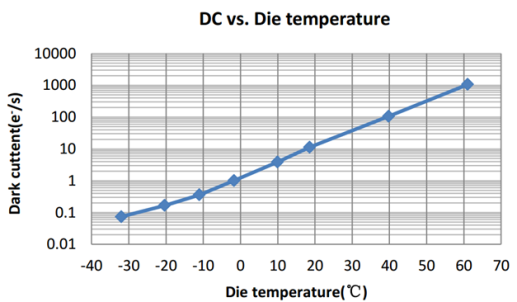
Figure 1: The specific phenomenon that the dark current ascends significantly with the rise of temperature.
Its impact becomes stronger as sensor temperature rises. When the working temperature of the image sensor increases, dark current rises as well, which means more thermally generated electrons are added during the same exposure period. This is why dark current-related image degradation is often much more obvious in warm operating conditions or in workflows that require longer acquisitions.
In practical imaging, dark current matters because it can reduce contrast, interfere with weak-signal visibility, and make the image appear less clean even before other sources of noise are considered. For that reason, dark current should be understood not only as a sensor characteristic, but also as a direct image-quality factor—especially in low-light and long-exposure applications.
The Main Image Quality Effects of Dark Current
There are three main ways dark current directly affects image quality: background rise, hot pixels, and noise increase. All three come from the same root cause—the accumulation of thermally generated electrons in the pixels over the exposure time.
Background Rise
One of the most direct effects of dark current is an increase in image background. Even in the absence of light, thermally generated electrons continue to accumulate in the sensor, adding unwanted signal to the image. As this background rises, weak image details can become harder to distinguish, especially in low-light imaging where the useful signal is already limited.
Hot Pixels and Nonuniformity
Dark current can also lead to hot pixels, which are pixels that appear abnormally bright during longer exposures because of increased charge leakage or locally elevated dark current. These pixels do not represent real image information, yet they can become highly visible in dark-field or long-exposure imaging. As exposure time increases, pixel-to-pixel variation in dark current can make the image look less uniform and reduce overall image cleanliness.
Noise Increase
Another important effect is noise growth. As dark current accumulates, it introduces additional statistical fluctuations that make the image appear less clean. In practical terms, this means that dark current does not only raise the image baseline, but can also reduce the visibility of weak signals by increasing the noise associated with the image background.
These image-quality effects become more serious as exposure time increases. For that reason, shorter exposures—or effective cooling of the camera—can help reduce their impact and improve the final image.
Why Exposure Time and Temperature Make the Problem Worse?
Exposure time is a critical factor in how strongly dark current affects an image. Because thermally generated electrons continue to accumulate in the pixels during the acquisition, longer exposures allow more unwanted signal to build up. As a result, image-quality problems related to dark current become much more visible over time, especially when the true optical signal is weak.
Temperature makes the problem worse in a similar way. The magnitude of dark current is strongly associated with sensor temperature, so as the temperature rises, more thermally generated electrons are produced during the same exposure period. This is why dark current can increase significantly under warmer operating conditions and why temperature control plays such an important role in maintaining image quality.
When long exposure time and elevated sensor temperature occur together, the image-quality impact becomes much more pronounced. Background can rise further, hot pixels become more visible, and the image may appear less clean overall. In practical terms, this means that dark current may remain a minor concern in short exposures, but become a major image-quality limit in long-exposure, low-light imaging.
For that reason, exposure time and temperature should always be considered together when evaluating dark current risk. A camera that performs well in short-exposure imaging may show much more obvious dark-current-related image degradation when exposures are extended or sensor temperature is allowed to rise.
How Cooling Helps—and What It Does Not Solve?
Cooling helps reduce dark current by lowering the sensor temperature, which in turn reduces the thermally generated charge carriers that accumulate during an exposure. Because dark current rises strongly with temperature, cooling can make a substantial difference in long-exposure image quality, especially when weak signals must be preserved against a clean background. This is why cooling is such an important strategy in cameras designed for low-light or long-exposure imaging.
In practical camera design, two common approaches are air cooling and liquid cooling. Air cooling typically uses a heat sink and fan to remove heat from the camera body, while liquid cooling relies on an external circulating coolant system to carry heat away more efficiently. In Tucsen’s portfolio, some cameras use air cooling, while higher-performance models such as the Dhyana 95 V2 and Dhyana 400BSI V3 support both air and liquid cooling configurations for more demanding long-exposure workflows.
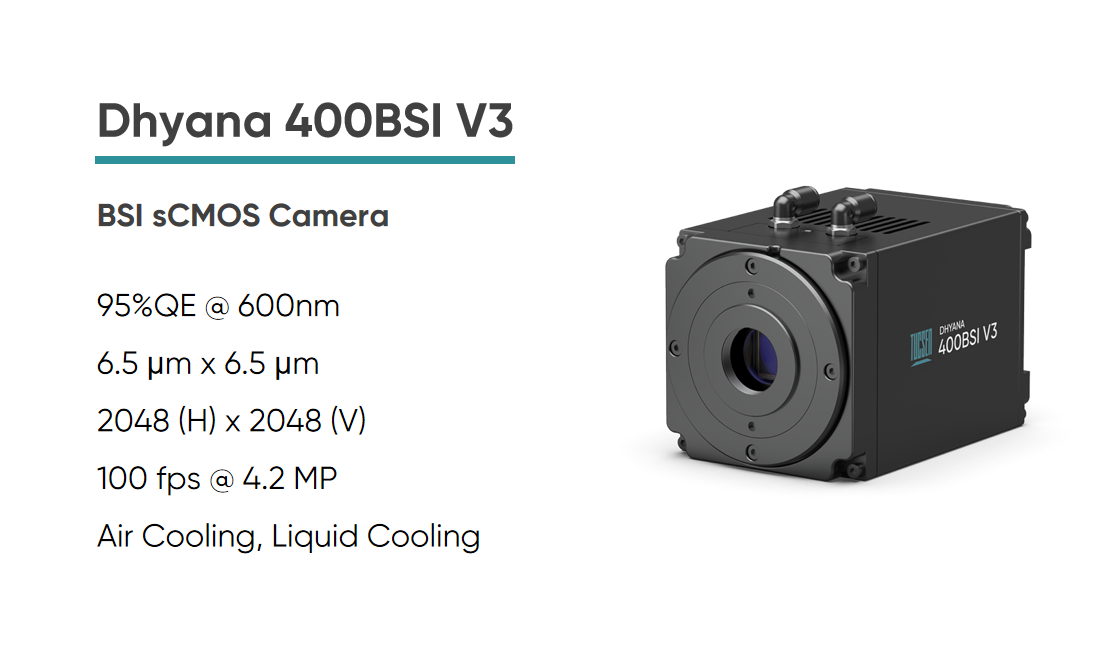
Figure 2: Tucsen Dhyana 400BSI V3 BSI sCMOS camera
Cooling becomes especially important when exposure times are long. Dark current continues to accumulate with time, so temperature control has much greater significance when a camera is required to work under very weak illumination with long exposures. In these conditions, reducing sensor temperature can make long-exposure imaging much more usable and consistent. Deep-cooled cameras may use multi-stage Peltier cooling, or even liquid-nitrogen-based approaches in more extreme systems, to reduce sensor temperature substantially for demanding applications.
At the same time, cooling does not solve every image-quality problem by itself. It reduces one important source of unwanted signal and noise, but it does not eliminate other performance limits such as read noise, optical limitations, or workflow constraints. Cooling should therefore be understood as a highly effective tool for controlling dark-current-related degradation, not as a complete replacement for broader camera and system evaluation.
When Dark Current Image Quality Effects Matter Most?
Dark current image quality effects matter most when exposures are long enough for unwanted thermal charge to accumulate visibly in the image. In these workflows, dark current does more than remain a background specification on a datasheet. It can raise the image baseline, make hot pixels more obvious, and reduce the visibility of weak details by increasing background-related noise.
Its impact becomes even more important when the useful signal is weak. In low-light imaging, dim structures or faint signals are already harder to preserve, so any increase in unwanted background or noise has a greater effect on the final image. Under these conditions, dark current can become a meaningful limit on image cleanliness and contrast, especially when exposure times are extended.
By contrast, the visible image-quality effect of dark current may be much smaller in bright, short-exposure workflows. If exposures are brief and signals are strong, dark current may contribute very little compared with the useful image information. This is why the severity of dark-current-related image degradation should always be judged in context rather than assumed to be equally important in every application.
For practical evaluation, the key question is not simply whether dark current exists, but whether it becomes visible enough to interfere with the intended image quality. That is most likely in long-exposure, weak-signal, and dark-background imaging workflows, where preserving a clean image is especially important.
A Practical Checklist for Evaluating Dark Current Image Quality Risk
When assessing the image-quality impact of dark current, it helps to move beyond the specification value alone and consider how it affects the actual imaging workflow. The following questions can serve as a practical checklist:
● Are the exposure times long enough for dark current to accumulate visibly?
The longer the exposure, the more opportunity dark current has to raise the image background and increase unwanted noise.
● Are faint signals being measured close to the background?
When weak details must remain visible, even a moderate increase in background or noise can reduce image quality.
● Is hot-pixel behavior likely to affect analysis or interpretation?
In long-exposure imaging, pixel-to-pixel variation in dark current can become much more obvious and interfere with clean image presentation.
● Will sensor temperature be high enough to worsen dark current effects?
If the camera is operating under warmer conditions or for extended periods, dark-current-related image degradation may become more noticeable.
● Would cooling materially improve the workflow?
In long-exposure and low-light imaging, better thermal control can significantly reduce dark-current-related background rise and image degradation.
● Is dark current a bigger image-quality risk than other factors?
In some workflows, optics, read noise, or signal level may still be more limiting than dark current.
This kind of checklist helps translate dark current from a technical specification into a more useful image-quality evaluation tool.
Conclusion
Dark current affects image quality most clearly by raising background, increasing noise, and making nonuniform artifacts such as hot pixels more visible in longer exposures. Its impact becomes much more important when exposure times are extended, signals are weak, and preserving a clean image background is essential.
At the same time, dark current should always be judged in context. In bright, short-exposure workflows, its visible effect may be limited. In long-exposure, low-light imaging, however, it can become a meaningful barrier to image quality and consistency. The key question is not simply whether dark current exists, but whether it is large enough to interfere with the image quality the application requires.
For users working with demanding low-light or long-exposure workflows, Tucsen offers camera solutions designed to support cleaner image acquisition and better thermal performance. If dark current is likely to limit your results, exploring Tucsen’s cooled and low-noise camera options can be a practical next step.
Related article:
Understanding Dark Current in cameras: Causes, Noise, and Mitigation
When Low Dark Current Matters in camera systems?
Tucsen Photonics Co., Ltd. All rights reserved. When citing, please acknowledge the source: www.tucsen.com


