

 2026/02/13
Common Misconceptions
Low-light imaging is often considered the most demanding scenario for signal-to-noise ratio (SNR). High quantum efficiency and low readout noise are typically assumed to guarantee optimal sensitivity. Yet, in practice, feedback from users often reveals:
“Even with a camera having readout noise below 1 e⁻, weak signals are still hard to distinguish.”
“Increasing the camera gain makes images brighter, but quantitative results don’t improve.”
“Longer exposure leads to dirty backgrounds, and SNR actually worsens.”
Are these issues a failure of specifications? Addressing them requires returning to the fundamental nature of SNR.
Understanding SNR in Low-Light Imaging
Camera SNR describes the ratio between signal electrons generated by incident photons and image noise. Higher SNR corresponds to clearer images and better imaging quality.
However, an image is not simply “captured” — it is generated through a complex chain: photons → electrons → analog signal → digital signal → image. Each stage can introduce noise unrelated to the signal.
For sCMOS cameras, SNR can be approximated as:
SNR = S √(S + R2 + D·t)
● S: Signal electrons (determined by photon count, quantum efficiency, pixel area)
● D: Dark current (temperature-dependent)
● t: Exposure time (application-dependent)
● R: Readout noise (assumed time-stable, random)
Low-light imaging challenges arise because signal electrons are limited, and the camera system must both convert the finite light signal and suppress all noise contributions — a high bar for fidelity and data reliability.
Noise Sources and Optimization Strategies
Achieving high-fidelity imaging and reliable data requires understanding the physical origin of each noise source. Despite widespread use of high-sensitivity chips, only a few manufacturers truly master high SNR imaging technology.
01. Readout Noise — Determines Sensitivity Threshold
Scenario Analysis:
In high-speed, low-light imaging, incident photon counts per frame are often extremely low (≤10 e⁻/pixel). Time constraints or dynamic sample processes limit signal accumulation.
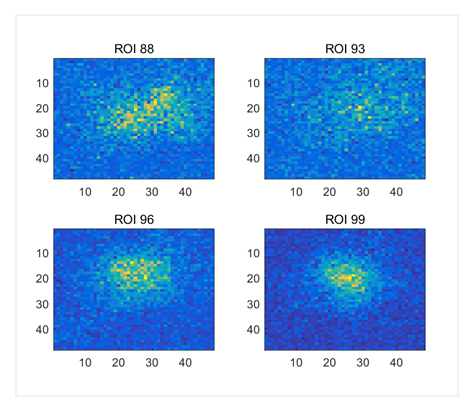
Figure 2: Weak-light imaging example — single-atom trap trace analysis
Under these conditions, readout noise becomes the main factor limiting minimum detectable signal, directly affecting whether weak signals can be resolved.
Applications:
● Biology: Single-molecule localization
● Physics: Quantum signal detection
● Industry: Low-contrast flat-panel inspection
Optimization Strategies:
Readout noise arises when pixel charge is converted to voltage, amplified, and digitized. It increases with readout speed.
● Reduce readout frequency to lower noise contribution
● Improve camera electronics to minimize noise introduction
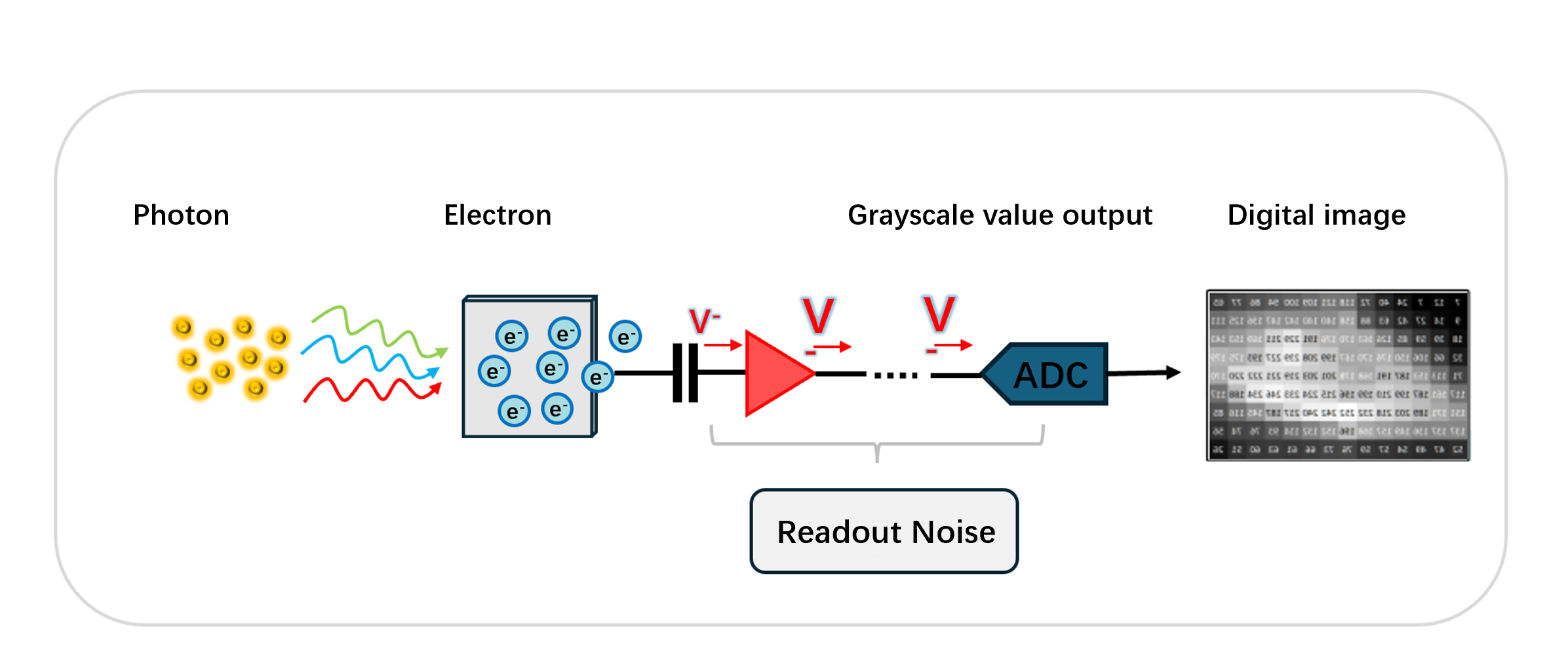
Figure 3 Physical Mechanisms of Readout Noise Generation
Tucsen Advantage:
Tucsen has over a decade of expertise in ultra-low noise circuit design, working closely with sensor manufacturers. This enables firmware- and driver-level optimization, fully leveraging sensor performance at the system level.
02. Dark Current — Critical in Long Exposure
Scenario Analysis:In many low-light applications, longer exposure is required to accumulate sufficient signal. Here, dark current becomes a significant SNR factor.
Applications:
● Biology: Bioluminescence imaging
● Astronomy: Deep-sky long-exposure observation
● Industry: PL / EL emission inspection
Optimization Strategies:Dark current arises from thermally generated electrons in the silicon lattice. It follows Poisson statistics and scales with exposure time. Cooling is the primary method to reduce it.
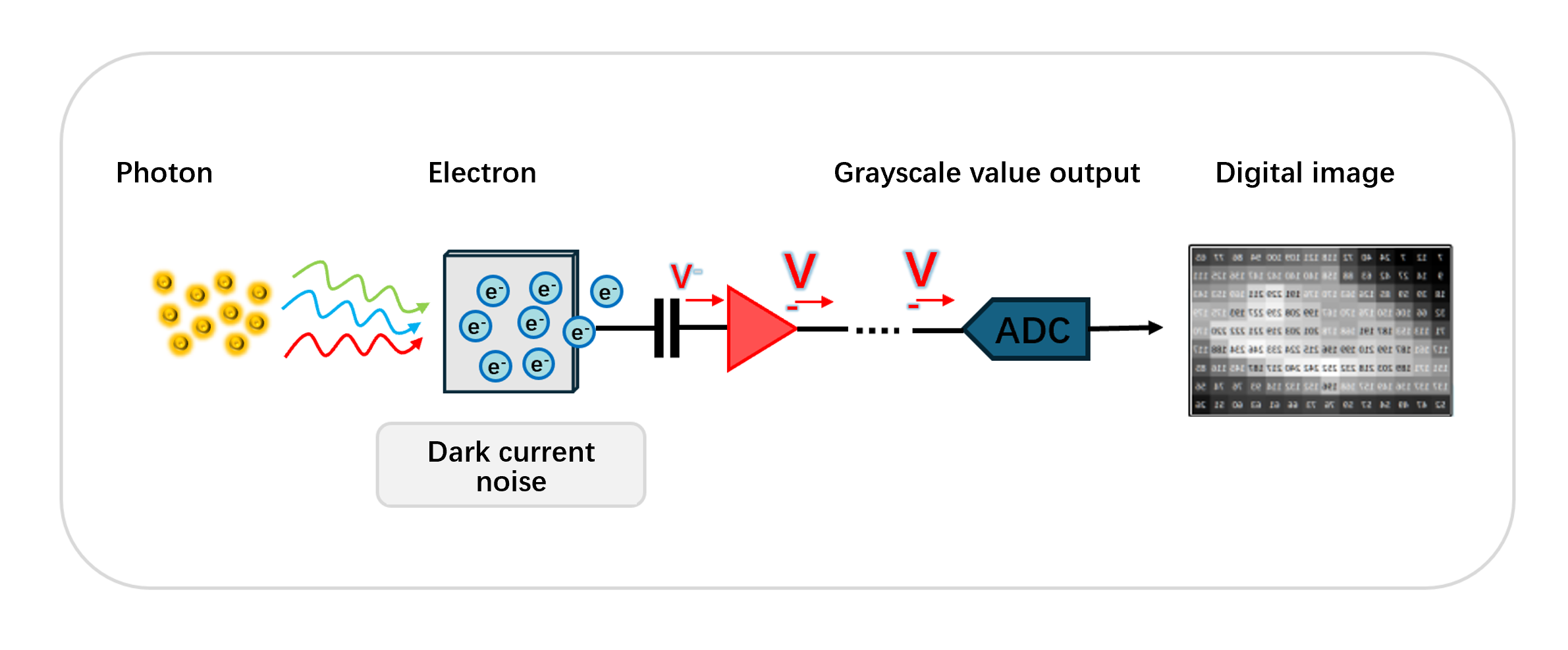
Figure 4: Dark current mechanism illustration
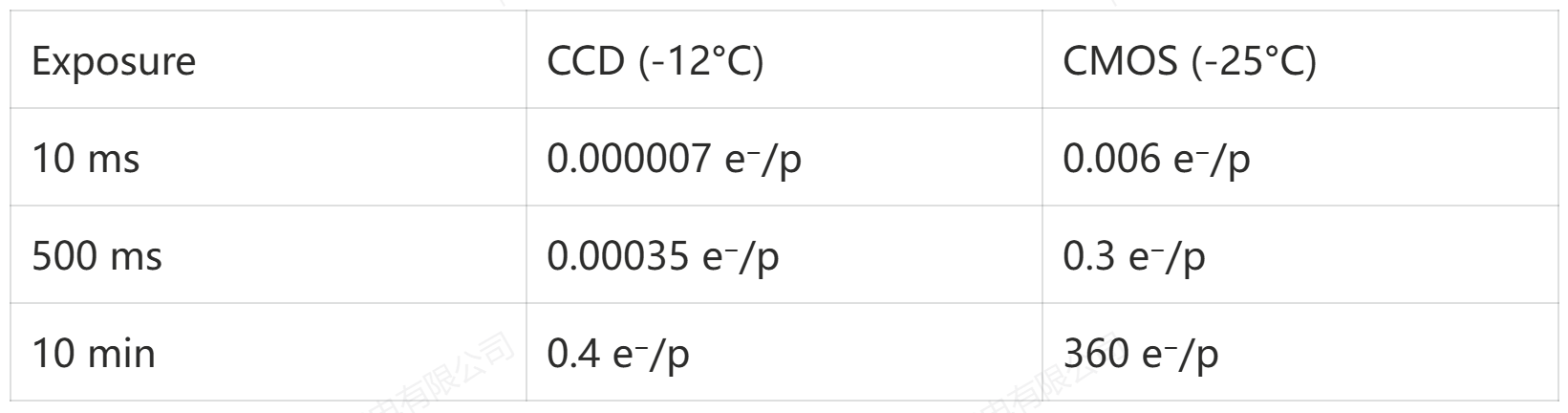
Table 2: Dark current performance under long exposures
Tucsen Advantage:Tucsen’s FL series uses high-reliability TEC cooling, achieving dark current as low as 0.0005 e⁻/p/s, maintaining high SNR even for multi-minute exposures.
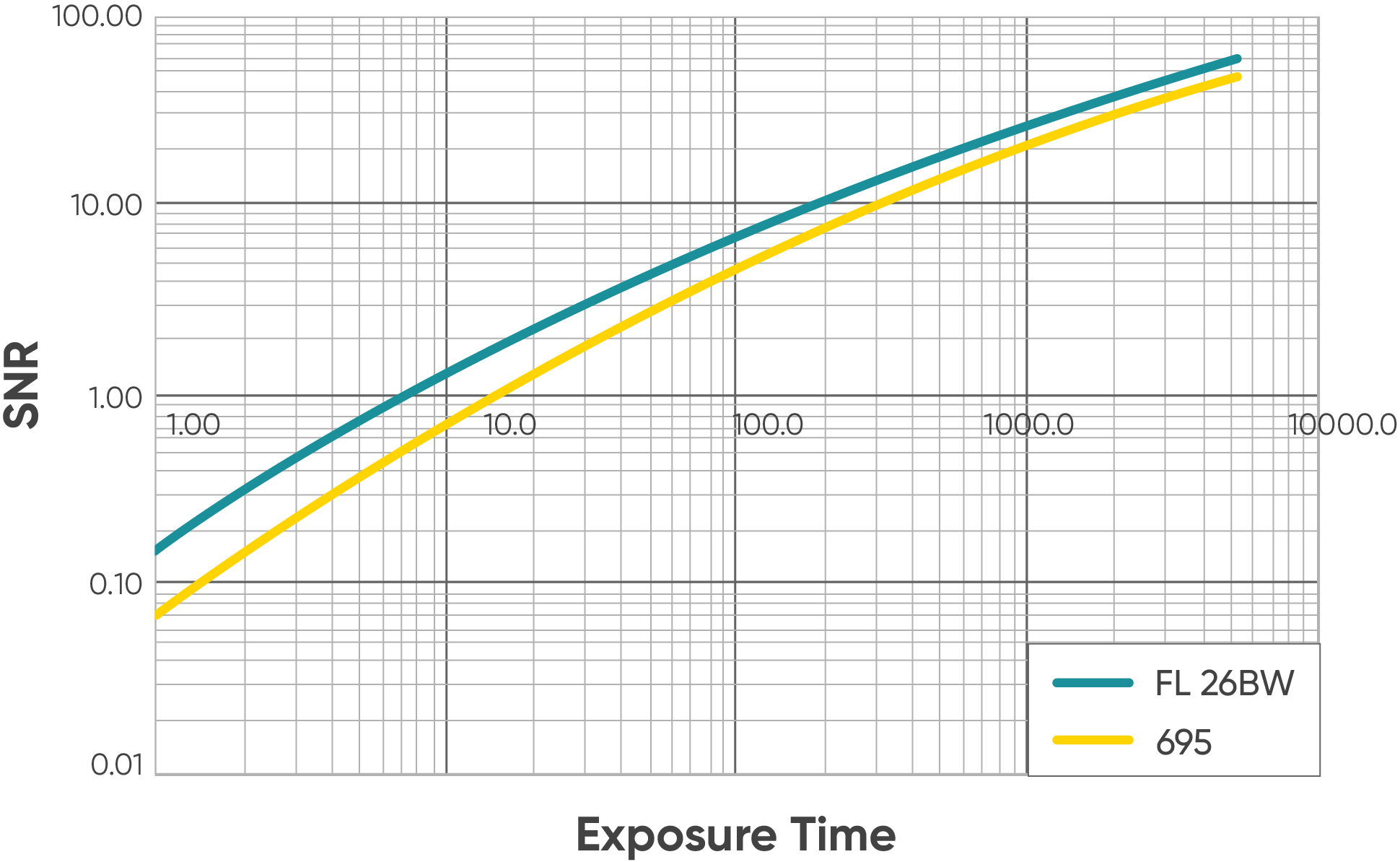
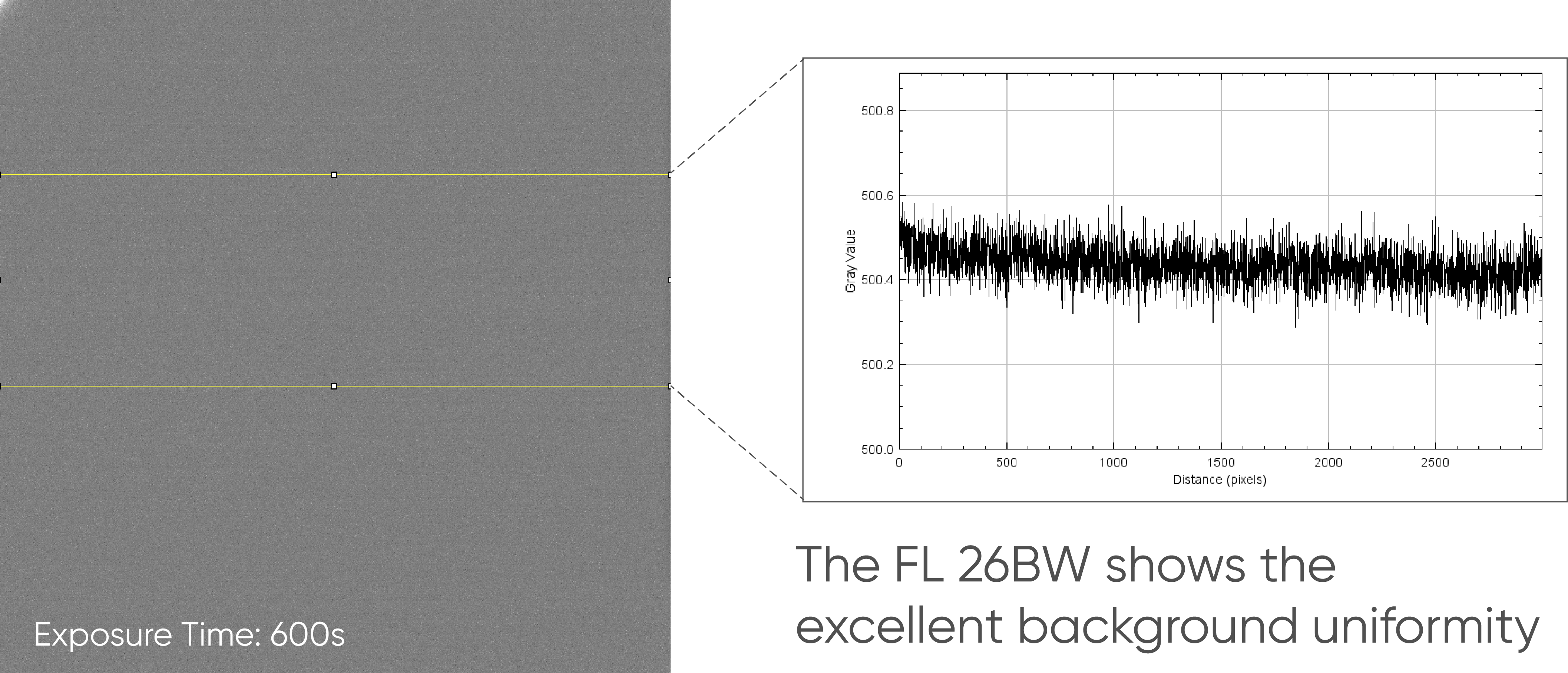
Figure5: FL 26BW vs CCD (ICX695) under 30-min exposure; FL 26BW maintains low background noise and uniformity
03. Photon Shot Noise — Camera “Soft Power”
Scenario Analysis:When per-frame signals exceed ~100 e⁻/pixel, shot noise becomes the dominant SNR factor.
Applications:
● Biology: Wide-field fluorescence
● Physics: Fluorescence spectroscopy
● Industry: Wafer surface bright-field inspection
Optimization Strategies:Shot noise is intrinsic to photon arrival statistics:
Shot noise (e−) = √(signal electrons) = √(photons × QE)
● Use high-QE cameras matched to the spectral band or increase exposure
● Suppress background and apply algorithmic corrections to reduce non-signal photons
Tucsen Advantage:Tucsen cameras cover X-ray, UV, visible, and NIR bands and include Mosaic image processing software, which provides real-time background subtraction, 3D noise reduction, and ROI analysis, enhancing interpretability and quantitative reliability.
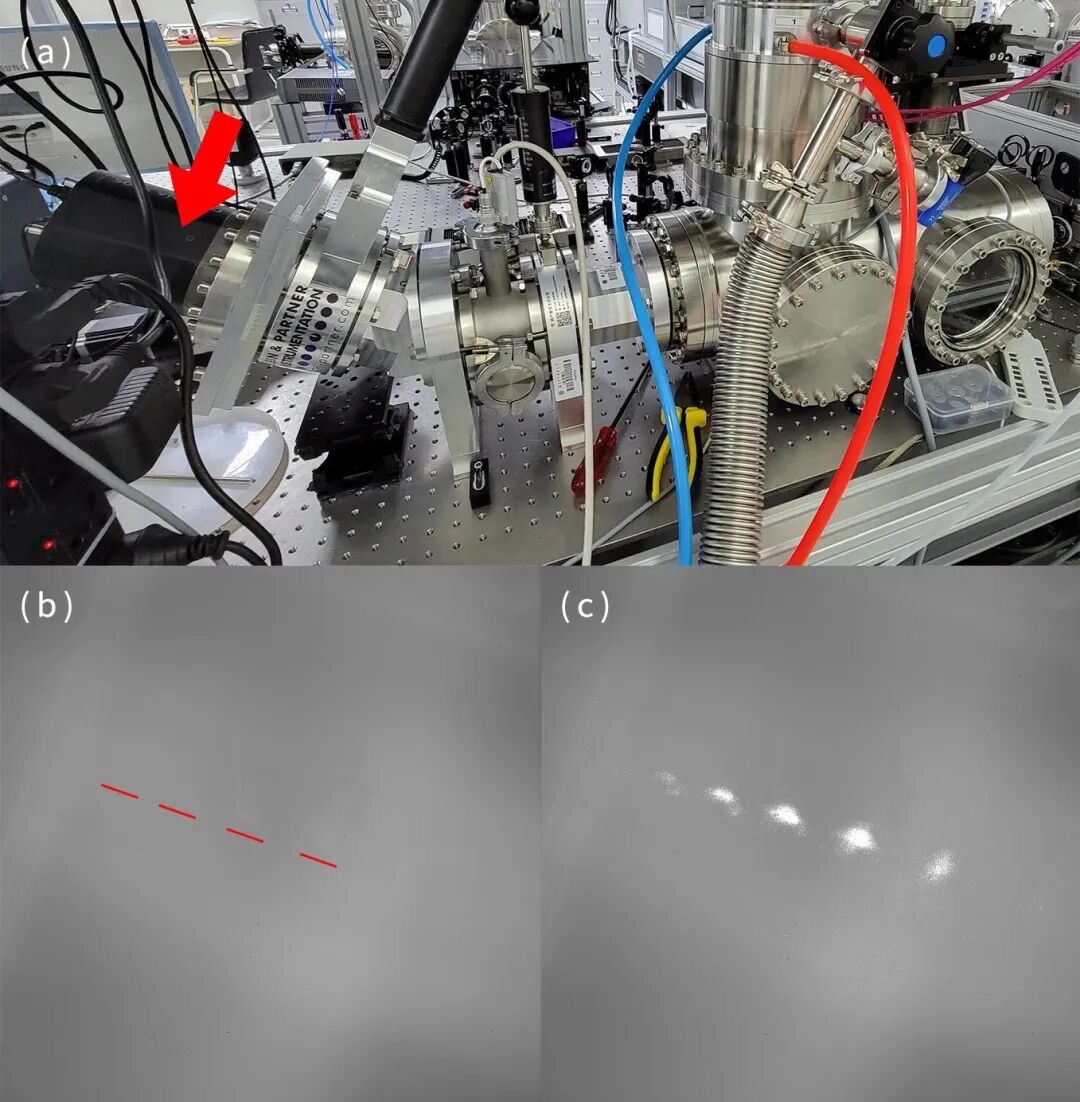
Figure 6: Example — gas high-harmonic detection before and after Mosaic real-time background subtraction
Summary — SNR × Low-Light Imaging
High-fidelity signal output requires both system-level camera design and deep understanding of photon statistics.
Tucsen integrates ultra-low readout noise design, reliable TEC cooling, and advanced image processing, providing a system-level low-light optimization solution — enabling quantitative, reproducible, and physically interpretable imaging for both scientific research and industrial inspection.
Contact Us:For low-light imaging challenges, consult Tucsen engineers for professional guidance and tailored solutions.


