

 2026/04/21
When you evaluate a camera, effective area is one of the specifications that directly affects how much of the projected image can be captured in a single frame. In simple terms, it describes the physical size of the sensor region that detects light and forms the image. In a fixed optical setup, a larger effective area can often provide a wider field of view and improve coverage efficiency by showing more of the sample at once.
However, effective area should not be interpreted in isolation. Its value depends on how well the camera sensor matches the rest of the imaging system, including the optics, the usable image circle, and the physical mount. A larger sensor can be very useful, but only when the optical path can fully support it. That is why effective area is best understood not just as a number on a specification sheet, but as a practical parameter that influences field of view, optical matching, and overall imaging efficiency.
What Is an Effective Area?
The effective area of a camera is the physical size of the sensor region that is able to detect light and form an image. It is usually given as X and Y dimensions, typically in millimeters, representing the width and height of the active imaging area.
This specification matters because it describes the real size of the image-recording area on the sensor, not just the number of pixels. Larger sensors often contain more pixels, but this is not always the case, since the final sensor area also depends on pixel size. Two cameras may have similar resolutions while using different sensor dimensions, and two cameras with different resolutions may still have similar effective areas if their pixel sizes differ.
In practical terms, effective area helps explain how much of the projected image can be captured by the camera. That is why it is closely tied to field of view and system matching in many camera systems setups.
Is Effective Area the Same as Active Area, Image Area, or Sensor Size?
In many scientific cameras specifications, effective area is closely related to terms such as active area and image area. In practice, these terms are often used to describe the portion of the sensor that actually participates in image formation. Depending on the manufacturer and the product line, the wording may differ, but the underlying idea is usually similar: this is the usable physical region of the camera sensor that records the image.
Sensor size, however, can be a little more confusing. In some cases, it refers to the general format of the sensor, while in others it is used more loosely as shorthand for the sensor’s overall dimensions. That is why effective area is often the more useful specification when you want to understand real imaging coverage. It tells you the actual width and height of the region that contributes to the image, which makes it more directly relevant to field of view and optical matching.
For that reason, when comparing cameras, it is usually better to rely on the effective area or the true physical sensor dimensions rather than on broad format labels alone. That gives you a clearer picture of how much of the projected image the camera sensor can actually capture.
Why Does Effective Area Affect Field of View?
In the same optical setup, a larger effective area can capture a larger portion of the image projected by the lens or microscope, which usually means a wider field of view in a single frame.
When Pixel Count Increases but Pixel Size Stays the Same
When pixel count increases while pixel size remains the same, the sensor usually becomes physically larger. In that case, the effective area grows, and the camera can often record a larger portion of the projected image. This means the field of view may also increase, provided the optical setup can illuminate the larger sensor area properly. In practical terms, this is one of the clearest cases where higher pixel count and wider coverage can increase together.
When Pixel Count Increases by Shrinking Pixel Size
A higher pixel count does not always mean a wider field of view. If the extra pixels come from smaller pixel size rather than a larger sensor, the effective area may stay similar even though resolution increases. In that case, the camera records the image with denser sampling, but not necessarily with wider coverage. This distinction matters because effective area determines how much of the projected image is captured, while pixel size helps determine how finely that image is sampled.
Why Can a Wider Field of View Improve Imaging Efficiency
A wider field of view can improve imaging efficiency because it allows the camera to capture more of the sample in a single frame. This can reduce the need for stitching, preserve more surrounding context, and improve screening efficiency in workflows that benefit from larger-area coverage. In applications where throughput matters, a larger effective area can help the system gather useful image information more efficiently, as long as the optics and sensor are well matched.
How Does the Optical Setup Limit the Usable Effective Area?
A larger camera sensor only helps when the optical system can project an image large enough to use that sensor area well. Once the usable image formed by the optics reaches its limit, increasing sensor size alone will not continue to deliver more meaningful field of view. That is why effective area must always be considered together with the optical path.
Image Circle and Usable Sensor Coverage
Every optical system can support only a certain projected image area at the sensor plane. If the image circle is smaller than the sensor, the outer part of the sensor may not receive fully usable image information. In that case, the sensor may be physically larger, but not all of its effective area contributes equally to the final image. A larger sensor adds real value only when the usable image circle is large enough to cover it well.
Microscope Field Number, Ports, and Adapters
This relationship is especially important in microscope imaging systems. Many microscope setups deliver a limited circular image field to the camera, and the usable coverage depends not only on the optics themselves but also on the field number, camera port, and any adapter in the optical path.
For example, if a microscope system projects an image field of about 22 mm in diameter, a sensor with an effective area of 15.5 mm on each side can fit within that usable field. A larger sensor may require optics or coupling components that support a wider projected image. It may also require a different physical mount so that the larger sensor can be accommodated without blocking parts of the image.
What Happens When the Sensor Is Too Large for the Optical Path
When the sensor is too large for the optical path, the system may not provide additional useful image information across the full sensor area. Instead, the outer regions may suffer from blocked edges, underused sensor area, dark corners, or reduced edge performance. In these cases, the expected gain from a larger sensor is not fully realized, because the limiting factor is no longer the camera itself, but the optical system.
When the optics, image circle, and mount are all matched correctly, a larger sensor can capture more of the sample in one frame, preserve more context, and improve imaging efficiency. The key point is that larger sensor area only adds value when the rest of the imaging system can make use of it.
Why Are Effective Areas Not Be Evaluated Alone?
Effective area is an important specification, but it does not determine imaging performance by itself. A larger effective area can increase field of view and improve coverage, yet that advantage only becomes meaningful when it is considered together with pixel size, resolution, optical resolution, and the demands of the imaging workflow.
Effective Area vs Pixel Size and Resolution
Effective area, pixel size, and resolution describe different aspects of camera performance. Effective area tells you how much of the projected image can reach the sensor. Pixel size influences how that image is sampled and how much light each pixel can collect. Resolution tells you how many pixels are available to record that image.
These specifications are related, but they are not interchangeable. A camera with more pixels may provide higher resolution, but that does not always mean it captures a wider field of view. If the higher pixel count comes from smaller pixels rather than a physically larger sensor, the effective area may stay nearly the same. In that case, the camera records the image with finer sampling density rather than broader coverage.
For this reason, a larger effective area is not automatically the better choice if its pixel size and resolution are poorly matched to the optical system or the application. This is one reason why users often compare different sCMOS cameras based not only on sensor size, but also on pixel size, sampling, and optical matching. In some cases, a smaller sensor with a more appropriate balance of area, pixel size, and resolution may produce a better overall result.
Effective Area vs Optical Resolution
The usable value of effective area also depends on what the optics can resolve. A large sensor does not improve image detail if the optical system cannot project enough meaningful resolution across that field. In practical terms, the camera can only record the information delivered by the optics. If the lens or microscope cannot maintain image quality across the full sensor area, increasing effective area alone will not fully improve the final result.
Effective Area vs Data Load and Workflow Demands
A larger effective area can increase coverage efficiency, but it may also increase data volume, processing demand, and storage requirements. In some workflows, that trade-off is acceptable because capturing more of the sample in one frame reduces repeated acquisitions. In others, the added data load may not provide a meaningful benefit. For that reason, effective area should always be judged in the context of the full imaging task, not as a standalone specification.
How Do You Choose the Right Effective Area for Your Imaging System?
The right effective area is the one that matches the optical system, the sampling needs of the application, and the practical demands of the workflow. When comparing different CMOS cameras, it is important to look beyond sensor size alone and consider whether the full imaging system is properly matched.
A larger sensor can be valuable because it captures more of the projected image in one frame, but it is not automatically the best choice in every setup. In practice, effective area should be selected based on usable coverage rather than sensor size alone.
When to Prioritize More Coverage
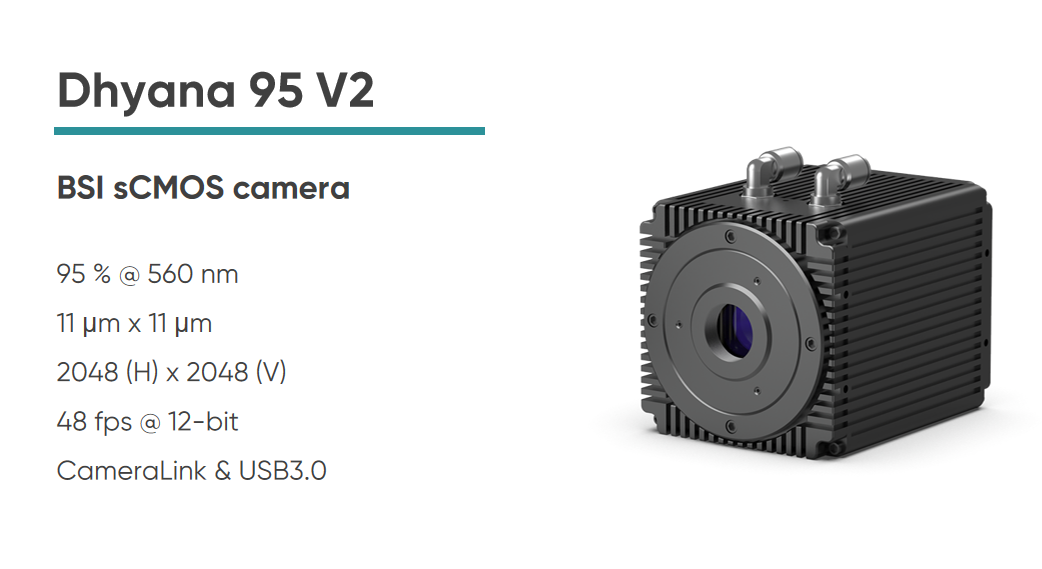
A larger effective area is often the better choice when the imaging task benefits from seeing more of the sample at once. This can be helpful when you want to reduce stitching, preserve more surrounding context, or improve throughput in workflows that involve larger fields or repeated screening. For example, cameras such as Tucsen’s Dhyana 95 V2 sCMOS camera are designed around this kind of advantage, combining a 22.5 mm × 22.5 mm effective area with a 31.9 mm sensor diagonal to support wider single-frame coverage and stronger imaging efficiency in well-matched optical systems.
When to Prioritize Better Sampling
In some applications, the main priority is not wider coverage, but more appropriate sampling of fine image detail. In that case, pixel size and system resolution may matter more than increasing effective area alone. A larger sensor does not automatically improve results if the real need is to match the sampling density to the optical performance of the system. This is why effective area should always be considered together with resolution and pixel size, rather than treated as the only measure of camera suitability.
When Optical Matching Matters More Than Sensor Size
Optical matching becomes the deciding factor when the usable image circle, port size, adapter, or lens performance limits what the camera can actually record. In these situations, choosing a larger sensor may add little practical value if the optics cannot illuminate or resolve that area well. A well-matched system with a moderate sensor size can often perform better than a larger sensor that extends beyond the usable optical field.
When comparing effective area across camera options, it helps to ask a few practical questions. How much of the sample needs to fit into a single frame? Can the optics project a usable image across the full sensor area? Is the current pixel size already well matched to the system’s optical resolution? Will a larger sensor improve workflow efficiency, or simply increase data load without adding meaningful image information? These questions usually lead to a more reliable decision than looking at sensor size alone.
Conclusion
Effective area is more than a specification-table number. It helps determine how much of the projected image a camera can capture in one frame, and it plays an important role in field of view, optical matching, and imaging efficiency. A larger effective area can bring real advantages, but only when it is evaluated together with pixel size, resolution, optics, and the needs of the imaging workflow.
That is why the best choice is not simply the largest sensor, but the one that is best matched to the full imaging system. For users evaluating cameras for different imaging needs and optical setups, Tucsen offers camera options designed to support a wide range of applications. Explore Tucsen cameras to compare sensor formats and find a system that fits your application more effectively.
Tucsen Photonics Co., Ltd. All rights reserved. When citing, please acknowledge the source: www.tucsen.com


