

 2026/05/25
In scientific imaging, analog gain and digital gain are often treated as if they do the same thing because both can make an image look brighter. But they are not the same, and the difference matters more than many users realize.
Analog gain changes the signal before it reaches the analog-to-digital converter, while digital gain is applied after the signal has already been digitized. That difference affects how weak signals are represented, how noise behaves, and how much dynamic range remains before saturation. In other words, this is not just a display issue. It is a data-quality issue.
In this article, we will explain what analog gain and digital gain actually do, how they affect scientific images differently, and how to decide which one makes more sense for your application.
What Is the Difference Between Analog Gain and Digital Gain in a Scientific Camera?
The main difference is simple: analog gain amplifies the sensor signal before ADC conversion, while digital gain rescales pixel values after the signal has already been digitized.
In scientific cameras, light reaching the sensor is converted into an electrical signal. Before that signal becomes a digital pixel value, it passes through the camera’s analog readout chain. When you adjust analog gain, you are changing the amplification applied at this stage. Because this happens upstream of digitization, analog gain can have a real effect on how weak signals are represented relative to the camera’s read noise and output scale.
Digital gain works differently. It is applied after the signal has already been measured and converted into digital values. At that point, the camera is not collecting more photons or recovering hidden information from the sensor. It is simply multiplying existing gray values. This can make an image look brighter, but it does not add new signal content or increase the ADC bit depth.
That is why the two controls should not be treated as interchangeable. Analog gain changes how the signal enters the digital domain. Digital gain changes how already digitized data is scaled afterward. Some scientific cameras allow users to control both. Some expose only one type of gain. Others combine different gain behaviors behind a single user-facing setting.
From a practical imaging standpoint, the real question is not which one makes the image brighter. It is which one changes the data in a more useful way for the imaging task. In scientific work, that usually means thinking about weak signal visibility, read noise, dynamic range, and how much reliable measurement information remains in the final image.
How Does Analog Gain Affect Noise and Dynamic Range?
Analog gain can make weak signals easier to represent, but it also reduces the signal range available before saturation.
Because analog gain is applied before ADC conversion, it increases the amplification of the sensor signal during readout. In practical terms, this means that a smaller number of photoelectrons can occupy a larger portion of the camera’s digital output range. That can be helpful when you are working with faint structures or low-light signals, because weak intensity differences are represented more strongly in the final image.
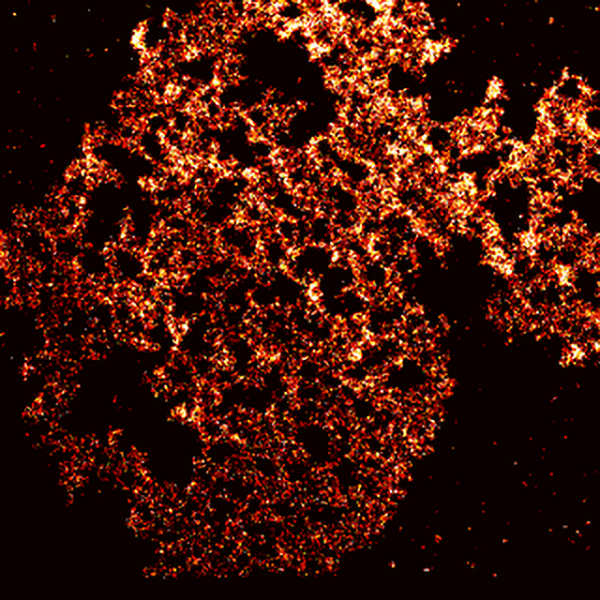
This is one reason analog gain is often associated with improved sensitivity. In many camera architectures, raising analog gain also reduces the effective impact of read noise when the signal is converted into digital values. As a result, dim features may become easier to separate from the noise floor. This is especially relevant in single-molecule fluorescence and other weak-signal imaging applications, where making very small signal differences more visible can matter more than preserving the widest possible dynamic range.
However, analog gain is always a trade-off. When the signal is amplified more strongly before digitization, the available output range is used up more quickly. In practice, this means the camera reaches saturation with fewer collected electrons than it would at a lower gain setting. The physical full well of the pixel does not change, but the effective full well capacity within the output scale becomes smaller. That is why higher analog gain usually reduces usable dynamic range.
So, analog gain is not simply a “better brightness” control. It is a balance between two competing goals: making faint signals more usable and preserving enough headroom for brighter ones. The right setting depends on what matters more in the image. If weak detail is the priority, higher analog gain may help. If highlight retention and broad signal range matter more, lower gain is often the safer choice.
What Does Digital Gain Actually Do to the Image?
Digital gain changes the scale of image data after digitization, but it does not improve the original measurement.
Once the sensor signal has already passed through the analog readout chain and been converted by the ADC into pixel values, the core measurement step is finished. If digital gain is applied after that point, the camera is not collecting more light, recovering lost detail, or creating new signal information. It is simply multiplying the digital values that already exist.
That is why digital gain can make an image look brighter without making the underlying data better. If a faint feature was poorly separated from noise before digital scaling, multiplying the pixel values afterward will scale both the feature and the noise together. The image may become easier to view on screen, but that does not mean the measurement itself has improved.
Digital gain can also reduce the effective output headroom before digital saturation. Since the available output code range does not expand, stronger scaling pushes values toward the maximum more quickly. In practice, this means bright regions may clip sooner within the digital output range, even though the sensor itself has not physically changed. In addition, fractional digital scaling can introduce small rounding effects or a slight loss of precision, especially when data is repeatedly rescaled in downstream workflows.
That does not mean digital gain has no value. It can still be useful for live preview, display adjustment, matching image brightness across workflows, or making data easier to inspect quickly. But in scientific imaging, it should usually be understood as a representation control, not a true substitute for better signal capture or more meaningful pre-ADC amplification.
When Is Digital Gain Still Useful?
Digital gain is still useful when the goal is display adjustment or workflow convenience rather than improving the original measurement.
In practice, digital gain can help during live preview, quick image inspection, or situations where output brightness needs to be matched across displays or software environments. It is especially useful when users want faint features to appear more visible on screen without changing acquisition settings.
Still, its role should be kept in perspective. Digital gain changes how the image is presented, not how the signal was originally captured. If weak-signal fidelity, dynamic range control, or quantitative reliability are important, digital gain is usually best treated as a secondary adjustment rather than the main tool for improving image quality.
Can a Camera Offer Both Analog Gain and Digital Gain?
Yes. Some scientific cameras allow control of both, while others expose only one type of gain or hide the difference behind a single user setting.
Camera gain behavior depends heavily on design. In some systems, the user can independently adjust analog gain and digital gain. In others, only one gain control is visible in software, even though more than one type of scaling may exist inside the camera pipeline. There are also cameras where gain changes are linked to operating modes, sensor architecture, or automatic control logic, so the user may not always see a clean separation between the two.
That is why gain settings should not be interpreted only by the label shown in software. A control named “gain” may refer mainly to analog amplification, mainly to digital scaling, or to a combination that depends on the mode. In some cameras, changing gain may also affect related parameters such as dynamic range, read noise behavior, frame rate, or output bit depth.
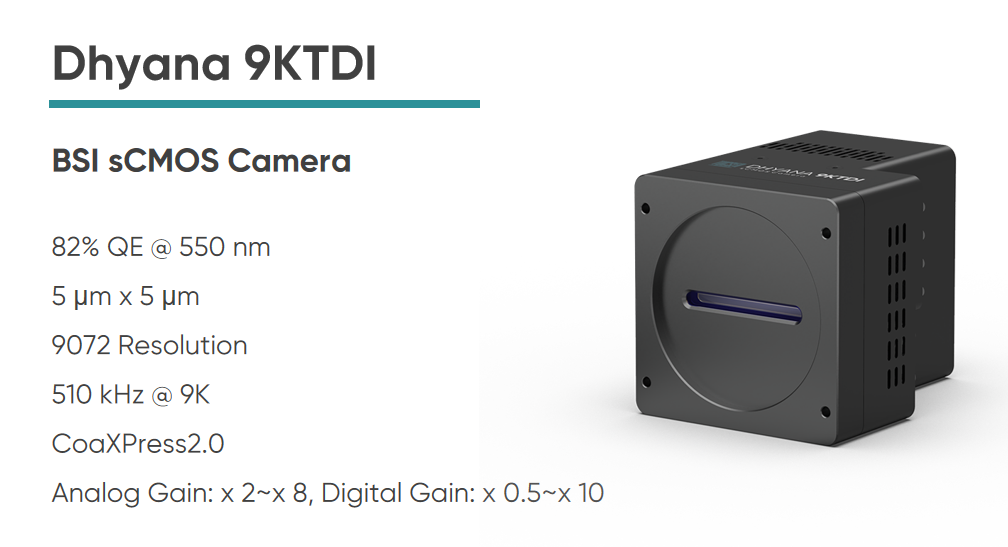
For example, public documentation for Tucsen’s Dhyana 9KTDI sCMOS camera shows separate AnalogGain and DigitalGain controls, making it a useful case of a scientific camera that provides access to both types of gain. This kind of design can give users more flexibility when they need to balance weak-signal visibility, grayscale scaling, and workflow requirements.
For that reason, users who want a more accurate understanding should check the camera’s technical documentation, specification sheet, or mode descriptions rather than assuming that all gain controls behave the same way across different models.
How Should You Choose Between Analog Gain and Digital Gain?
Use analog gain when you need weak signals to be represented more effectively before digitization, and use digital gain mainly when you need output scaling after the signal has already been measured.
A simple way to choose is to start with the real goal. If the problem is signal capture, analog gain is usually the more important setting. If the data is already adequate and the main need is a brighter or more convenient display, digital gain is often enough.
Here is the fast decision guide:
|
If You Need... |
Better Choice |
Why |
|
Better representation of faint signals |
Analog gain |
Acts before ADC |
|
Lower effective impact of read noise |
Analog gain |
Helps weak signals enter the digital range more effectively |
|
More viewing brightness only |
Digital gain |
Rescales existing pixel values |
|
More highlight headroom |
Lower analog gain |
Preserves more usable output range |
|
Better display convenience during preview |
Digital gain |
Quick post-digitization adjustment |
|
More reliable quantitative capture |
Analog-focused setup |
More directly tied to acquisition conditions |
In most cases, analog gain should be chosen carefully rather than pushed as high as possible. Higher gain can improve low-level visibility, but it also reduces dynamic range and increases the risk of saturation. Digital gain is useful, but usually as a presentation tool rather than a substitute for better signal capture.
A practical rule of thumb is this: if the goal is better data, think about analog gain first. If the goal is mainly better display, digital gain is often enough.
Conclusion
In most scientific imaging workflows, analog gain is the more important setting because it changes how the signal is handled before digitization, while digital gain mainly changes how already digitized data is scaled afterward.
That is why the two should not be treated as interchangeable brightness controls. Analog gain can help weak signals become more usable, but it also reduces available dynamic range before saturation. Digital gain can make images easier to view, but it usually does not improve the underlying measurement. The right choice depends on what matters most in your application: faint signal visibility, dynamic range, quantitative reliability, or workflow convenience.
If you are evaluating gain behavior in a scientific camera, it is worth looking beyond the gain slider itself and understanding how the camera handles signal, noise, and ADC conversion across different operating modes. Tucsen’s scientific imaging solutions are designed to support that kind of application-driven optimization.
Related Article:
CMOS and sCMOS Camera Gain Settings: From Basics to Manual vs Auto
Tucsen Photonics Co., Ltd. All rights reserved. When citing, please acknowledge the source: www.tucsen.com


