

 2026/03/27
Dark current is a camera noise source that depends on both sensor temperature and exposure time. In scientific imaging, that makes it an important specification in some workflows, but not in all of them. At short exposure times, dark current may contribute very little to the final image. At longer exposure times, however, it can become a meaningful source of noise that affects image quality and signal-to-noise performance.
For that reason, the most useful question is not simply whether a camera has low dark current on paper, but whether dark current will actually matter in the intended imaging workflow. This article focuses on that practical question: when low dark current should influence camera choice, and when other specifications may matter more.
Why Dark Current Does Not Matter Equally in Every Imaging Workflow?
Dark current does not affect every imaging application in the same way. Its practical importance depends on how much it contributes relative to the total signal and noise in the image. In workflows with short exposures and strong signal levels, dark current may be small enough to have little effect on overall image quality. In these cases, it is often not the limiting factor in camera performance.
Its importance increases as exposure time becomes longer or the available signal becomes weaker. Because dark current accumulates during the exposure, longer acquisitions give it more time to build up. In low-light or long-exposure imaging, this added contribution can become much more significant, especially when the resulting dark current noise is no longer negligible compared with other camera noise sources.
This is why low dark current should be treated as a context-dependent specification rather than a universal requirement. In some applications, it is critical to successful imaging. In others, it may matter far less than exposure strategy, signal level, or other aspects of camera performance. The key is to judge dark current in relation to the real workflow rather than as an isolated number on a datasheet.
How Exposure Time Changes the Importance of Dark Current?
Exposure time is one of the most important factors in judging whether dark current will affect an imaging workflow. Because dark current accumulates over the course of an exposure, its practical impact depends not only on the sensor specification itself, but also on how long the camera is collecting signal. A low dark current value may make little difference in very short exposures, yet become much more meaningful as exposure time increases.
In short-exposure imaging, dark current often contributes very little to the final image. When exposure times are brief, the amount of thermally generated charge accumulated during each frame may remain small enough to be insignificant compared with the useful signal or with other noise sources. In these cases, dark current is often not the first specification that determines practical camera performance.
A simple example shows why exposure time matters so much. At a dark current of 0.001 e⁻/pixel/s, the dark current noise remains negligible at both 1 ms and 60 s exposure. But a camera with 2 e⁻/pixel/s would contribute about 11 e⁻ of dark current noise in a 60 s exposure, which can become significant in low-light imaging. At 1 ms exposure, however, even this higher dark current level would still contribute very little.
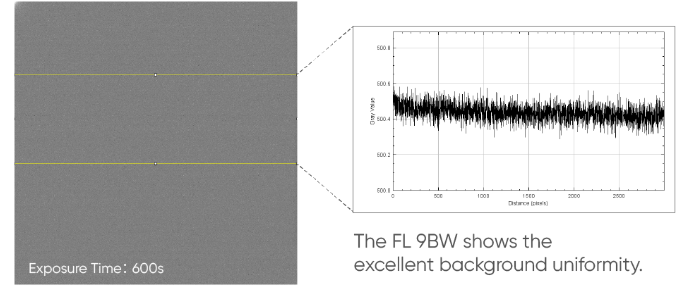
Figure 1 : The Figure 1 comes from Tucsen cooled CMOS camera FL 9BW that the dark current is as low as 0.0005e/pixel/s.
It shows that FL 9BWhas a excellent background which almost immune to dark current noise though the exposure time is as long as 600s.
The situation changes in longer exposures. As exposure time increases, dark current has more time to build up, and its effect can become increasingly visible in the image. This is especially relevant in low-light imaging, where weak signals already make it more difficult to maintain a strong signal-to-noise ratio. Under these conditions, even a modest dark current level can become more important simply because it continues to accumulate throughout the acquisition.
For this reason, exposure time should always be considered before deciding whether low dark current is a priority. In fast imaging workflows, it may matter very little. In long-exposure applications, however, it can become an important factor in image quality and should be evaluated more carefully alongside the rest of the camera’s noise performance.
When Low Dark Current Should Be a Priority?
Low dark current should be a priority when the imaging workflow involves long exposures, weak signals, or both. In these conditions, dark current has more time to accumulate, and its noise contribution can become large enough to reduce image quality or limit signal-to-noise performance.
Its importance increases when dark current noise is no longer negligible compared with other camera noise sources. A specification that seems unimportant in short-exposure imaging may become much more significant in long-exposure workflows, simply because the dark current continues to build up throughout the acquisition.
By contrast, low dark current may matter less in bright imaging conditions or in workflows built around very short exposures. In those cases, other specifications may have a greater effect on practical performance. For that reason, low dark current should be prioritized when the application is truly sensitive to long-exposure noise and weak-signal preservation, rather than treated as the most important specification in every situation.
When Other Camera Specifications May Matter More?
Low dark current is valuable in the right conditions, but it is not always the first specification that determines camera performance. In many imaging workflows, other factors may have a greater practical impact on image quality or usability, especially when exposure times are short or signal levels are relatively strong. In these cases, choosing a camera based only on dark current can overemphasize a specification that may not be the main performance limit.
One important example is read noise. In low-light imaging with short or moderate exposures, read noise may remain more influential than dark current because dark current has not had enough time to accumulate significantly. In other workflows, quantum efficiency, frame rate, or overall sensitivity may matter more, particularly if the goal is to capture weak signals efficiently, image dynamic events, or maintain high throughput.
For this reason, dark current should be evaluated in context rather than treated as a standalone ranking factor. The best camera is not always the one with the lowest dark current on paper, but the one whose full performance profile matches the exposure time, signal level, and imaging priorities of the application.
A Practical Checklist for Evaluating Dark Current
When deciding how much dark current should matter, it helps to move beyond the specification value alone and ask how it affects the actual workflow. The following questions can serve as a practical checklist when comparing scientific cameras. Dark current is exposure-time- and temperature-dependent, and its importance rises most clearly in longer-exposure, lower-signal work.
● What exposure times does the workflow normally use?
Dark current becomes more important as exposure time increases, because the unwanted signal and its noise continue to accumulate during the exposure.
● Are the signals weak enough that dark current noise could matter?
In low-light or photon-limited imaging, dark current can become a meaningful part of the total noise budget, while in strong-signal imaging it may contribute very little.
● Will dark current be comparable to other noise sources?
A camera with very low dark current may offer little practical advantage if read noise or other limits dominate the workflow, especially at short exposures.
● Is long-exposure image quality a priority?
If the workflow depends on long single-frame acquisitions, low dark current deserves more attention because it can become a real barrier to preserving clean low-light data.
● Does the application truly justify paying for lower dark current?
Lower dark current is most valuable when it meaningfully improves the final image or noise performance, rather than simply looking better on a datasheet.
Recommended Tucsen Camera Categories for Long-Exposure Imaging
For workflows where low dark current is a meaningful priority, Tucsen offers several camera categories worth considering for long-exposure and low-light imaging needs:
● Cooled CMOS camera for applications that require lower sensor temperature and improved long-exposure noise performance
● Large Format camera for workflows that benefit from broader image coverage while maintaining sensitivity
● High Sensitivity sCMOS camera for demanding low-light imaging where signal preservation is especially important
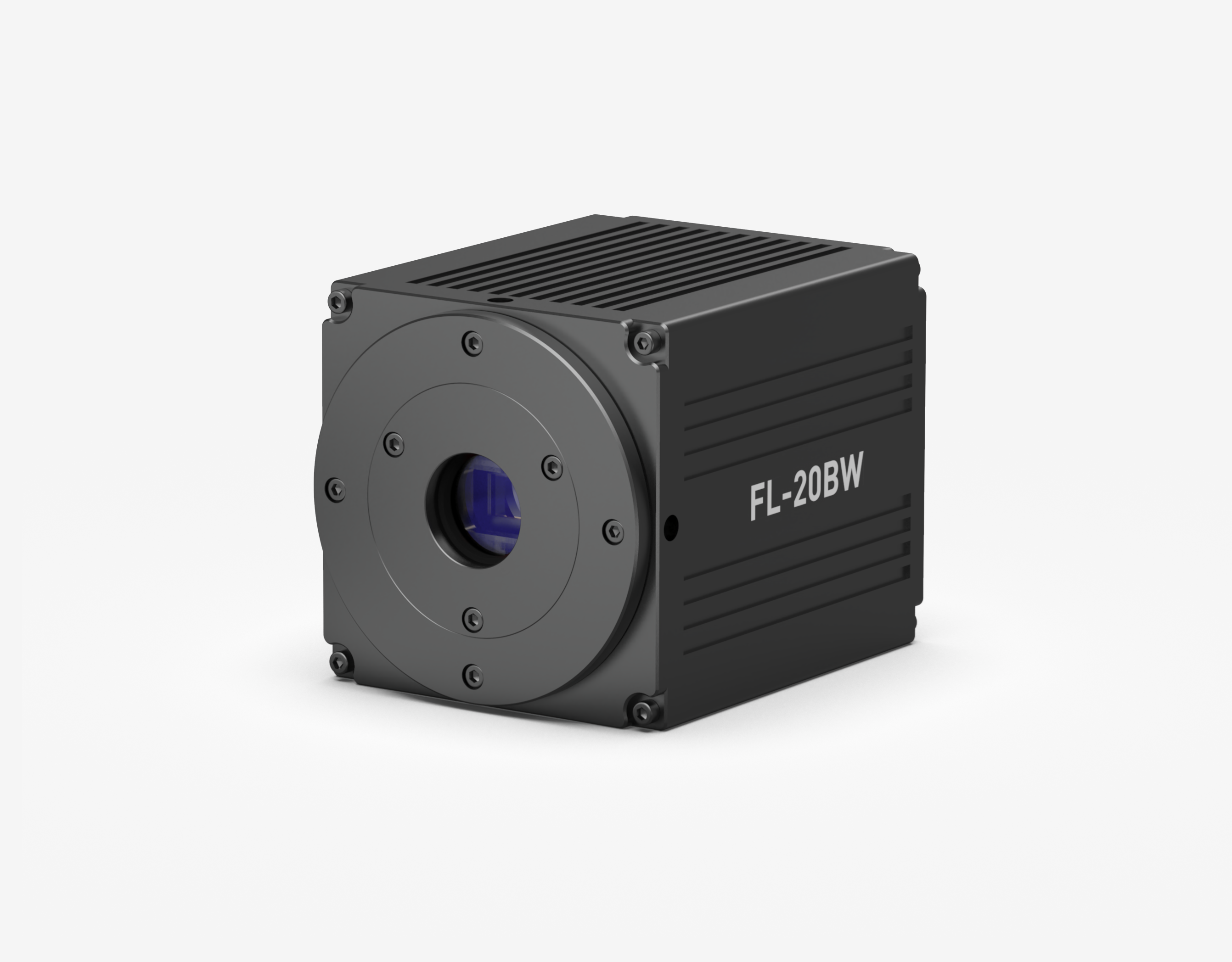
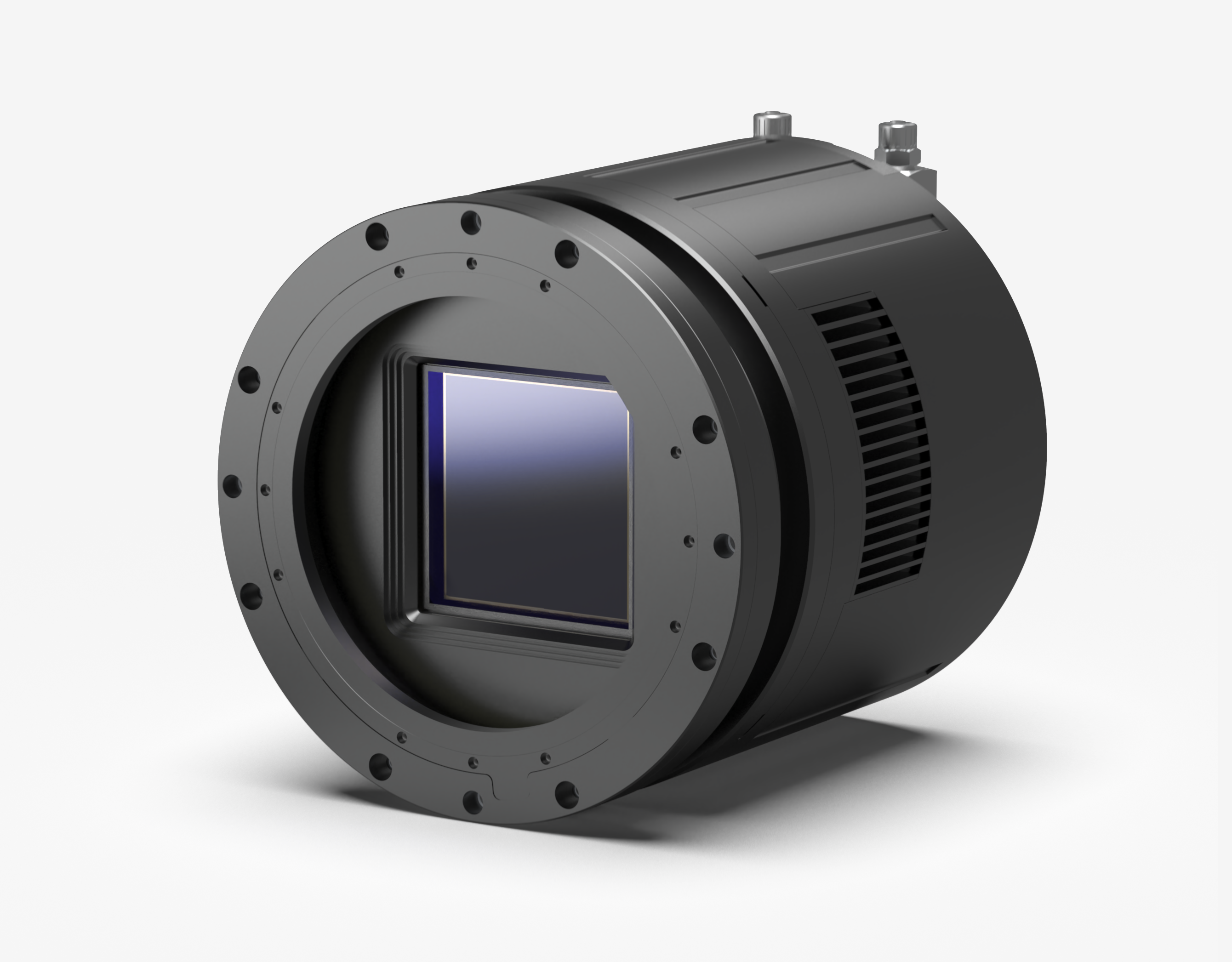
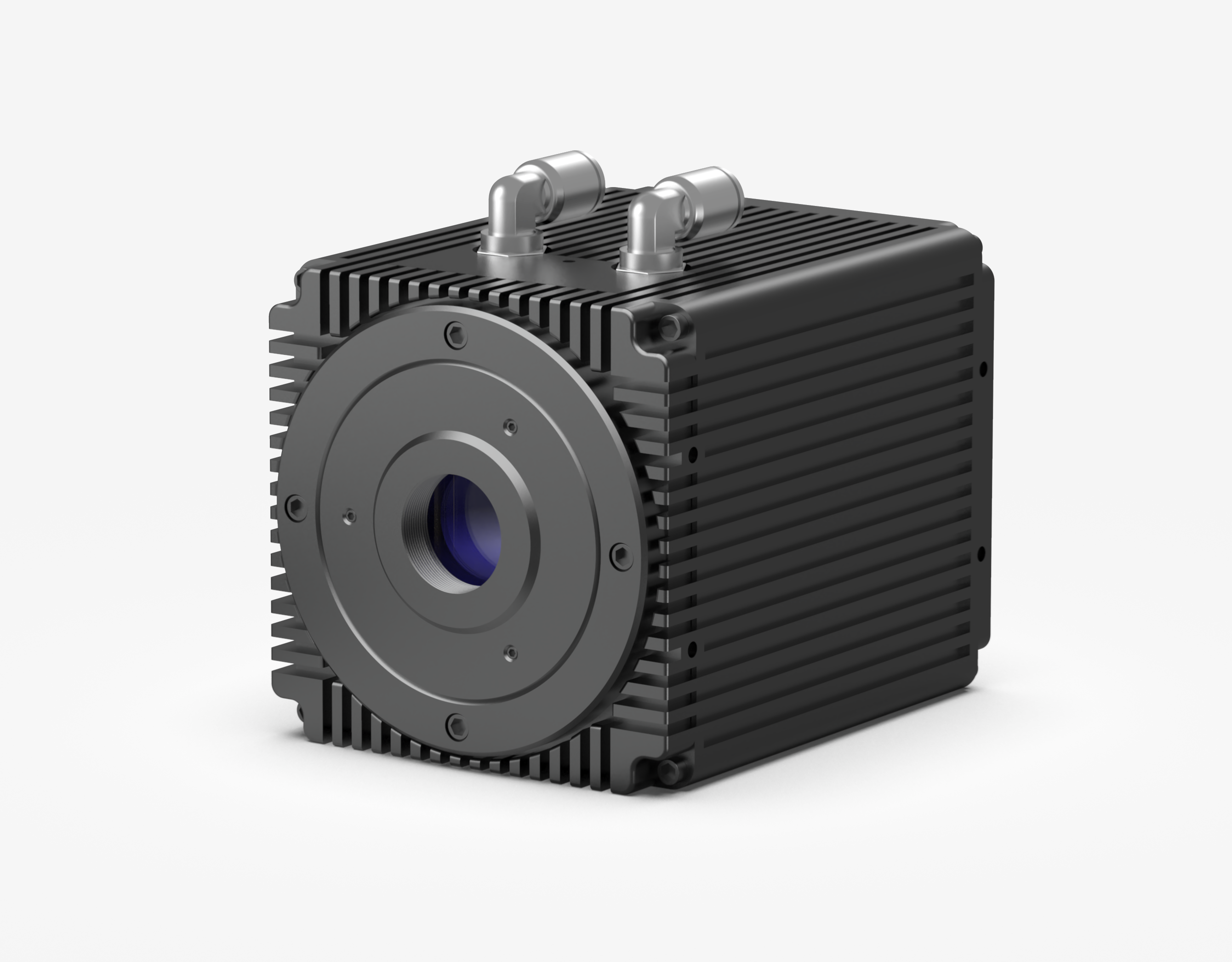
Figure 2: Tucsen long time exposure camera recommendation
Conclusion
Low dark current can be critical in some scientific imaging tasks, but it is not equally important in every workflow. Its real value depends on exposure time, signal level, and whether dark current noise becomes large enough to compete with other limits on image quality. In short exposures it may have little practical effect, while in long-exposure, low-light imaging it can become a major factor in successful image acquisition.
For that reason, the most useful question is not simply which camera has the lowest dark current on paper, but whether dark current will meaningfully affect the exposures, noise performance, and image quality of the intended application. For users working with demanding low-light or long-exposure workflows, Tucsen offers scientific camera resources and camera options designed to support more informed system selection.
Related article: For a broader introduction to dark current fundamentals, noise behavior, and mitigation, read Understanding Dark Current in Scientific Cameras: Causes, Noise, and Mitigation.
Tucsen Photonics Co., Ltd. All rights reserved. When citing, please acknowledge the source: www.tucsen.com


