

 2026/05/20
Choosing a fast camera for high-speed scientific imaging is not as simple as picking the highest frame rate on a datasheet. In real imaging work, “fast” can mean several different things. You may need to capture more frames per second, shorten exposure to reduce motion blur, improve timing accuracy across the full image, or move large amounts of data without dropping frames.
In many cases, the right choice depends on your experiment, not on one headline number. A camera that looks fast on paper may still fall short if its shutter behavior, readout speed, sensitivity, or data path does not match the job. This article explains how to judge camera speed in a more practical way and how to choose the kind of speed your application actually needs.
What Does “Fast” Mean in Scientific Imaging?
In scientific imaging, “fast” does not describe just one camera specification. It can refer to frame rate, exposure time, frame time, line time, or overall system throughput, depending on what you are trying to capture.
For many users, the first number they check is frame rate. That makes sense, because frame rate tells you how many images a camera can acquire each second. But frame rate alone does not fully describe real imaging speed. A camera may offer high FPS in one mode while behaving very differently at full resolution, with a different bit depth, or under a different data interface.
Exposure time is another part of speed, but it answers a different question. It tells you how long each frame collects light. This matters because a camera can run at a high frame rate and still produce blurred images if the exposure is too long for the motion you are trying to freeze. In other cases, your challenge is not motion blur but timing consistency, especially when rolling readout spreads exposure timing across the image instead of exposing the full frame at once.
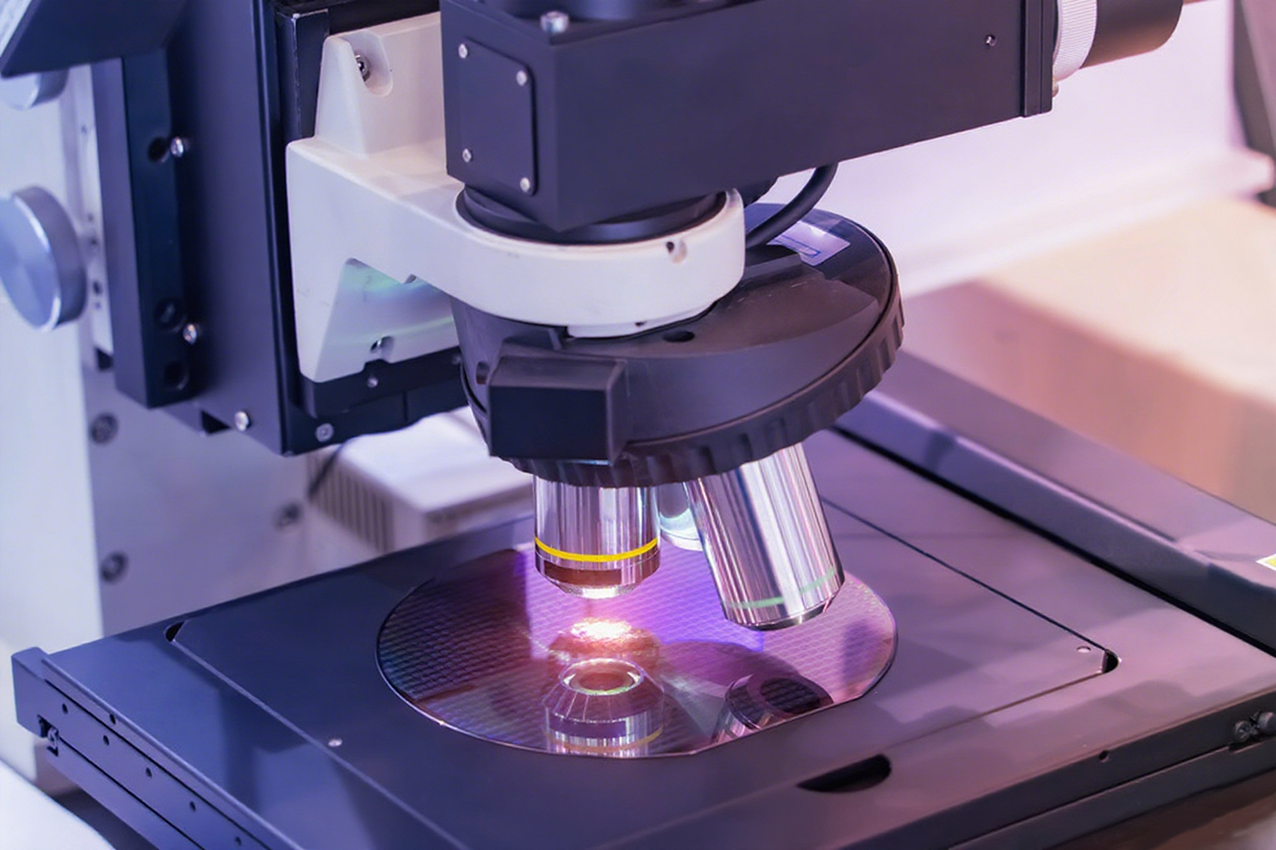
That is why “fast” should be treated as a timing and system question, not just a marketing number. In one application, a fast camera may mean high full-frame FPS with enough sensitivity for low-light dynamic imaging, such as large-field voltage or calcium imaging in neuroscience. In another, it may mean global shutter timing and clear image capture on fast-moving inspection platforms, such as semiconductor wafer inspection or chip packaging inspection. Before comparing camera models, you first need to decide which kind of speed actually matters for your experiment.
Start with the Event, Not the Datasheet
Once you understand what “fast” can mean, the next step is to define the event itself. A camera should be chosen around the timing demands of the experiment, not around the biggest speed number on a product page.
Start by asking how quickly the sample, object, or signal changes and what you actually need to capture. In some experiments, the goal is to record more stages of a fast process over time. In others, the main challenge is freezing motion clearly within each frame. In still others, the real requirement is timing accuracy, especially when a short event must be aligned with a trigger, a light pulse, or another device.
These are not small differences. They shape what kind of speed matters most. A workflow that needs denser temporal sampling may prioritize frame rate. A workflow that needs cleaner single-frame detail may care more about usable exposure time. A workflow built around synchronized events may care most about timing consistency and repeatability.
It also helps to define how the acquisition will run. Do you need a long continuous sequence, or only a short burst? Do you need the full frame to represent the same moment in time, or is some timing spread acceptable? Do you need a large field of view, or can the active area be reduced?
Once these questions are clear, the datasheet becomes much easier to interpret. Instead of asking which camera is fastest in general, you can ask which camera is fast in the way your experiment actually requires.
Why Maximum FPS Can Be Misleading?
A camera’s maximum FPS is usually measured under specific conditions, so it should never be treated as a complete description of real high-speed performance.
Maximum FPS is useful, but only when you understand what sits behind it. In many cases, the quoted number reflects one specific operating mode rather than the way the camera will actually be used in your workflow. A camera may reach a very high frame rate with a reduced ROI, a lower bit depth, or a different readout setting, while full-resolution performance may be much lower. That does not mean the spec is misleading by itself. It means the number needs context.
Exposure settings matter too. If your experiment needs a longer exposure to collect enough signal, the camera may not reach its headline acquisition speed in practice. The same is true when you move from a lighter test condition to a real imaging setup that includes more demanding timing, larger image sizes, or continuous capture over longer sequences.
Bit depth and readout mode can also change what is realistically available. Some cameras offer different speed-performance trade-offs depending on whether you prioritize dynamic range, lower noise, or higher throughput. On top of that, the sensor is only one part of the system. Data still has to leave the camera, move through the interface, and be received and stored by the host computer. If the interface, frame grabber, PC, or storage cannot keep up, the real bottleneck may appear far beyond the sensor itself.
That is why the most useful question is not “What is the maximum FPS?” but “Under what conditions is that FPS available, and can my full system sustain it?” A camera may hit an impressive peak number in one mode and still behave very differently in the real workflow that matters to you.
What Can Change the Real Speed of a Camera?
|
Factor |
Why It Matters |
|
Resolution / ROI |
Cropping the active area often increases speed, while full-resolution capture may run much slower. |
|
Exposure time |
Longer exposure can reduce the frame rate that is realistically achievable in the experiment. |
|
Bit depth |
Different bit depth modes may change throughput and available acquisition speed. |
|
Readout mode |
Some modes prioritize speed, while others prioritize image quality or dynamic range. |
|
Data interface |
Even a fast sensor can be limited by the bandwidth of the transfer link. |
|
Host PC and storage |
If the receiving system cannot keep up, sustained high-speed capture may not be possible. |
Frame Rate, Exposure Time, and Motion Freeze Are Not the Same Thing
A higher frame rate does not automatically produce sharper images, because motion blur depends more directly on exposure time than on FPS alone.
These terms are closely related, but they answer different questions. Frame rate tells you how often the camera records an image. It controls temporal sampling, which means how finely you can track change over time. Exposure time tells you how long each image collects light. That controls how much motion is averaged into a single frame. When people confuse these two settings, they often expect a faster camera to solve blur on its own, even when the real issue is exposure length.
A camera can run at high FPS and still produce blurred images if each frame uses an exposure that is too long for the motion being captured. This is common in low-light imaging, where users may increase exposure to collect more signal, only to lose motion clarity. On the other hand, a lower-FPS system can still freeze motion well if the exposure is short enough and the event does not require denser temporal sampling.
That distinction matters because high-speed imaging usually involves two separate goals. One is seeing more time points. The other is stopping motion clearly inside each frame. Some experiments need both, but not all do. If your main goal is motion freeze, exposure time may deserve more attention than maximum FPS. If your goal is tracking a fast process over time, frame rate may matter more.
The trade-off becomes harder in low-light imaging. Shorter exposure improves motion clarity, but it also reduces the number of photons collected in each frame. That can quickly turn speed into a sensitivity problem, especially when signal levels are already limited.
How Speed Changes Resolution, Sensitivity, and Dynamic Range?
High-speed imaging always involves trade-offs, because a camera usually reaches higher speed by reducing something else in the process.
One common trade-off is image area. Higher acquisition rates are often easier to achieve when the camera reads a smaller active region instead of the full sensor. That can be a very practical choice, but it still means giving up field of view and spatial context. In other words, the speed gain often comes from reading less image data per frame.
Another trade-off appears in signal quality. High-speed imaging usually pushes users toward shorter exposure times, lower per-frame photon counts, or faster operating modes. As a result, the image may carry less signal, especially in low-light work where every frame already starts with limited photons. In these cases, speed is not just about how quickly the camera runs. It is also about whether the data remains usable at that speed.
Dynamic range can be affected as well. Some speed-oriented modes may change bit depth, readout behavior, or the practical signal range available for measurement. That does not make those modes inherently worse. It simply means they should be judged against the goal of the experiment. If the task is to detect rapid change, the trade may be worthwhile. If it depends on preserving subtle intensity differences, a more balanced operating point may be the better choice.
That is why speed should never be judged as an isolated advantage. The best result comes from finding a setting where speed, signal quality, and measurement value still work together.
What Kind of Fast Camera Fits Different High-Speed Imaging Tasks?
The right fast camera depends less on the word “high-speed” itself and more on what kind of high-speed imaging task you need to solve.
Fast biological dynamics often require a balance between speed and sensitivity. In these workflows, the challenge is not only capturing change quickly, but doing so under limited signal conditions and sometimes across a large field of view. In this kind of work, cameras such as Tucsen’s Aries 6504 sCMOS camera are a strong fit, because the goal is not just higher FPS, but maintaining useful signal quality while capturing fast biological change.
High-speed inspection usually shifts the priority toward throughput, timing stability, and practical system reliability. Here, users often care more about whether the camera can deliver sharp, consistent results on fast-moving targets than about a headline number alone. For example, Tucsen’s Libra UV Global Shutter CMOS Camera fits applications such as semiconductor wafer inspection and packaging defect screening, where global shutter timing and stable high-speed acquisition matter more than speed in isolation.
Triggered or pulsed-light imaging places more emphasis on timing behavior. If the image has to align with a short event, a light pulse, or an external trigger, the main question becomes whether exposure can be controlled and repeated in a predictable way. In these cases, timing quality often matters as much as raw speed.
Multi-camera systems raise the bar further. When several cameras need to capture data together, timing alignment across devices becomes part of the selection process. A camera may be fast in isolation but harder to trust in a synchronized setup if trigger behavior is not consistent enough.
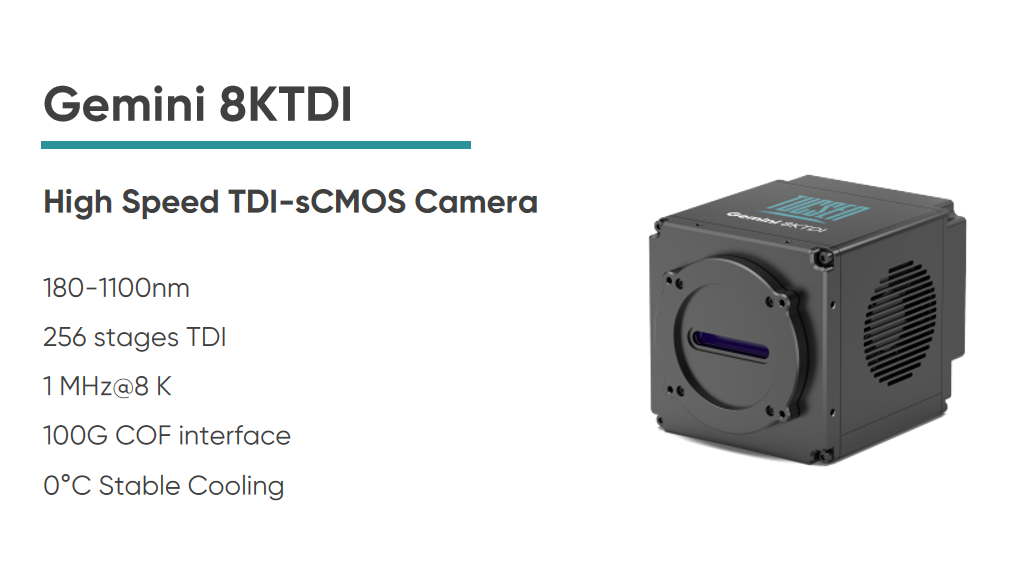
High-throughput scanning or line-based workflows bring yet another kind of speed requirement. In these applications, the best fit may depend more on the imaging architecture than on the FPS of an area-scan camera. Cameras such as Tucsen’s Gemini 8KTDI sCMOS camera are a better example here, because line rate and TDI-based throughput matter more than conventional area-camera speed.
That is why selecting a fast camera starts with the task, not the label. Once the application is clear, the meaning of “fast enough” becomes much easier to define.
A Quick Checklist for Choosing a Fast Scientific Camera
A fast scientific camera should be chosen against the real task, not just against the highest number in a spec table. Before making a shortlist, use the questions below to define what “fast enough” actually means for your workflow.
● What event timescale do I need to resolve?
● Do I need more time points, better motion freeze, or both?
● How much signal can I afford to lose at shorter exposure times?
● Can I reduce ROI without losing critical image information?
● Do I need full-frame timing consistency, or is rolling readout acceptable?
● Will I rely on triggered capture, pulsed illumination, or synchronized devices?
● Can my interface, host PC, and storage sustain the required data rate?
● What matters most in this application: speed, sensitivity, throughput, or architecture fit?
If these questions are clear, choosing a fast camera becomes much more practical. You are no longer comparing headline numbers in isolation. You are selecting a camera that is fast in the way your experiment actually needs.
Conclusion
The best fast camera for high-speed scientific imaging is not simply the one with the highest FPS, but the one whose speed, sensitivity, timing behavior, and imaging architecture match the task in front of you. In some applications, that means capturing more frames per second. In others, it means freezing motion more clearly, keeping enough signal at shorter exposures, or choosing a camera design that fits the way data is actually acquired.
That is why fast camera selection should begin with the event, not the datasheet. Once the application is clear, it becomes much easier to decide what kind of speed actually matters.
If you are evaluating a camera for high-speed scientific imaging, Tucsen’s portfolio includes options for fast biological dynamics, high-speed inspection, and line-based high-throughput workflows. Choosing the right one starts with matching the camera to the job, not simply chasing the biggest number.
Tucsen Photonics Co., Ltd. All rights reserved. When citing, please acknowledge the source: www.tucsen.com


