

 2026/04/23
Regions of Interest (ROIs) in camera systems means using only the part of the sensor or image that matters for the measurement. In many camera workflows, this helps reduce unnecessary data and can often improve frame rate by limiting how much image information must be read out or transferred. The trade-off is that a smaller ROI also reduces field of view and image context.
ROI is widely used across camera systems, machine vision, microscopy, and OEM camera systems where speed and data efficiency matter.
ROI is therefore more than a simple software label. It affects acquisition efficiency, data load, and workflow decisions. This article explains what ROI means in a camera, how it works, why it can increase frame rate, and what users should consider before reducing the image area.
What Does ROI Mean in camera systems?
ROI in camera systems means selecting a specific part of the sensor or image for acquisition, readout, or output instead of using the full frame.
In a camera workflow, ROI is not just a visual marker or an analysis label. It refers to the image area the camera uses when capturing or outputting data, which is why it matters in discussions about readout, frame rate, and acquisition efficiency. When only one part of the scene contains the signal that matters, keeping the entire frame active may only add unnecessary data and slow down the workflow.
The idea is simple: ROI keeps the area that matters and reduces attention to the rest. For example, a user may only need to follow one cell cluster, one moving particle, or one localized emission region instead of capturing the full sensor area every time. In that case, ROI becomes a practical way to make acquisition more focused and efficient.
How Does ROI Work in a camera?
ROI works by limiting the image area the camera reads out, processes, or sends, depending on the camera design.
In many scientific cameras workflows, ROI reduces the active part of the image instead of using the full sensor area for every frame. This can lower the amount of data the system has to handle during acquisition, which is why ROI is often linked to faster and more efficient imaging.
ROI is also different from cropping after capture. Cropping removes part of an image after the full frame has already been acquired, while ROI can reduce the amount of image data handled earlier in the acquisition path. That earlier reduction is what makes ROI relevant to camera performance rather than just image presentation.
The exact effect of ROI still depends on sensor and camera architecture. Different cameras handle readout, timing, and data transfer differently, so the performance gain is not always the same. That is why ROI should be understood as a practical acquisition setting, not a fixed shortcut with identical results in every system.
Why Can ROI Increase Frame Rate?
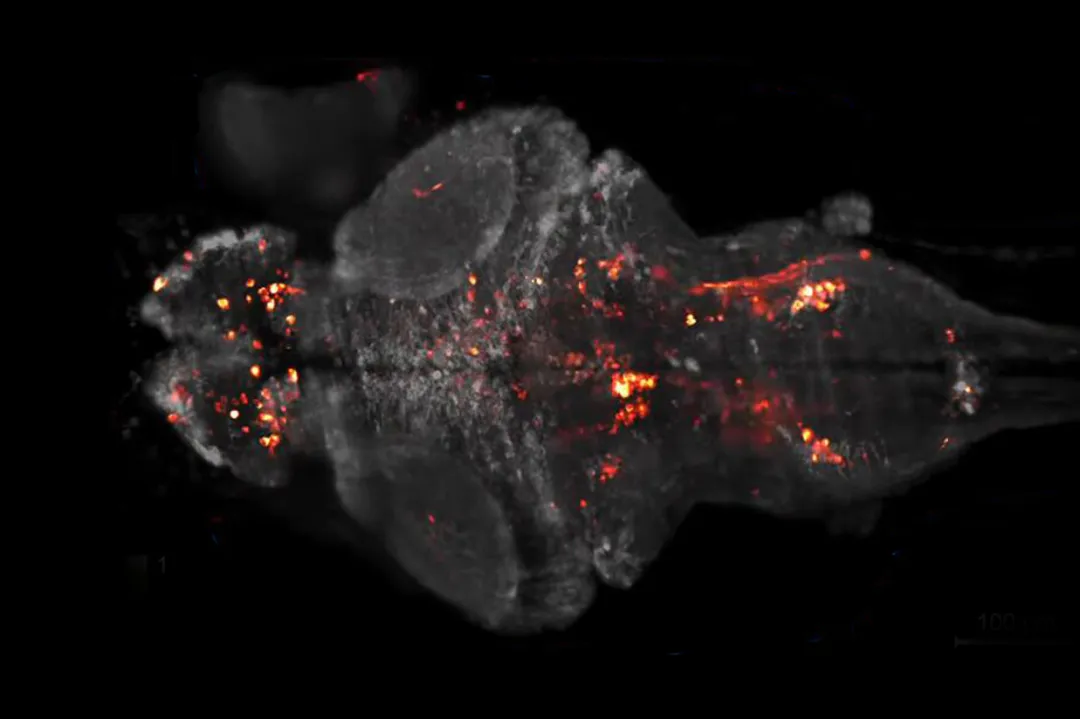
ROI can increase frame rate because the camera often has less image data to read and transfer in each frame. This is especially relevant in applications such as calcium imaging, where fast local signals often matter more than full-frame coverage.
Frame Time and Active Rows
A smaller ROI often helps increase frame rate because fewer active rows usually mean less readout work in each frame. In many CMOS cameras, reducing ROI height has a stronger effect on frame rate than reducing ROI width. That is because frame timing is closely tied to how many sensor rows must be read out per frame, while column data may be handled in parallel depending on the camera design.
This is why high-speed imaging often uses a wide but shallow “letterbox” ROI rather than a small square ROI. If the event of interest spreads across the image width but only occupies a limited height, this kind of ROI can keep the important signal in view while still improving speed.
Other Limits on FPS
ROI is not the only factor that affects frame rate. Exposure time, sensor timing, readout mode, interface bandwidth, and processing overhead can still limit how fast the camera runs. At very small ROI heights, frame rate gains may also stop scaling proportionally because transmission and processing overhead can become the next bottleneck.
Example of Full Frame vs Small ROI
For example, a full-frame acquisition at 2048 × 2048 produces far more data per frame than an ROI at 2048 × 256 or 512 × 512. The exact frame-rate improvement depends on the camera, but the basic logic is clear: when the system has less image data to handle, it often has a better chance of running faster.
What Are the Main Benefits of ROI in camera systems?
The main benefits of ROI in camera systems are higher acquisition speed, lower data load, and better focus on the image area that actually matters.
The main benefits of ROI in camera systems include:
● Higher Frame Rate: A smaller active image area can help the camera capture fast local events more efficiently.
● Lower Data Load: ROI reduces how much data must be transferred, stored, and processed, which is especially useful in long or repeated acquisitions.
● More Efficient Acquisition Workflow: When the full frame does not add useful information, ROI helps keep the workflow focused on the part of the image that actually matters.
These benefits are most valuable when the signal is spatially limited and the full image area adds more burden than value. In that case, ROI becomes more than a speed setting. It becomes a practical way to make the whole acquisition workflow more focused.
What Do You Lose When You Reduce ROI?
When you reduce ROI, you lose field of view, image context, and some flexibility during setup or tracking.
Smaller Field of View
The most direct trade-off is a smaller field of view. A reduced ROI captures less of the sample or scene, which means less surrounding information is available in each frame. This is often acceptable when the target is confined to one area, but it can become a limitation when the experiment still depends on broader spatial coverage.
Less Spatial Context
A smaller ROI also means less image context. Neighboring structures, nearby motion, background changes, or multiple objects may still matter even when the main signal comes from one region. If that context helps with interpretation, alignment, or analysis, reducing the image area too much can weaken the value of the data.
Higher Tracking Risk
A tight ROI can also make tracking more fragile. If the target drifts, moves, or changes position, it may leave the selected region and break the measurement. This is especially common in live imaging, particle tracking, unstable samples, or any workflow where the subject does not stay perfectly fixed.
For that reason, the best ROI is usually not the smallest one possible. It is the smallest one that still preserves enough coverage and context for the experiment to remain reliable.
ROI vs Full Frame, Cropping, and Binning: What Is the Difference?
ROI, full frame, cropping, and binning solve different problems because they change different parts of the imaging workflow.
ROI vs Full Frame
Full-frame acquisition keeps the entire sensor area active. This gives you the widest field of view and the most complete spatial context, which is useful during setup, target search, alignment, or experiments where multiple regions matter at the same time.
ROI reduces the active image area when only one region matters. This can make acquisition faster and more efficient, but it also means that less of the scene is captured in each frame.
ROI vs Cropping
Cropping usually happens after acquisition. The full image is captured first, and then part of it is removed later for viewing, presentation, or analysis.
ROI is different because it can reduce the amount of image data handled earlier in the acquisition path. That difference matters because post-acquisition cropping does not usually improve camera speed or reduce readout burden in the same way. Cropping changes the saved or displayed image, while ROI can change how much image data the camera and system must deal with in the first place.
ROI vs Binning
ROI changes the image area. Binning changes how neighboring pixel data is combined.
That means the two settings affect different aspects of the image. ROI reduces the portion of the sensor being used, while binning combines signal from adjacent pixels to create a different balance of sensitivity, noise behavior, and spatial sampling. In many workflows, they can even be used together. For example, a user may apply ROI to reduce the active image area and use binning to improve low-light performance or reduce data size further.
When Should You Use ROI in camera systems?
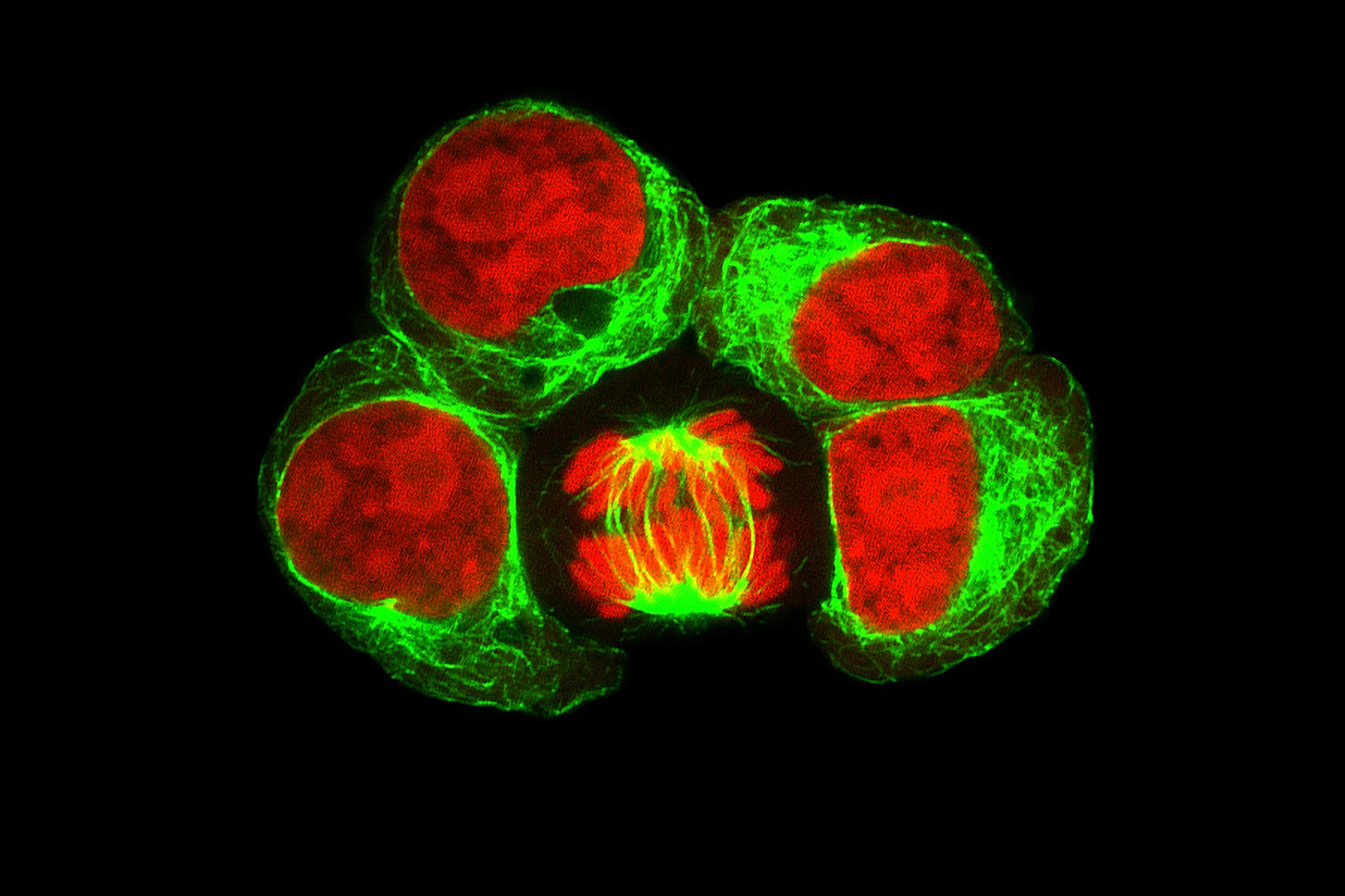
You should use ROI when the important signal is limited to one part of the image and the full frame adds more data than value. ROI is often a practical choice in live-cell imaging, where the measurement may focus on a defined region rather than the entire field of view.
Fast Dynamic Events
ROI is a strong choice when you need to capture fast events in a limited area. If the region of interest is small but changes quickly, reducing the active image area can help the system keep up more effectively than a full-frame acquiTracking a Defined Target Regionsition
Long or Repeated Acquisitions
ROI is also useful when data volume becomes a practical burden. In long imaging runs, repeated measurements, or high-frame-rate acquisitions, capturing less unnecessary area can make storage, transfer, and later review much easier.
Tracking a Defined Target Region
If the experiment is centered on one cell cluster, particle path, defect area, or localized signal source, ROI can help keep the acquisition focused on the part of the image that actually supports the measurement.
ROI is not always the right choice. Full frame may still be the better choice during search, alignment, focusing, or exploratory imaging. If spatial context still matters, reducing the image area too early can create more problems than it solves.
It can also be useful in single-molecule fluorescence, where the signal of interest may occupy only a small part of the full image area.
How Do You Choose the Right ROI Size and Position?
The right ROI size and position should keep the important signal in view while still reducing unnecessary image area.
Start with More Area Than You Think You Need
A good workflow is to begin with a larger image area, confirm where the target appears, and then reduce the ROI once the important region is clear. This gives you enough context for alignment, focus, and target verification before narrowing the field.
Leave Margin for Motion or Drift
ROI should not only match the signal location in one perfect frame. It should also allow for realistic movement, drift, or experimental variability. If the subject may shift during acquisition, the ROI should include enough margin to keep it in view.
Match ROI Shape to the Experiment
ROI shape matters as much as ROI size. The best shape depends on how the signal appears and how the event moves. A narrow vertical region, a wide horizontal strip, or a more centered square region may all make sense in different experiments. The goal is to reduce unused image area without cutting away information that still matters.
Check Camera Constraints
Some cameras place limits on ROI size, position, or step increments. In practice, that means the ROI may not be adjustable to every exact pixel boundary you choose. For that reason, ROI selection should be guided by both experiment needs and camera behavior. A practical ROI is one that fits the signal, preserves enough context, and works within the system’s actual acquisition settings.
Conclusion
ROI is more than a basic camera term. In camera systems, it is a practical acquisition tool that helps reduce unnecessary image area, improve workflow efficiency, and often increase frame rate when the full sensor area is not needed.
Its value depends on how well it matches the experiment. The best ROI is not simply the smallest one possible. It is the one that keeps the important signal in view, preserves enough context for reliable measurement, and supports the speed and data-handling needs of the workflow.
FAQs
Does ROI reduce resolution?
ROI reduces the captured image area, but it does not change the pixel size of the remaining region. In other words, it changes how much of the image is captured, not the native pixel structure of that selected area.
Can ROI and binning be used together?
Yes. ROI and binning affect different parts of the imaging process, so they can often be used together. ROI reduces the image area, while binning combines neighboring pixel data.
Does ROI improve image quality?
Not by itself. ROI mainly improves efficiency by reducing the image area the system needs to read, transfer, and process. It can support faster acquisition and lighter data handling, but it does not automatically improve the intrinsic image quality of the remaining pixels.
Can ROI be placed anywhere on the sensor?
Not always. Some cameras allow flexible ROI positioning, while others limit where the ROI can be placed. The available position may depend on sensor design, readout architecture, or camera firmware settings.
Tucsen Photonics Co., Ltd. All rights reserved. When citing, please acknowledge the source: www.tucsen.com


