

 2026/05/23
In high-speed scientific imaging, exposure time is one of the first settings users look at, but it does not tell the whole timing story. Exposure time defines how long the sensor collects light for a given frame. It does not fully explain how long the camera needs to complete that frame, read out the data, or become ready for the next exposure. That is why duty cycle matters.
In many fast imaging workflows, the real limit is not just how briefly a frame can be exposed, but how efficiently the system uses time across repeated frames. This article explains what exposure time actually controls, how duty cycle changes imaging efficiency, and when each metric matters most.
What Does Exposure Time Actually Control in High-Speed Scientific Imaging?
Exposure time controls how long the sensor collects light for each frame. In simple terms, it sets the photon collection window. A longer exposure gives the sensor more time to gather signal, while a shorter exposure reduces the time available for light collection.
Exposure Time vs Frame Time
Exposure time and frame time are related, but they are not the same thing. Exposure time is the light-collection portion of a frame. Frame time is the total time required to complete one frame cycle. In many systems, frame time includes exposure plus other timing steps such as readout or internal sensor operations.
This is why two cameras can use the same exposure time and still deliver different real-world imaging performance. One may spend more of each cycle collecting light, while another may spend more time handling the frame after exposure ends.
Why Exposure Time Alone Does Not Define Throughput
A shorter exposure does not automatically mean higher effective throughput. In many high-speed systems, performance is also shaped by readout, frame transition, and other timing overhead between exposures. That is why exposure time should be treated as one part of the imaging cycle rather than a complete measure of acquisition efficiency.
What Is Duty Cycle, and Why Does It Matter at High Speed?
Duty cycle describes how much of each imaging cycle is actually spent collecting light. A high duty cycle means the sensor spends most of the cycle exposing. A lower duty cycle means more time is being used for readout, reset, transfer, or other internal timing steps between exposures.
Duty Cycle as Effective Photon-Collection Efficiency
A useful way to think about duty cycle is that it reflects effective photon-collection efficiency over time. Exposure time tells you how long one frame is allowed to gather signal. Duty cycle tells you how much of the repeated acquisition process is actually devoted to gathering that signal.
That distinction matters in experiments that rely on repeated short exposures. If the camera is only exposing for a limited fraction of each cycle, then a large share of the available time is not contributing to image formation. In practical terms, that can reduce overall signal efficiency, especially when light is already limited or when timing margins are tight.
Where Dead Time Comes From
Dead time can come from several sources. Depending on the camera architecture, it may include sensor readout, line-by-line timing behavior, frame transfer steps, internal reset operations, or time needed before the next exposure can begin. Some systems also introduce timing constraints when external triggering or synchronized illumination is used.
The important point is that dead time is not always obvious if you look only at exposure settings. A camera may allow a very short exposure on paper, yet still lose a meaningful part of each acquisition cycle to timing overhead.
Why Duty Cycle Becomes More Important as Exposure Gets Shorter
As exposure time decreases, duty cycle often becomes a more revealing performance clue than exposure alone. For example, a system using a 10 microsecond exposure may look fast at first glance. But if the full cycle is much longer than that, the camera is spending a large share of its time doing something other than collecting light.
That is why high-speed imaging should not be judged by minimum exposure time alone. To understand real acquisition efficiency, you also need to ask how much of each cycle is truly available for exposure.
Exposure Time vs Duty Cycle: Which One Limits Real Imaging Efficiency?
The answer depends on what is actually limiting the imaging cycle. When exposure time is longer than the other timing steps in the system, exposure is still the main constraint because the sensor simply needs that time to collect enough signal. But when exposure becomes very short, readout and other dead time can take up a much larger share of each frame cycle. At that point, duty cycle often becomes the more revealing metric.
When Exposure Time Is the Main Limit
Exposure time matters most in low-light imaging or in experiments where signal strength is the main challenge. If the sample is dim, shortening exposure may reduce blur or improve timing resolution, but it can also leave the image too weak or noisy to be useful. This is common with static or slow-moving samples where users can afford longer exposures and where signal quality matters more than absolute throughput. In these cases, exposure time remains the first performance limit to evaluate.
When Duty Cycle Becomes the Better Performance Clue
Duty cycle becomes more important when exposures are already short and the camera is operating at high frame rates or in repeated acquisition sequences. In this regime, the key question is not only how briefly the sensor can expose, but how efficiently the full cycle is used. If a significant part of each cycle is spent on readout, reset, or timing overhead, then the system may lose efficiency even if the selected exposure looks fast on paper.
A Simple Timing Example
Consider two cameras both set to a 100 µs exposure. If Camera A completes the full cycle in 110 µs, while Camera B needs 200 µs, both cameras have the same exposure time, but not the same real imaging efficiency. Camera A spends most of its cycle collecting light, while Camera B spends much more time outside the exposure window.
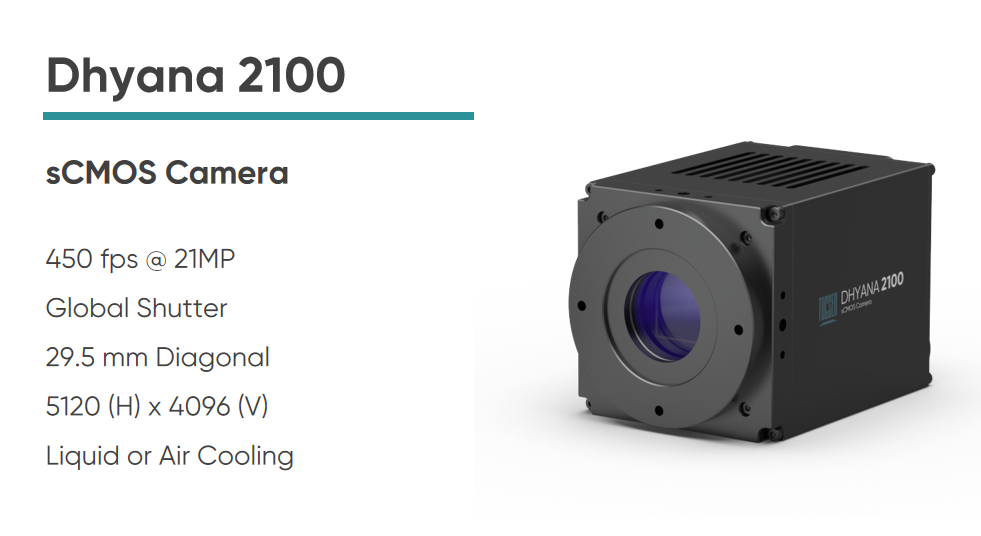
For example, Tucsen’s Dhyana 2100 sCMOS camera, timing behavior is shaped not only by the selected exposure, but also by readout mode, trigger handling, and the surrounding acquisition workflow.
What Happens at Very Short Exposure Times?
Very short exposure times can reduce motion blur, improve temporal precision, and help control brightness in fast-changing scenes. But they also make the imaging system less tolerant of timing mismatch. At this point, even small differences in sensor timing, readout behavior, or synchronization can have a visible effect on the final image.
Minimum Exposure Is Not the Whole Story
A short minimum exposure specification is useful, but it does not guarantee equally clean performance in every high-speed workflow. Once exposure becomes extremely brief, the practical result depends more heavily on how the camera handles timing around that exposure, especially when external illumination, triggering, or rapid scene change is involved.
Why Rolling Shutter Can Complicate Short-Exposure Acquisition
Short exposures can become more difficult in rolling shutter systems because different rows do not start and end exposure at exactly the same time. That row-by-row timing is often acceptable under continuous illumination or with slowly changing scenes, but it can become a problem when illumination is pulsed or when events change very quickly across the frame. In those cases, the selected exposure time may look short enough, while the actual temporal alignment across the image is still imperfect.
This can be especially relevant in semiconductor inspection, where fast stage motion, short exposure windows, and strict timing consistency all affect how reliably small defects can be captured across the field.
Pulsed Illumination and Synchronization Risks
These timing issues matter most when short exposure is combined with strobed LEDs, lasers, or other pulsed light sources. If the camera timing and the illumination timing are not matched correctly, users may see uneven exposure, banding, or incomplete frame capture. This is one reason high-speed imaging should be evaluated as a timing system, not just as an exposure setting. A short exposure can be valuable, but only when the surrounding timing behavior supports it.
How Do Shutter Type and Timing Mode Change Duty Cycle?
Shutter type and timing mode can significantly change duty cycle because they shape when exposure starts, how readout is handled, and how quickly the next frame can begin. This means duty cycle is not only a result of the selected exposure time. It is also a result of camera architecture.
Rolling Shutter vs Global Shutter
The main difference is timing behavior across the sensor. In a rolling shutter system, rows are exposed at slightly different times, so exposure is staggered across the frame. In a global shutter system, the entire image area is exposed together. If you want a fuller explanation of global vs. rolling shutter behavior and how to choose between them, we have covered that in more detail separately.
For duty cycle, this difference matters because sensor timing affects how cleanly exposure, readout, and frame transition can be managed in repeated high-speed acquisition.
What Overlap Mode Changes
Overlap mode can strongly improve duty cycle because it reduces the amount of time lost between frames. Instead of waiting for one frame cycle to finish completely before beginning the next exposure, some systems can overlap exposure and readout behavior in a way that keeps the sensor collecting light more efficiently over time.
This is especially valuable in short-exposure, repeated-frame workflows. When exposure is already brief, even a small reduction in dead time can make a meaningful difference in effective acquisition efficiency
Why Trigger Outputs Matter in Real Systems
In real imaging setups, camera timing rarely works alone. The camera may need to coordinate with a pulsed light source, a motion stage, a scanning system, or a switching device. That is why trigger outputs matter. They help define exactly when exposure begins, when readout ends, and how external devices should respond.
When Does Exposure Time Matter More Than Duty Cycle?
Exposure time matters more than duty cycle when signal collection is still the main challenge. If the sample is dim, the scene changes slowly, or the experiment can tolerate longer frame intervals, the first priority is often collecting enough photons to produce a usable image. In these cases, shortening exposure to improve timing efficiency may do more harm than good if it weakens signal quality too much.
Low-Light, Static, or Quasi-Static Imaging
This is especially true in low-light imaging and in static or quasi-static sample observation. When motion is limited and continuous illumination is available, users can often afford longer exposures in exchange for cleaner data. Under these conditions, sensitivity, noise behavior, and exposure flexibility usually matter more than maximizing duty cycle. The same logic often applies in biological high-throughput imaging workflows where image quality and stable signal collection may still take priority over pushing timing efficiency as far as possible.
Cases Where Maximizing Duty Cycle Is Not the First Priority
Maximizing duty cycle is not always the first goal when temporal resolution is already sufficient for the task. If the system already captures events at the needed speed, users may benefit more from increasing signal strength, improving contrast, or reducing noise than from chasing a higher duty cycle. In other words, duty cycle becomes most valuable when acquisition efficiency is the bottleneck. When signal quality is the real limit, exposure time still deserves more attention.
When Is a Different Imaging Strategy Better Than Simply Shortening Exposure?
Shortening exposure is not the only way to improve timing performance. In many cases, a better result comes from optimizing the full imaging system rather than pushing exposure lower and lower. If signal becomes too weak, readout remains the bottleneck, or the sample motion is predictable, a different strategy may deliver better data with fewer trade-offs.
Improve Signal Instead of Only Cutting Exposure
If short exposure starts to hurt image quality, improving signal collection is often the better move. That may mean using a sensor with stronger sensitivity, increasing illumination efficiency, or improving the optical path so more useful light reaches the detector. In practice, this can preserve temporal performance without forcing exposure so low that the image becomes noisy or unstable.
Reduce Readout Burden with ROI or Faster Data Paths
In other situations, exposure is no longer the real limitation. The larger constraint may be how quickly the system reads out and transfers data. In that case, reducing the region of interest or using a faster data path can improve repeated-frame performance more effectively than cutting exposure further. This is especially relevant when the application only needs a smaller active area rather than the full sensor field.
Use TDI When Motion Is Predictable
When object motion is continuous and predictable, a different imaging architecture may be more effective than simply trying to freeze motion with ever shorter exposures. This is where Time Delay and Integration can become a better solution. Instead of relying only on a brief exposure window, TDI improves signal collection by synchronizing charge transfer with object motion.
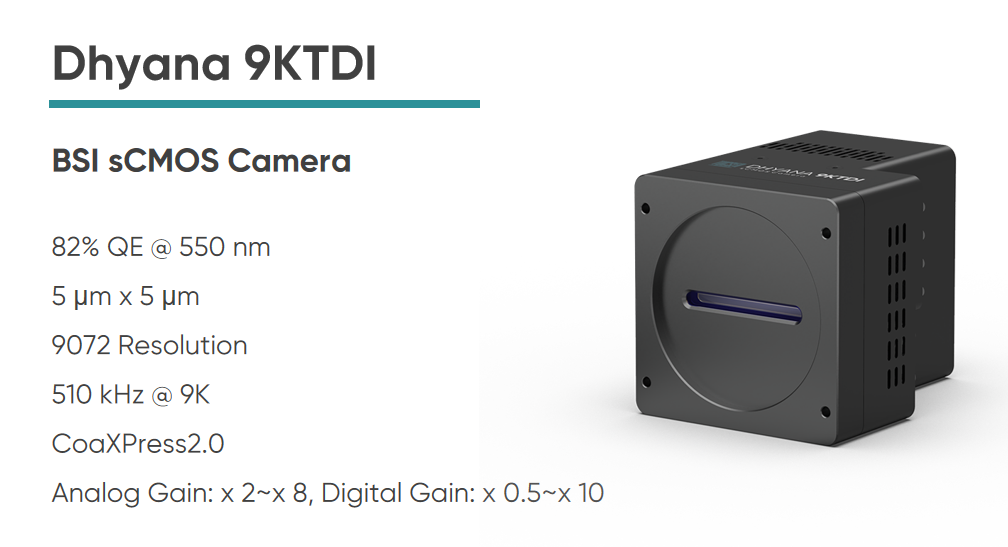
For example, Tucsen’s Dhyana 9KTDI sCMOS camera is a natural fit for this kind of strategy because it is designed for low-light, high-speed inspection workflows where continuous motion and efficient line-based acquisition matter more than simply pushing area-scan exposure shorter.
Conclusion
In high-speed scientific imaging, exposure time and duty cycle should not be treated as competing specifications. They answer different questions. Exposure time tells you how long each frame can collect light, while duty cycle shows how efficiently the system uses time across repeated acquisitions.
If signal collection is still the main challenge, exposure time deserves more attention. If exposures are already short and acquisition speed is rising, duty cycle often becomes the more useful indicator of real imaging efficiency. And when neither one solves the problem well enough, the better answer may be to rethink the imaging strategy itself through stronger signal collection, lower readout burden, or motion-matched approaches such as TDI.
For imaging tasks that involve fast motion, repeated short exposures, or timing-sensitive inspection, Tucsen offers scientific imaging solutions built for different timing demands, from high-speed global shutter platforms to TDI-based systems for efficient motion-aligned acquisition.
Tucsen Photonics Co., Ltd. All rights reserved. When citing, please acknowledge the source: www.tucsen.com


