

 2026/06/28
As inspection systems move into the micron and sub-micron range, detecting features alone is no longer enough. Modern applications require stable image quality, accurate measurements, and reliable performance over long operating periods.
This requirement is becoming increasingly important in industries such as semiconductors, medical devices, and new energy. In these fields, weak signals, low noise, and long-term stability directly affect inspection accuracy and production yield.
Because of this, cooled cameras are no longer used only in scientific research. They are now becoming an important part of advanced industrial inspection and machine vision systems.
How Does Sensor Cooling Improve Image Quality?
Sensor temperature has a direct impact on dark current in low-light imaging. When the temperature decreases, dark current noise is reduced and the signal-to-noise ratio improves.
Industry experience shows that reducing sensor temperature by about 6 to 7°C can lower dark current noise by nearly 50%. Lower noise helps systems detect weak signals and identify tiny defects more accurately.
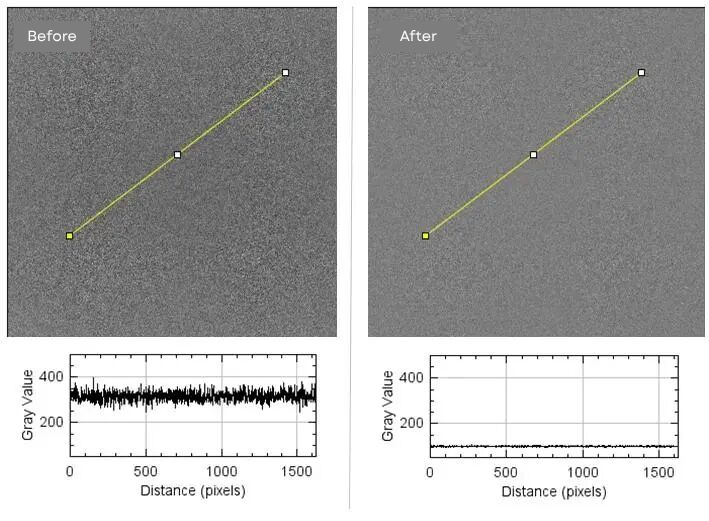
Figure 1. Noise baseline comparison before and after cooling.
Why Is Lower Temperature Not Always Better?
Cooling technology first appeared in astronomy. Astronomical observations often require exposure times that last from several minutes to several hours. To reduce thermal noise, early systems commonly used liquid nitrogen cooling at 77 K.
However, most imaging applications do not require extremely long exposures. Therefore, they do not need ultra-low temperatures.
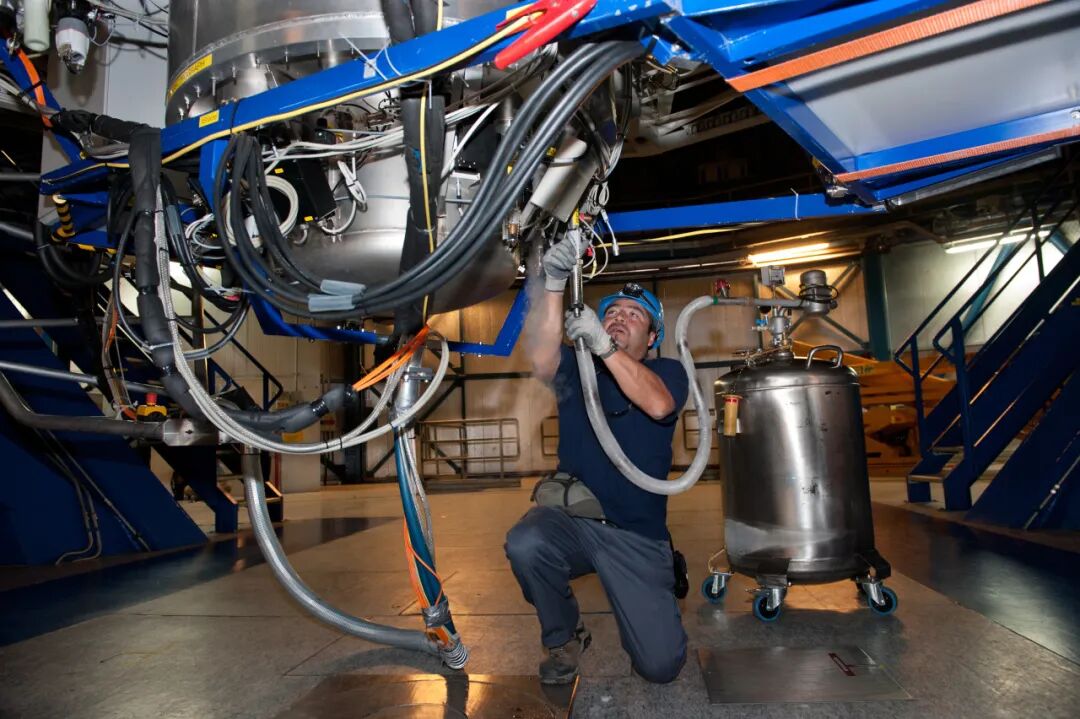
Figure 2. Liquid nitrogen refilling for astronomical instruments. Image source: ESO / Max Alexander
Although liquid nitrogen provides excellent cooling performance, it also creates several practical challenges:
- 1) Continuous refilling requirements
- 2) Large system size
- 3) High maintenance costs
- 4) Limited installation flexibility
Because of these limitations, multi-stage Thermoelectric Cooler (TEC) cooling with vacuum packaging has become the preferred solution. This approach provides compact size, precise temperature control, vibration-free operation, and long-term reliability.
Today, TEC cooling is widely used in life science, physics, astronomy, and other low-light imaging applications.
Why Does Industrial Inspection Focus on Efficiency and Cost?
Modern inspection systems must achieve two goals at the same time.
On one hand, they need scientific-grade image quality to detect smaller defects and improve production yield. On the other hand, they must support system integration, maintain reliable operation, and reduce operating costs.
For this reason, cooling solutions for industrial inspection must balance performance, efficiency, and cost.
Why Is It Difficult to Build a Reliable Cooled Camera?
Reaching a low temperature is not the biggest challenge. Maintaining stable performance for years is much more difficult.
Multi-Stage TEC Cooling Requires Advanced Thermal Management
A single TEC module has limited cooling capacity. To achieve deeper cooling, multiple TEC stages are stacked together.
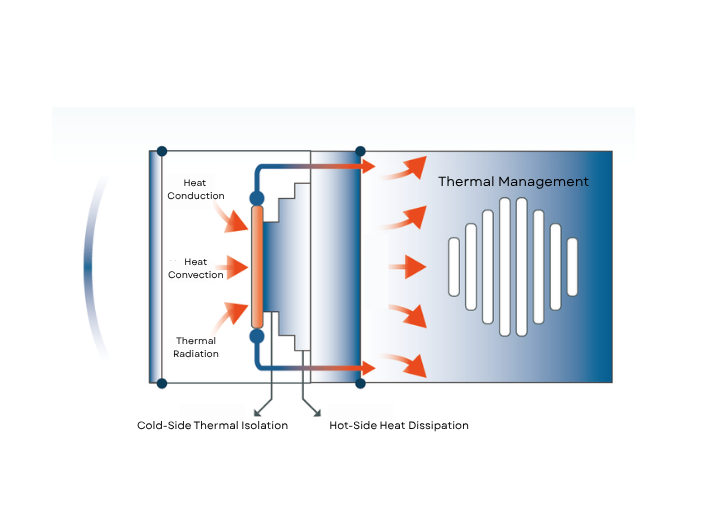
Figure 3. Multi-stage TEC cooling architecture.
As cooling depth increases, the system must control several factors:
- 1) Heat transfer through conduction
- 2) Thermal radiation between components
- 3) Airflow disturbances
These effects can reduce cooling efficiency, cause temperature drift, and increase power consumption.
The challenge is not simply reaching -40°C, -60°C, or even -80°C. The real challenge is keeping these temperatures stable during long-term operation.
Long-Term Vacuum Stability Is Even More Challenging
Lower temperatures increase the risk of condensation on the sensor window. If the window temperature drops below the ambient dew point, moisture can form quickly and affect image quality. In severe cases, condensation may damage internal electronics.
High-end cooled cameras use vacuum chambers to isolate the sensor from moisture. However, creating a vacuum is only the first step. Maintaining that vacuum over many years is far more difficult.
Several factors can gradually reduce vacuum performance:
- 1) Thermal expansion differences between materials
- 2) Feedthrough structures for power and signal transmission
- 3) Outgassing from internal components
Because of these challenges, long-term vacuum sealing remains one of the most demanding technologies in cooled camera design.
Precision Cooling with Flexible Thermal Management
Tucsen has developed mature TEC cooling and temperature control technologies for different applications.
Key capabilities include:
- 1) Up to five-stage TEC cooling for demanding low-temperature applications
- 2) Temperature control accuracy of ±0.1°C
- 3) Temperature stability better than ±0.5°C
- 4) Multiple thermal management options, including air cooling, liquid cooling, gas cooling, passive cooling, and external heat extraction
Proven Reliability Through Real-World Deployment
Tucsen was one of the first companies in China to develop cooled CCD cameras. The company has experienced the transition from CCD technology to sCMOS technology.
Years of engineering experience have helped Tucsen overcome key challenges such as vacuum leakage and condensation control. The company has established reliability standards with an MTBF of more than five years to ensure stable operation in demanding environments.
Reliability Verified in Extreme Applications
High-Altitude Solar Observation
In 2021, the Tucsen Dhyana 95 participated in solar coronagraph experiments at Daocheng Observatory in Sichuan, China. The observatory is located at an altitude of about 4,780 meters. The camera successfully captured white-light solar corona images under extreme conditions.
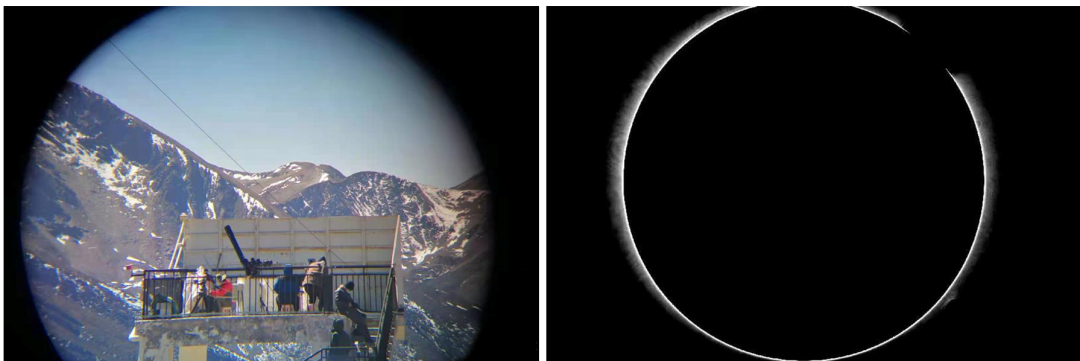
Figure 4. mage of the Wumingshan Observatory in Daocheng, Sichuan (left) and the solar corona (right).
Source: https://oaste.wh.sdu.edu.cn/info/1614/3321.htm
Advanced Imaging Is Becoming a System-Level Challenge
The development of cooled cameras reflects a broader change in imaging technology.
Camera performance is no longer determined only by sensor specifications. Long-term stability, thermal management, reliability, and system integration are becoming equally important.
Modern cooled cameras must not only achieve low temperatures. They must also maintain those temperatures consistently in real operating environments.
As inspection requirements continue to increase, imaging technology is moving from component optimization to system-level engineering. This change is shaping the next generation of advanced industrial inspection systems.
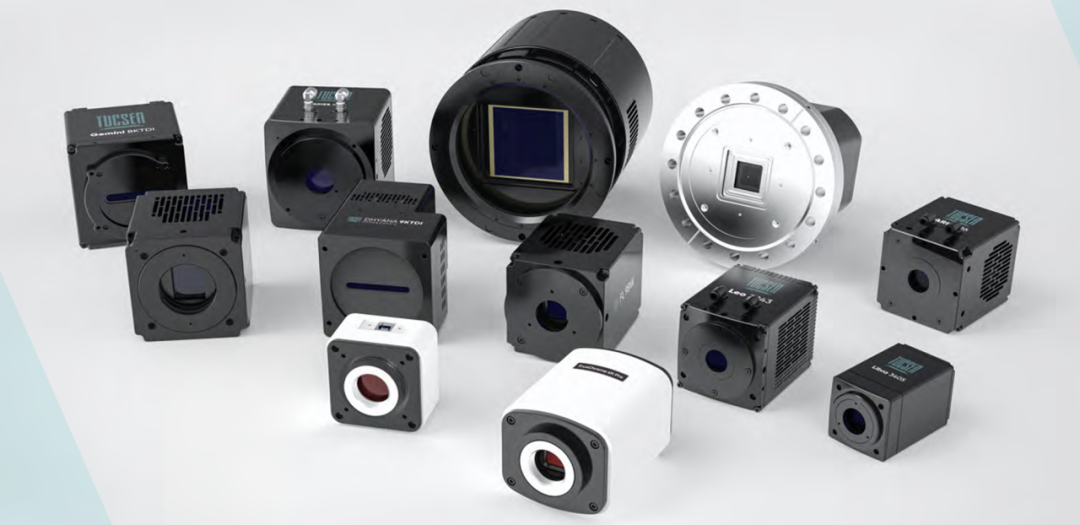
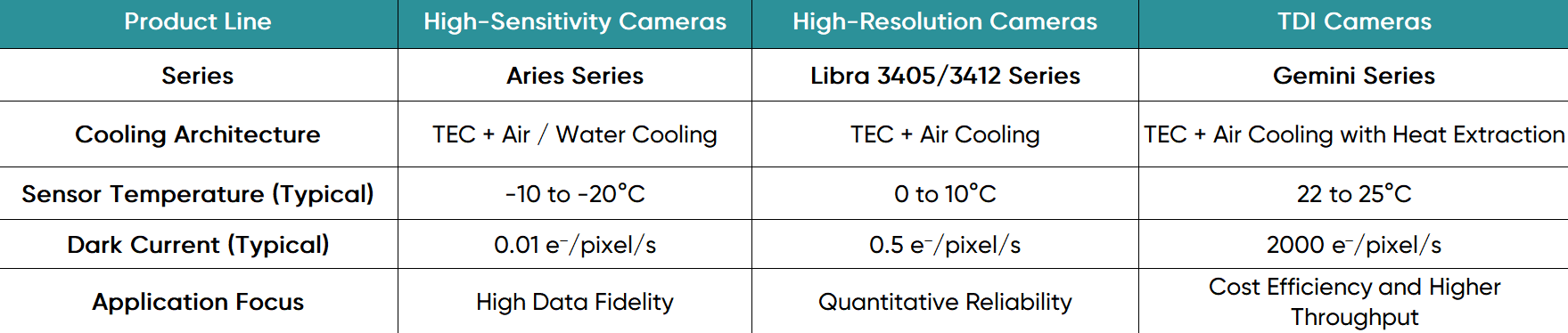
Figure 6: Example of Tucsen's Cooled camera Product Line
FAQ:
1. What is a cooled camera?
A cooled camera uses active temperature control to reduce sensor temperature. Lower temperatures help suppress dark current noise and improve image quality, especially in low-light imaging applications.
2. Why do scientific and industrial cameras need cooling?
Cooling reduces thermal noise inside the sensor. Lower noise improves signal-to-noise ratio and enables more accurate measurements, which is important for semiconductor inspection, life science imaging, astronomy, and other precision applications.
3. How does TEC cooling work?
TEC cooling uses thermoelectric modules to transfer heat away from the image sensor. Combined with heat dissipation systems, TEC technology provides stable and precise temperature control without moving parts.
4. How does cooling reduce dark current?
Dark current increases with sensor temperature. Lowering the sensor temperature reduces thermally generated electrons, which decreases background noise and improves weak signal detection.
5. Is lower temperature always better for imaging?
Not necessarily. Extremely low temperatures increase system complexity and cost. Most industrial and scientific applications only require temperatures that provide sufficient noise reduction and long-term stability.
6. What is multi-stage TEC cooling?
Multi-stage TEC cooling stacks several thermoelectric modules together to achieve deeper cooling. This approach is commonly used in scientific cameras that require low dark current and high image quality.
7. Why is vacuum sealing important in cooled cameras?
Vacuum chambers prevent moisture from reaching the sensor area. This helps avoid condensation and ensures stable operation during long-term use.


