

 2026/09/23
Advanced life science imaging depends on more than microscope optics alone. The camera and imaging software also need to work together reliably as part of the complete system.
At CNS 2026, Nikon demonstrated a customized Tucsen scientific camera integrated with a Nikon Ti Series inverted microscope and NIS-Elements, showing how a high-sensitivity sCMOS camera can become part of an established microscopy workflow.
The collaboration highlights Tucsen's capabilities in camera integration, customization, and high-sensitivity scientific imaging for research laboratories and microscopy system integrators.
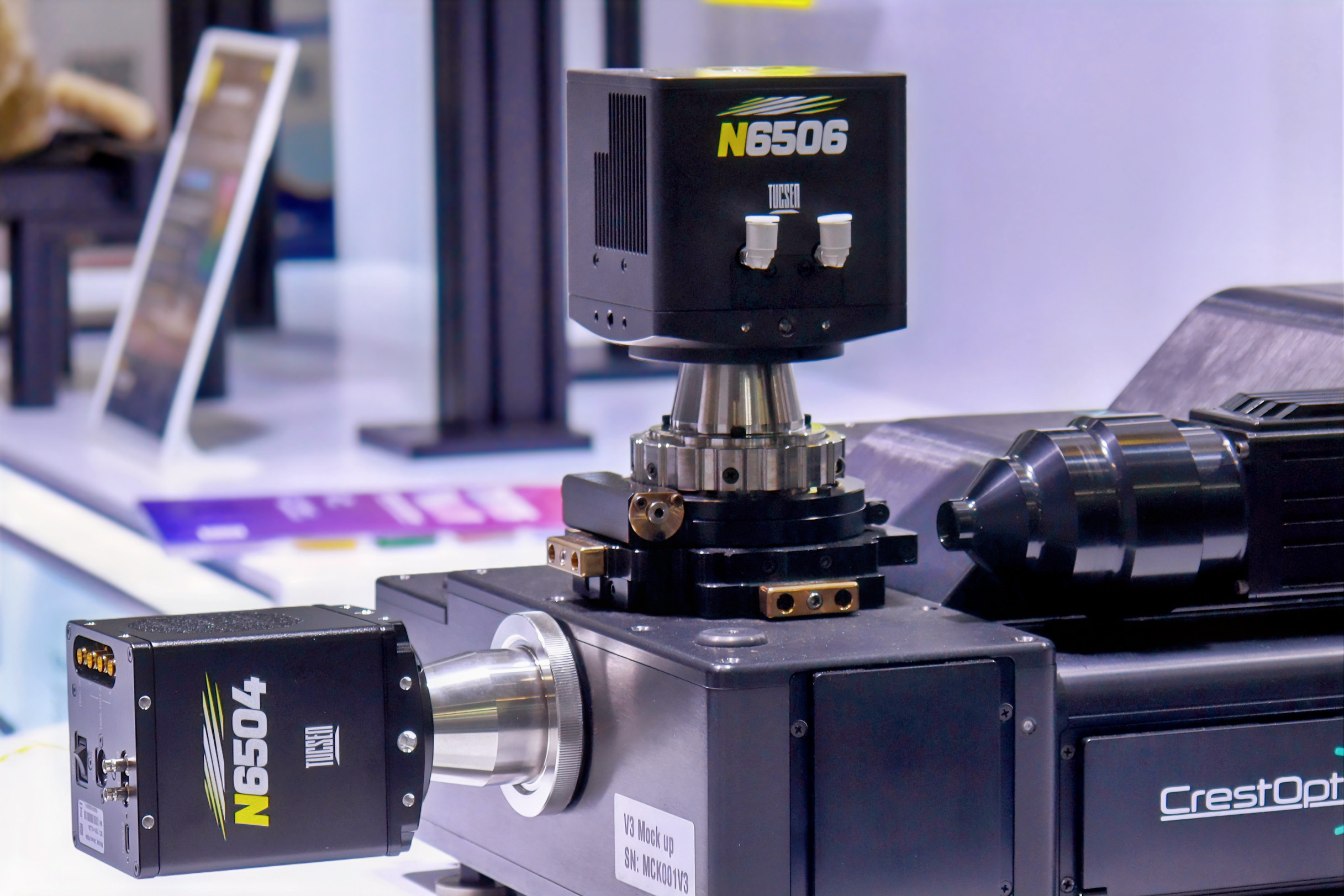
NIS-Elements: Integrated Control for Nikon Microscopy Systems
NIS-Elements is Nikon's microscopy imaging software platform, providing integrated control and management for advanced microscopy workflows.
It supports image acquisition, multidimensional imaging, time-series acquisition, visualization, analysis, and other functions used in life science research.
In the Nikon demonstration, the Nikon microscope, Tucsen camera, and NIS-Elements worked together as an integrated imaging system. Researchers could perform real-time image acquisition, adjust imaging parameters, and manage multidimensional and sequential imaging within the established software environment.
This type of integration helps the microscope camera fit naturally into the user's existing workflow rather than operating as a separate imaging device.
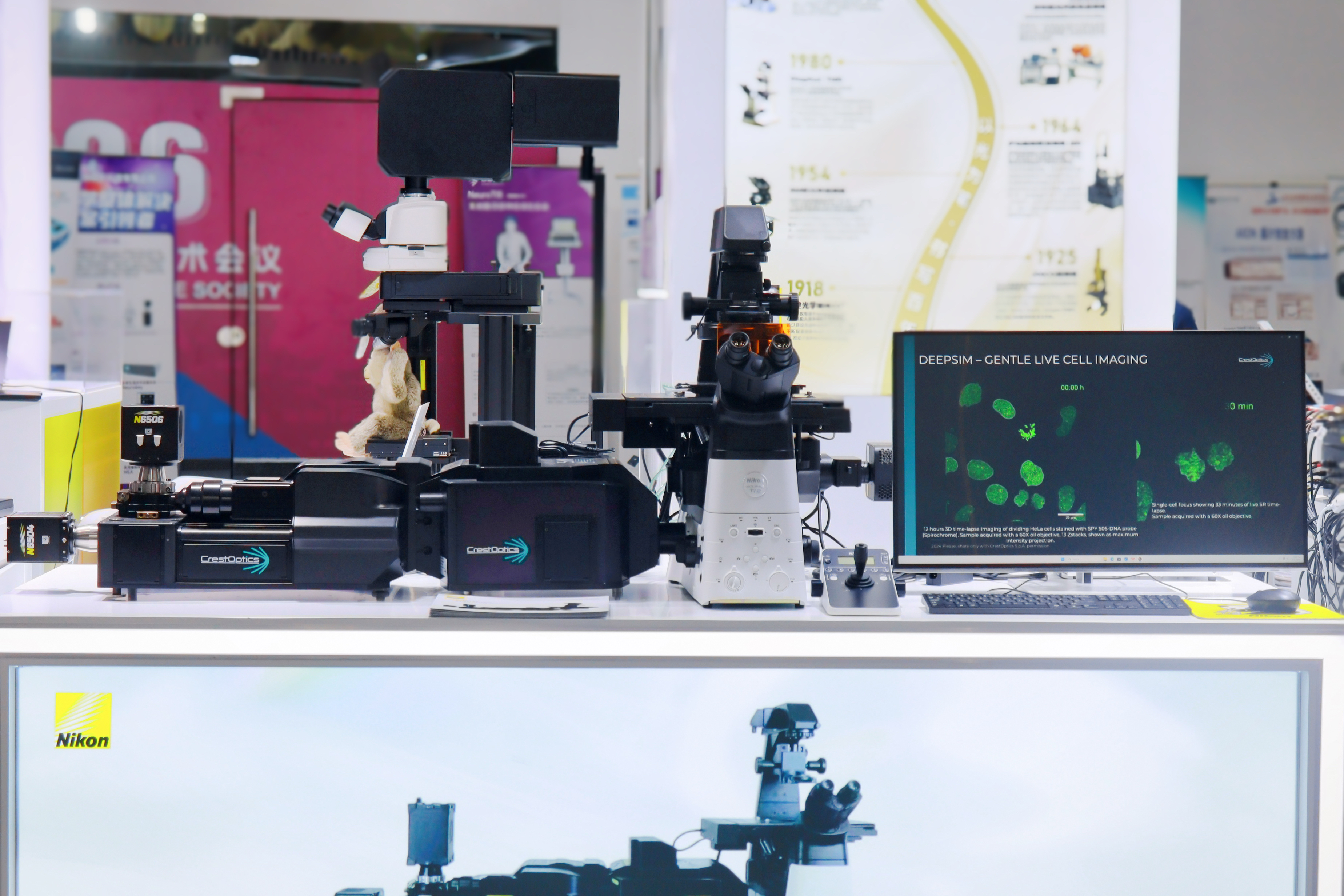
High-Sensitivity sCMOS for Demanding Microscopy Imaging
Many microscopy imaging applications involve weak optical signals. This is particularly relevant to fluorescence-based applications such as live cell imaging, super resolution microscopy, and confocal imaging.
Tucsen's high-sensitivity sCMOS cameras are designed for these demanding imaging conditions, combining high quantum efficiency, low readout noise, stable cooling, and broad spectral response.
These capabilities help capture more usable signal when photon availability is limited, supporting applications where sensitivity and image quality are critical.
The goal is not simply to provide a high-performance camera, but to provide a scientific camera for microscopy that can work effectively within the complete imaging system.
Why Choose Tucsen for Microscopy Imaging?
For microscope manufacturers and system integrators, camera performance is only one part of the integration process.
Different systems may require different sensor formats, frame rates, mechanical configurations, data interfaces, triggering methods, or software compatibility.
Tucsen supports customized camera configurations to meet these requirements. The Nikon collaboration is one example of how a Tucsen scientific camera can be adapted to an established microscopy platform while maintaining an integrated acquisition workflow.
This flexibility also makes Tucsen suitable for OEM scientific camera projects and customized imaging systems.
Can Tucsen Cameras Be Integrated with Other Microscopy Systems?
Yes. The Nikon collaboration is one example of Tucsen's work with microscopy platforms.
Tucsen has also collaborated with openUC2, an open and modular microscopy platform, enabling Libra sCMOS cameras to operate on ARM-based embedded systems, including Raspberry Pi-powered platforms.
Learn more about the Tucsen and openUC2 collaboration →
Tucsen also works with universities, research institutes, and scientific equipment partners on different imaging and integration projects.
These collaborations cover a range of research environments and system requirements.
Conclusion
The Nikon and Tucsen collaboration demonstrates how a high-sensitivity microscope camera can be integrated into an established microscopy ecosystem, combining camera performance with software compatibility and system-level integration.
For research laboratories, this provides greater flexibility when building advanced imaging systems. For microscope manufacturers and integrators, it demonstrates the possibilities of custom scientific camera and OEM integration.
If you are interested in Tucsen's high sensitivity cameras for microscopy or have specific camera integration requirements, contact our engineering team to discuss your application.


